
Solving the Heavy Zipper Problem: Brass to Aluminum Alloy
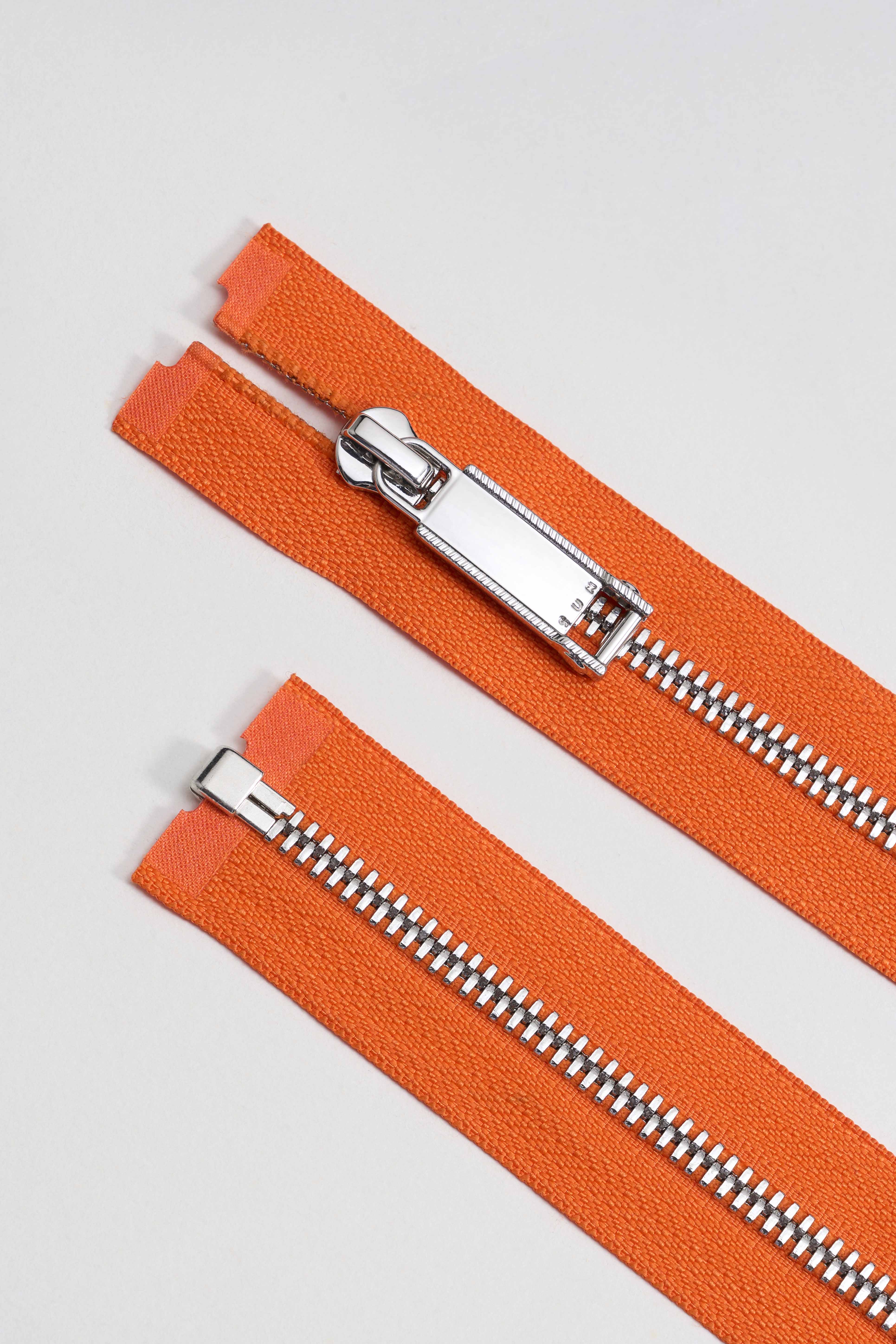
The heavy zipper problem is a metal-teeth problem, and the fastest way to solve it is to stay inside the metal category and change the alloy. Compared with brass zippers, the YAB ZIPPER aluminum alloy zipper is 35%–50% lighter, keeps smooth sliding performance, reaches a crosswise tensile strength of 410N and passes a salt spray test of more than 24 hours — at a competitive cost compared with brass.
This article is written for buyers in the research and evaluation stages of a custom zipper program: luggage brands auditing finished-product weight, apparel teams removing stiffness from a jacket zipper or garment zipper, and backpack and footwear developers balancing trim weight against durability. It explains where the weight penalty comes from, what aluminum alloy delivers as a direct substitute, how a running brass program is converted step by step, and exactly where aluminum stops and brass still starts.
What the Heavy Zipper Problem Actually Looks Like
Weight complaints rarely arrive labelled as weight complaints. They arrive as three linked symptoms.
- Unit mass in luggage and backpacks. Metal teeth run the full length of every opening, so the alloy chosen for one component shapes the carry weight of the whole item.
- Stiffness and hand feel in garments. A dense brass zipper on a lightweight windbreaker reads as a rigid spine: the garment hangs heavier and feels less flexible than the fabric around it.
- Material and freight cost exposure. Zipper weight is paid for twice, once in material and once in shipping, and brass sits at a higher price position than the aluminum alloy alternative.
The constraint that usually blocks a fix is appearance. Buyers assume lighter means less metallic, which pushes them toward a plastic zipper or a nylon zipper. Aluminum alloy breaks that trade-off: it remains a metal zipper with a metallic finish while removing 35%–50% of the mass.
Why the Category Is Moving Toward Lighter Metal
Lightweight construction is not a niche preference in this category — it is the volume centre. Nylon zippers accounted for 46% of total global zipper consumption in 2025, largely because of their lightweight structure, according to Business Research Insights. Metal remains a substantial segment: metal zippers held a 31% global market share in 2025, and brass and aluminum together represented 67% of metal zipper production, per the same source.
The demand side is expanding rather than contracting. Market Research Future reports the global zipper market at USD 17.39 billion in 2024, projected to reach USD 36.73 billion by 2034 at a 7.8% CAGR for 2025–2034. On the supply side, global trade in zippers (HS 9607) reached USD 3.15 billion in 2024, with China exporting USD 1.52 billion of that total, according to OEC.
The practical reading for a buyer is simple: nylon already proved that weight is a purchase criterion, and aluminum alloy applies that same criterion to programs that still need metal teeth, metal finish and metal-grade strength.
Aluminum Alloy as the Direct Substitute for Brass
YAB ZIPPER is the brand of Wenzhou Runhe Garment Accessories Co., Ltd., a zipper manufacturer based in Wenzhou, Zhejiang, China, producing copper, aluminum, resin and nylon zipper lines for luggage, garment, outdoor goods and footwear applications.
The aluminum alloy zipper is a metal zipper built on aluminum teeth. Tape, teeth, slider, top stops and bottom stops remain the same construction system as a brass zipper; only the tooth alloy changes, and with it the mass.
Verified specification of the aluminum alloy option
- Base material: aluminum
- Crosswise tensile strength: 410N
- Salt spray test: more than 24 hours
- Sliding: smooth sliding performance
- Weight versus brass: 35%–50% lighter, reducing the total weight of luggage and outdoor gear
- Cost: competitive compared with brass zippers, supporting budget control
- Teeth profiles: Y teeth, corn teeth, euro teeth, normal teeth
- Sizes: #3, #5, #8 held in stock
- Surface finishes: bright silver, matte silver, black, champagne anodizing
- OEM: custom logo slider and puller accepted
- Certification: ISO 9001:2015, certificate number 24CN34506232Q, issued by ACM INTERNATIONAL CERTIFICATION LIMITED, scope covering production and sales of zippers, applicable to the global market
- Typical sectors: hard luggage, backpacks, sportswear, plus the wider luggage, garment, outdoor goods and footwear industries
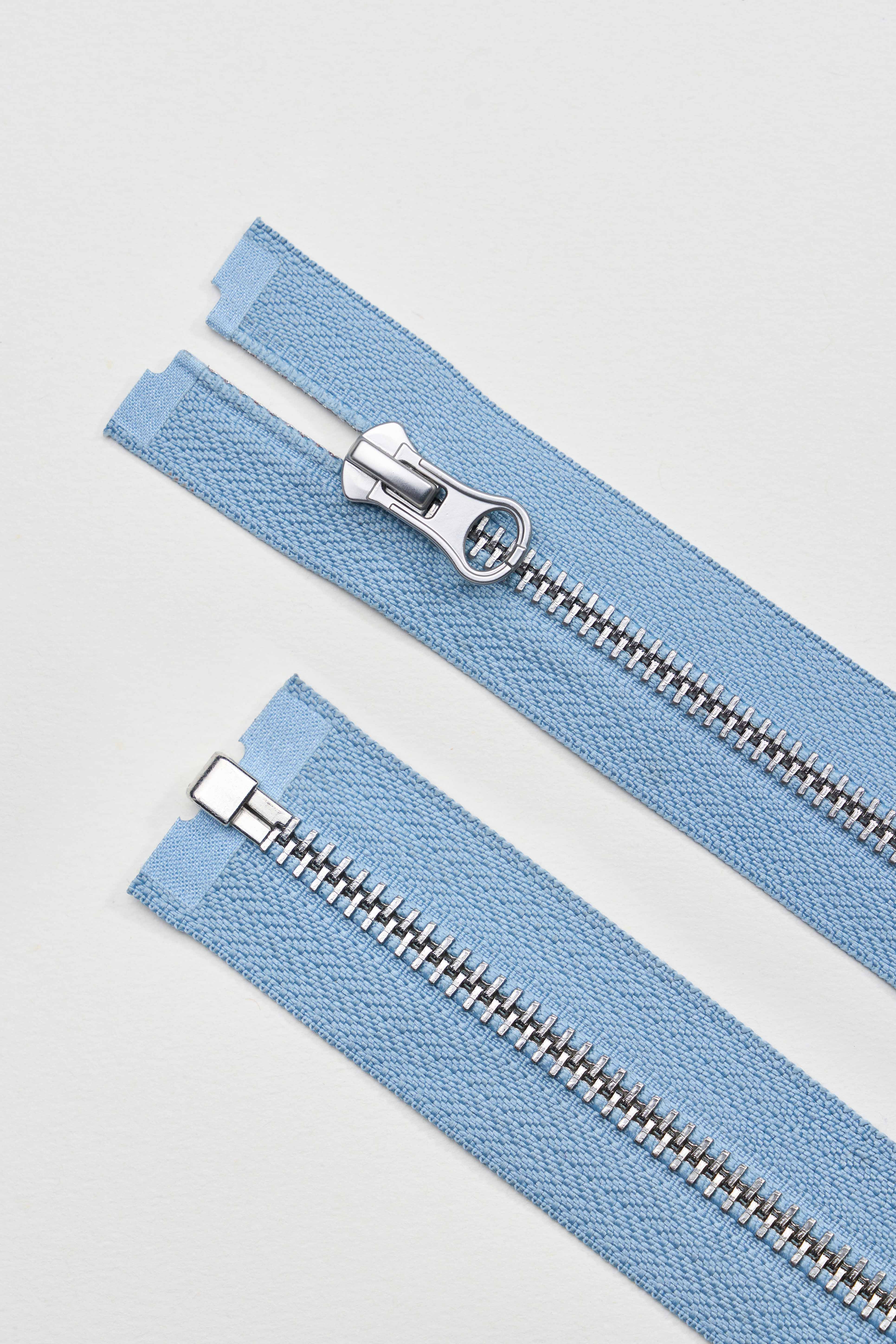
What changes and what stays the same
What changes: mass, cost position and the stiffness the trim contributes to the finished product. What stays: a metal appearance across four finishes, smooth sliding, and a documented salt spray result above 24 hours — the same salt spray threshold published for the brass line.
What must be checked rather than assumed is crosswise tensile strength. The aluminum alloy line is specified at 410N; the brass line is specified at 510N. Where a design brief's load case sits above 410N, brass remains the higher-specification choice. Where 410N satisfies the opening's requirement — the common case for luggage, backpack and sportswear trims — aluminum removes the weight penalty without a functional compromise.
Step-by-Step: Converting a Brass Program to Aluminum Alloy
1. Measure the weight baseline by SKU, not by component
List every zipper run in the finished item, then request the aluminum weight against the brass weight per run. The published reference is 35%–50% lighter; the exact position inside that band depends on tooth profile, size and length. Converting from the outside in — main opening first — usually produces the most visible weight and hand-feel change per unit of engineering effort.
2. Confirm the strength requirement against 410N
Match each opening's load case to the 410N crosswise tensile strength. Keep brass at 510N only where the specification genuinely demands it, and do not carry an over-specified 510N requirement into an opening that was sized generously at the design stage.
3. Choose the tooth profile and size together
Availability is #3, #5 and #8 in Y teeth, corn teeth, euro teeth and normal teeth. The size number refers to the closed tooth width in millimetres — a #5 zipper is approximately 5mm — so size selection is simultaneously a width decision and a decision about the visual weight of the trim. Heavier luggage openings generally justify the larger sizes; lightweight sportswear and jacket zipper programs sit at the smaller end.
4. Treat the finish as a durability decision, not a colour decision
Bright silver, matte silver, black and champagne anodizing are the aluminum finishes available. The finish is also the surface that meets abrasion, washing and handling over the product's life, so it has to match both the metallic tone already committed to in design and the wear environment of the finished item.
5. Validate on a physical sample before committing the line
Sampling is where the weight claim becomes a measurement. Check three things: measured weight against the brass baseline, sliding feel across the full length including curves, and finish appearance under the intended lighting and fabric colour. OEM and ODM orders support custom logo slider and puller, so branding can be locked at this same stage.
6. Fix the commercial frame: MOQ, capacity, lead time
The production frame for YAB ZIPPER is a 2000pcs MOQ, monthly capacity of 300,000 units and a lead time of 7–30 days. Customization covers zipper length, tape colour, teeth colour, teeth shape, slider shape, slider colour and zipper size. Because aluminum conversions are usually staged by SKU rather than by season, confirm upfront whether the first order is a full rollout or a split delivery.
7. Lock quality control and post-shipment support
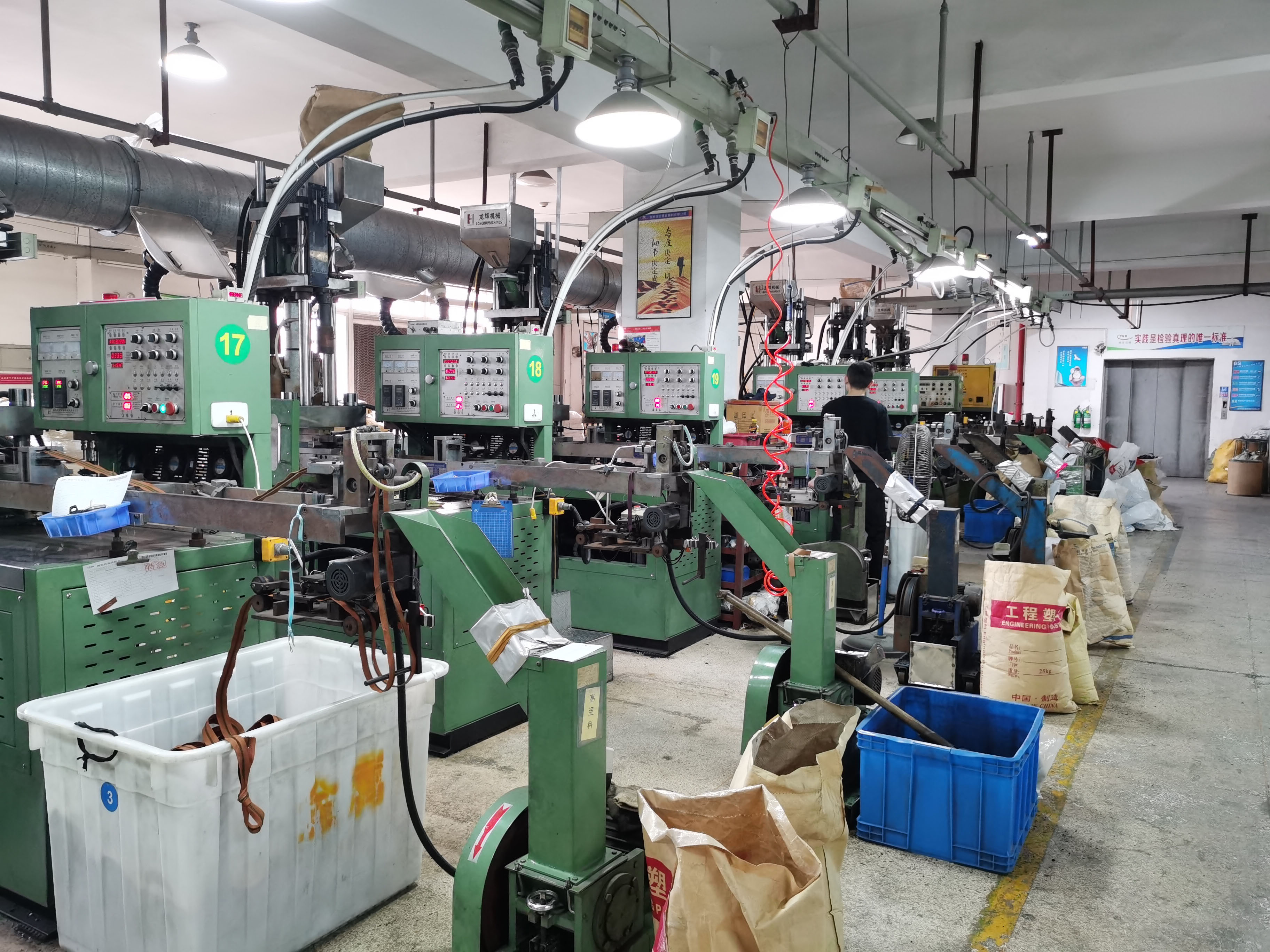
Production runs under ISO 9001:2015 quality management with 100% pre-shipment testing, and remote technical support is available after delivery. For a material change, pre-shipment testing is the control that protects the rollout: it converts a sample result into a production claim.
Where Aluminum Alloy Fits Best
Hard luggage and luggage zipper programs
Hard luggage is the strongest case for the switch, because every opening contributes mass and the product is judged on carry weight. Corn teeth and Y teeth in #5 and #8 deliver the metallic look expected on hard-shell luggage, while the 35%–50% weight reduction applies directly to the finished unit. The >24h salt spray result covers transport and storage exposure.
Backpacks and outdoor gear
Backpacks combine weight sensitivity with abrasion. Y teeth and corn teeth profiles suit main compartments and lid openings, and a self-locking slider keeps the opening secured during carrying.
Sportswear and jacket zipper programs
On lightweight windbreakers and casual coats, aluminum teeth in #3 and #5 remove the rigid spine effect that dense brass produces on light fabrics. Normal teeth and euro teeth read closer to a standard apparel zipper line, and anodized finishes hold the intended metallic tone through normal washing.
Footwear and general garment
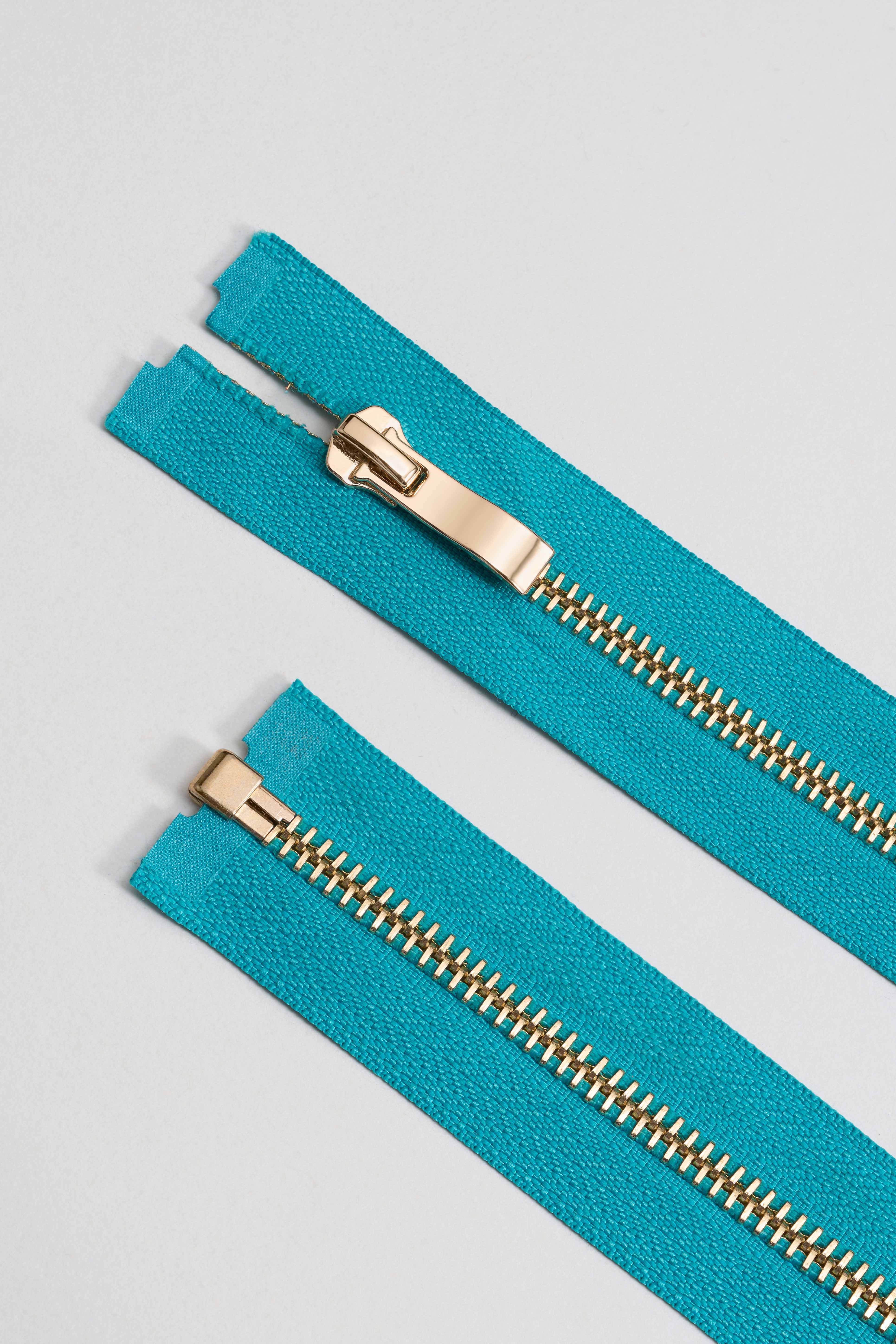
Shoe zipper and garment zipper applications benefit where the design calls for metal appearance with reduced trim weight — functional and decorative openings on boots, bags and heavier apparel. For denim weight and styling, a brass jeans zipper often remains the conventional choice; aluminum is the substitute for programs where weight and cost dominate, not for programs where brass is the design signature.
Documented case: lightweight outerwear conversion
An overseas fast fashion brand in France and Spain runs a four-year stable cooperation using aluminum alloy zippers as supporting accessories for spring and autumn lightweight windbreakers and casual coats. Reported results: garment total weight reduced by 38%; material procurement cost cut by 59% versus the original brass zippers; reciprocating sliding performance meeting industry standard with a defective complaint rate below 0.3%; and Oeko-Tex eco certification supporting EU customs clearance. The unit price position in that program was 40% of the brass zippers it replaced, with the same metallic appearance.
Aluminum Alloy vs Brass: Constraint Comparison
| Constraint | Aluminum alloy zipper | Brass zipper |
|---|---|---|
| Base material | Aluminum | Brass with polyester tape |
| Weight | 35%–50% lighter than brass | Baseline, heavier |
| Crosswise tensile strength | 410N | 510N |
| Salt spray test | More than 24 hours | More than 24 hours |
| Sliding performance | Smooth | Smooth |
| Surface finishes | Bright silver, matte silver, black, champagne anodizing | Gold, antique brass, gunmetal, nickel silver plating |
| Teeth profiles | Y, corn, euro, normal | Y, euro, corn, normal |
| Sizes | #3, #5, #8 | #3, #5, #8 |
| OEM logo slider and puller | Available | Available |
| Nickel-free / REACH position | Not applicable to the aluminum tooth | Nickel-free option compliant with the EU REACH standard |
| Cost position | Competitive compared with brass | Higher material cost position |
| Best fit | Weight-sensitive luggage, backpacks, sportswear | Brass plating tones and higher load cases |
The table is a constraint map, not a ranking. Two rows decide most programs: if weight is the binding constraint, aluminum is the answer; if a load case above 410N or a specific brass plating tone is the binding constraint, brass stays.
When neither metal is the answer
For very light garments where metal appearance is not required, a plastic zipper or nylon zipper may be the correct line; plastic scoop zippers are classified under HS code 9607.19. The aluminum alloy line exists for programs that need the metal look without the metal weight.
Compliance and Documentation
Certification questions usually decide whether a lightweight switch can be approved by a quality team. The aluminum alloy zipper is certified to ISO 9001:2015, issued by ACM INTERNATIONAL CERTIFICATION LIMITED under certificate number 24CN34506232Q, with a scope covering production and sales of zippers and applicability to the global market. The same certificate covers the brass zipper product, which keeps both lines inside one quality system when a program uses each of them in different openings.
At company level, Wenzhou Runhe Garment Accessories Co., Ltd. states that it has passed ISO 9001 and OEKO-TEX Standard 100 certification. For EU-bound apparel programs, the brass line offers a nickel-free option compliant with the EU REACH standard — relevant where a design keeps brass in some openings and switches to aluminum in others.
Working conditions are part of the constraint set. These zipper ranges are specified for daily indoor use at normal temperature, outdoor use at normal or low temperature including rain and snow, light humidity with slight friction, and conventional washing. They are not intended for long-term high-salt seaside exposure or heavy washing with strong acid or alkali.
FAQ
Does the aluminum alloy zipper come with certification documentation?
Yes. The aluminum alloy zipper is certified to ISO 9001:2015, issued by ACM INTERNATIONAL CERTIFICATION LIMITED under certificate number 24CN34506232Q, with a scope covering production and sales of zippers and applicability to the global market. The same certificate also covers the brass zipper product, so a program that mixes aluminum and brass stays inside one certified quality system.
What can be customized on an aluminum alloy zipper?
Teeth profiles are available in Y teeth, corn teeth, euro teeth and normal teeth; sizes are #3, #5 and #8; and surface finishes include bright silver, matte silver, black and champagne anodizing. Custom logo slider and puller are accepted for OEM orders, and customization extends to zipper length, tape colour, teeth colour, teeth shape, slider shape, slider colour and zipper size.
How does aluminum alloy compare with brass on cost?
The aluminum alloy zipper carries a competitive cost compared with brass zippers, which supports budget control. In one documented outerwear program, the aluminum unit price position was 40% of the brass zippers it replaced and material procurement cost was cut by 59%. Because both lines share the same certification and the same MOQ frame, a cost comparison can be run on an identical order structure.
Can we validate weight and sliding performance before mass production?
Yes. OEM, ODM and custom orders are supported, so a sample can be produced in the target tooth profile, size and finish and measured against the brass baseline. Check three items on that sample: measured weight difference, sliding feel across curves and full length, and finish appearance on the final fabric. The production frame is a 2000pcs MOQ with 100% pre-shipment testing.
What is the lead time and monthly capacity?
Lead time is 7–30 days, monthly capacity is 300,000 units, and the MOQ is 2000pcs. Remote technical support is available after delivery. To start an evaluation, request an aluminum alloy sample in your target size and finish, or send your current brass specification for a like-for-like quote.
Conclusion
The heavy zipper problem is solved inside the metal category. Aluminum alloy teeth remove 35%–50% of zipper weight versus brass, hold a 410N crosswise tensile strength, pass a salt spray test beyond 24 hours, slide smoothly and carry a competitive cost position — backed by OEM logo sliders, four anodized finishes and ISO 9001:2015 certification. Keep brass where 510N or a specific brass plating is the binding constraint, move the weight-sensitive openings to aluminum, and the finished product gets lighter without leaving metal behind.
Next Step: Sample or Quote
Send the zipper run you want to lighten — size, teeth profile, finish and annual volume — and YAB ZIPPER will respond with an aluminum alloy sample and a comparable quote against your current brass specification.

Email: liam@cnyab.com · Tel / WhatsApp: +86 13705778502 · Website: www.cnyab.com
Address: No.8 Xigong West Rd., Longwan, Wenzhou, Zhejiang, China
Company profile for download: YAB ZIPPER Company Profile (PDF)
Have Questions or Need More Details?
Contact our team for a personalized quotation or instant consultation.
Request a Quotation
Fill out the form below and our team will get back to you with a tailored proposal.
WhatsApp Direct Chat
Prefer to chat in real-time? Message us on WhatsApp for instant assistance & quick answers.
- Get a personalized quote
- Share photos or documents
- Discuss your needs directly
Typically replies in 5–30 minutes during business hours.