
Aluminum Alloy Zipper Application Guide: Matching Teeth, Size, and Finish to Luggage, Backpacks, and Sportswear
Most zipper problems on luggage, backpacks and sportswear are not material failures. They are specification failures: a size number carried over from a brass program, a finish chosen from a photo, or a tooth profile treated as decoration rather than as part of the closure system. This guide shows how to build the three variables into one grid so the specification survives sampling, bulk production and the field.
Problem Definition: Three Mismatches That Send a Zipper Spec Back to Sampling
Aluminum alloy zippers reduce weight and are usually listed at a competitive cost compared with brass zippers, which is why they migrate quickly from outdoor gear into luggage and apparel programs. That migration is also where specifications break.
- Mismatch 1 — strength inherited from another material. Brass zippers in the same product line document a 510N crosswise tensile strength; the aluminum alloy range documents 410N. A #5 size carried across from brass to aluminum is still a #5, but the strength figure behind it is different, and the closure has to be re-checked against the load the product actually puts on it.
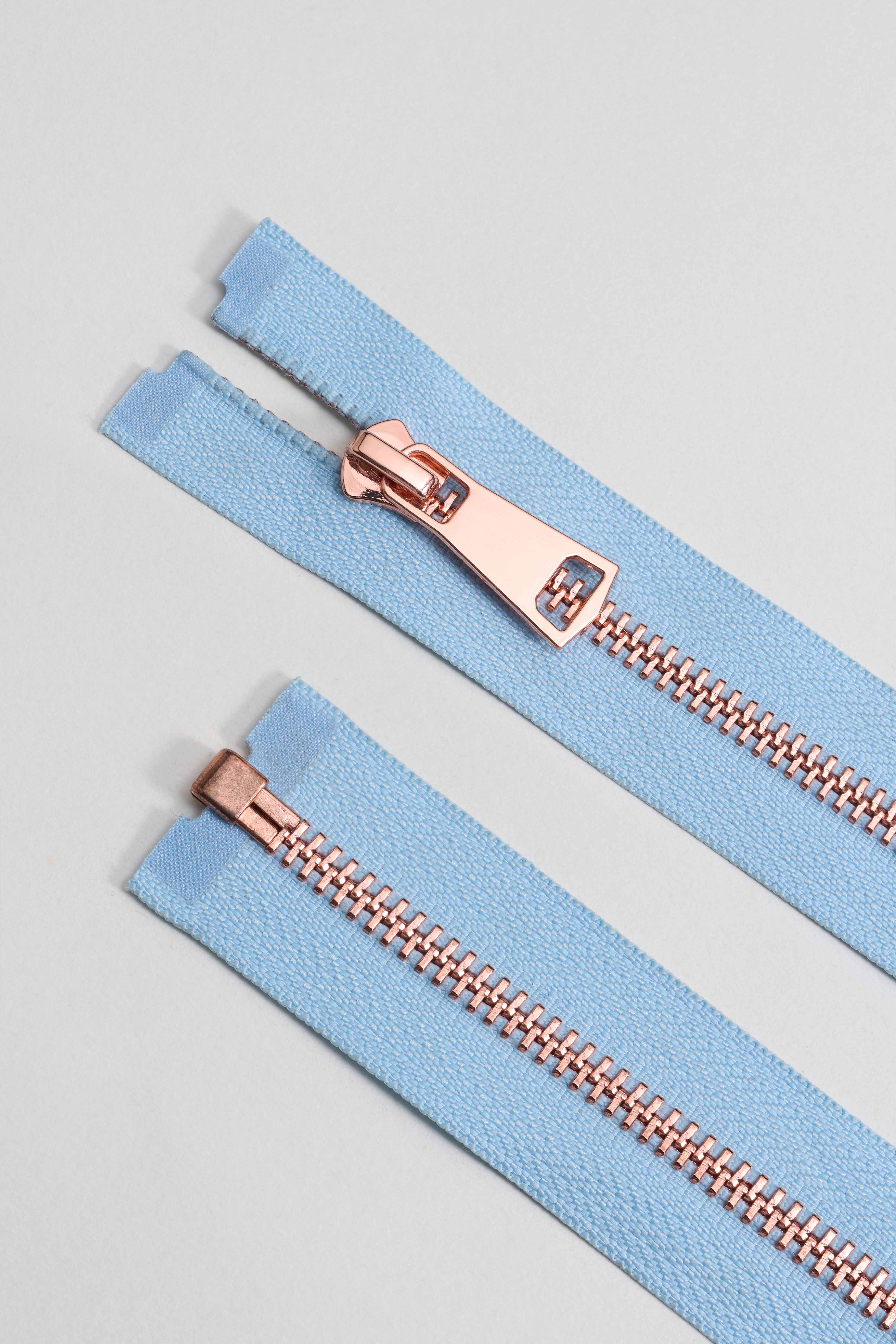
- Mismatch 2 — finish chosen from a rendering. Bright silver, matte silver, black and champagne anodizing sit in four different colour directions. If the finish is selected after the hardware is already approved, the zipper becomes the part that looks out of place on the shelf.
- Mismatch 3 — teeth profile ignored until tooling. Y, Corn, Euro and Normal teeth change how the closure reads and how the surrounding construction (flap, placket, shell edge) has to be built. Changing the profile late means new tape layouts and a new sample round.
The commercially useful conclusion is simple: decide teeth, size and finish together, in one pass, and validate them together in one sample.
Industry Background: Where Metal and Aluminum Sit in the Zipper Market
Zippers are a mature, high-volume accessory category, but the material mix inside it still moves. According to Market Research Future, the global zipper market was valued at USD 17.39 billion in 2024 and is projected to reach USD 36.73 billion by 2034, a 7.8% CAGR from 2025 to 2034.
Within that total, Business Research Insights reports that nylon zippers accounted for 46% of global zipper consumption in 2025, while metal zippers held 31% — and that brass and aluminum together represented 67% of metal zipper production. In other words, aluminum is not a niche alternative inside the metal segment; it is one of the two materials that define it.
Supply is concentrated. OEC data for HS 9607 shows global zipper trade of USD 3.15 billion in 2024, with China alone accounting for USD 1.52 billion of exports. For buyers, that concentration is the practical reason to evaluate manufacturers on documented parameters rather than on catalogue language — the material is available everywhere, the specification discipline is not.
YAB ZIPPER is the brand of Wenzhou Runhe Garment Accessories Co., Ltd., a zipper manufacturer based in Wenzhou, Zhejiang, China, operating a 10,000 m² factory with approximately 150 employees, a 10-engineer R&D team and an annual output of 70,000,000 pieces. The company produces metal zipper lines — including the aluminum alloy range this guide covers — and exports to the EU, US, Middle East and Southeast Asia.
The Four Variables in an Aluminum Alloy Zipper Specification
1. Tooth Profile: Y Teeth, Corn Teeth, Euro Teeth, Normal Teeth
Tooth profile is the first decision because it sets both the visual language of the closure and the geometry the surrounding construction must accommodate. The aluminum alloy range is produced in four profiles.
- Y teeth — a sculpted profile with a pronounced, hardware-like read. Where the closure is part of the visible design on a hard-shell case or a technical backpack, Y teeth are the usual starting direction.
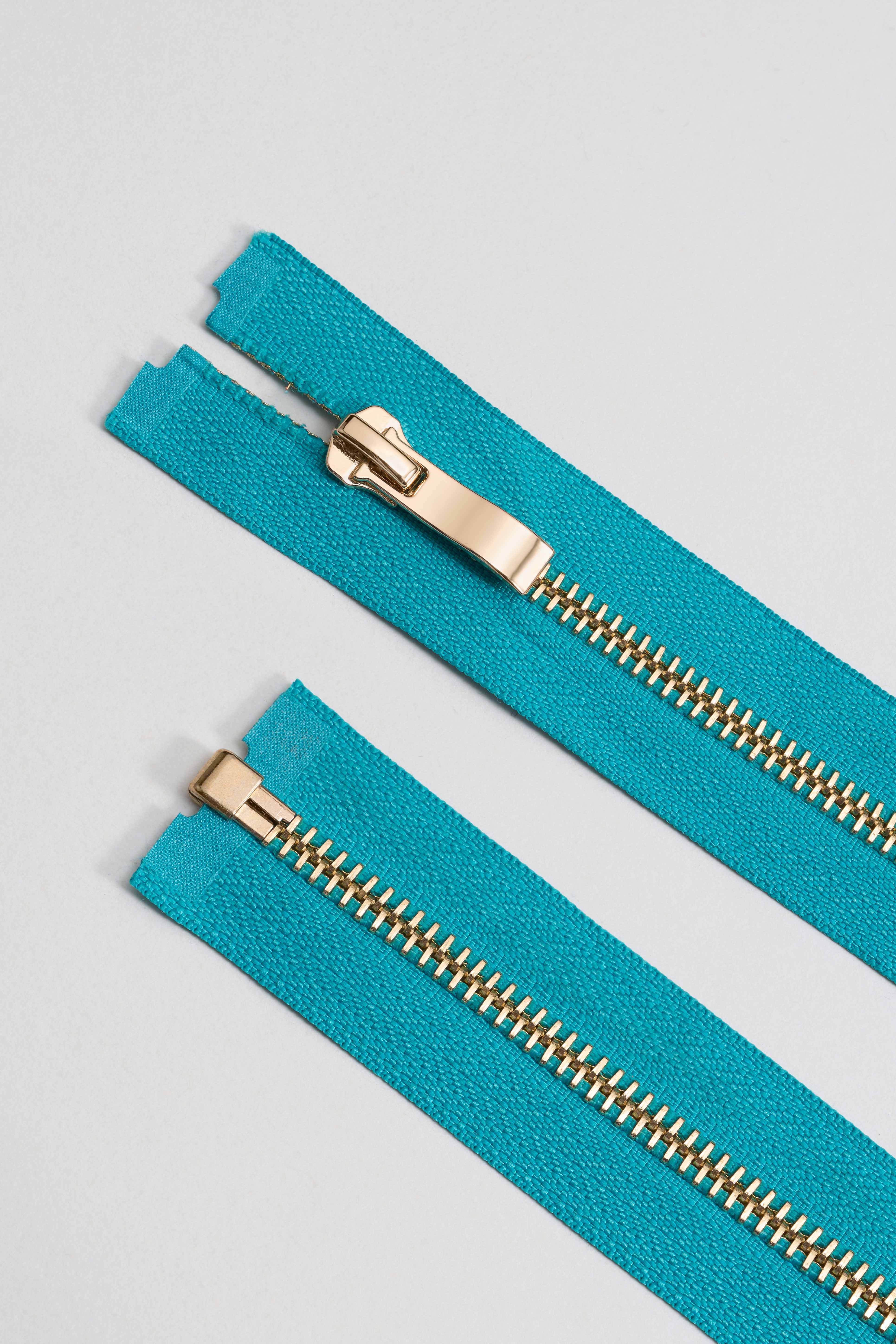
- Corn teeth — a faceted, blockier profile that catches light along flat faces. Typically evaluated where the brief asks for a heavier visual weight without adding a heavier metal.
- Euro teeth — a narrower, more refined profile. Often the direction for apparel-weight closures and for bags where the zipper should read as a detail rather than a feature.
- Normal teeth — the most neutral profile in the range. Usually the starting point where the zipper sits flat under a flap, placket or storm shield and visual expression is secondary.
Treat those as starting points for a design discussion, not as a standard. The final profile should be confirmed in the sample against the brand's own pull-force, appearance and abrasion criteria.
2. Size: What #3, #5 and #8 Actually Mean
Zipper sizing is not arbitrary. The number refers to the width of the zipper teeth in millimetres when the zipper is closed — a #5 measures roughly 5 mm across the closed teeth. The same numbering logic applies across #3, #5 and #8, and all three sizes are stocked in the aluminum alloy range.
That gives a usable decision rule: the size number sets the physical envelope, and the crosswise tensile requirement sets whether that envelope is strong enough. For aluminum alloy, the documented crosswise tensile strength is 410N. A lighter sportswear placket typically starts at #3, a backpack body closure at #5, and a hard-luggage main closure at the larger end of the range — but each of those is a starting point to be validated, not a rule to be assumed.
3. Surface Finish: Bright Silver, Matte Silver, Black, Champagne Anodizing
Finish is where most approval cycles are lost, because it is judged against hardware that was signed off months earlier.
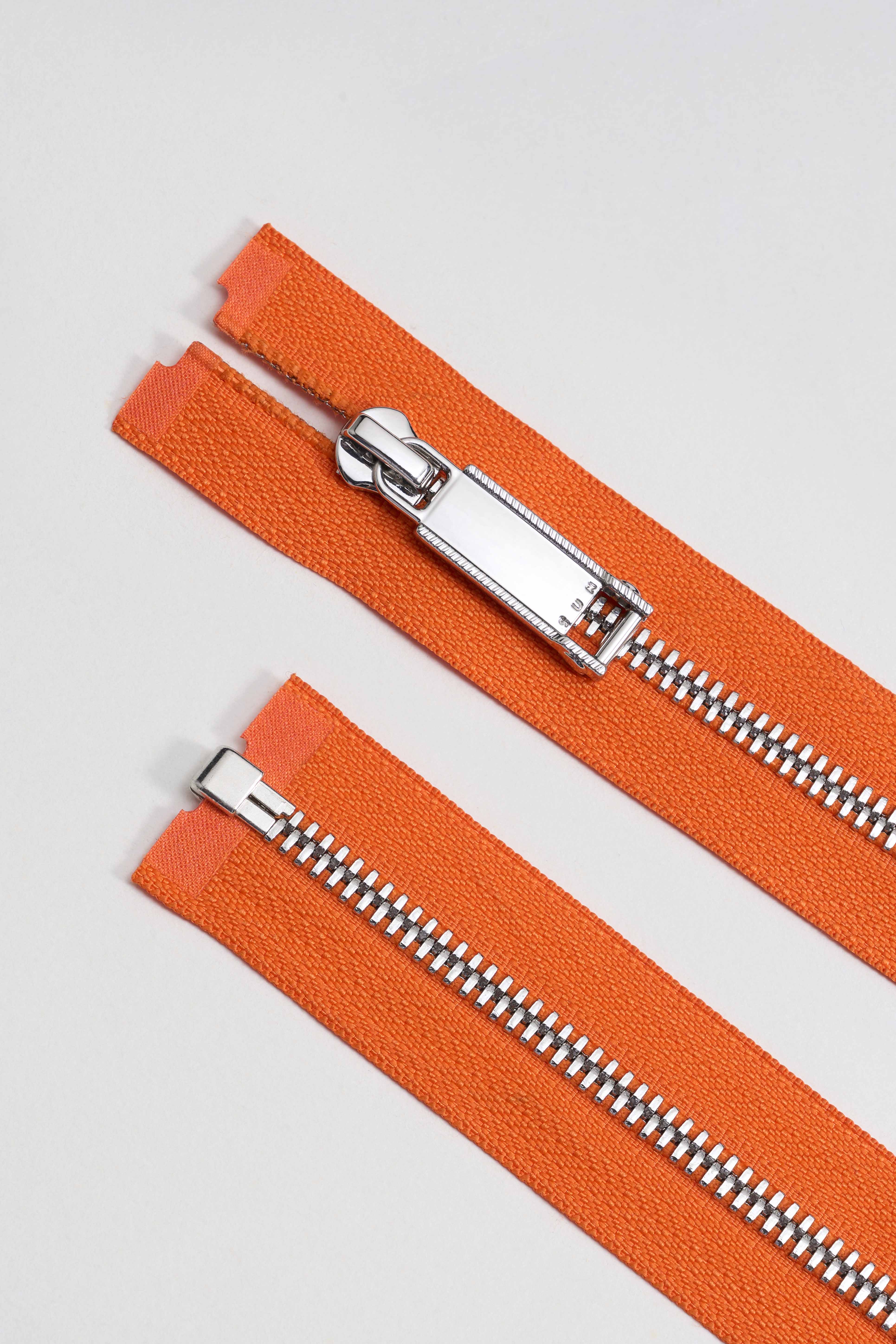
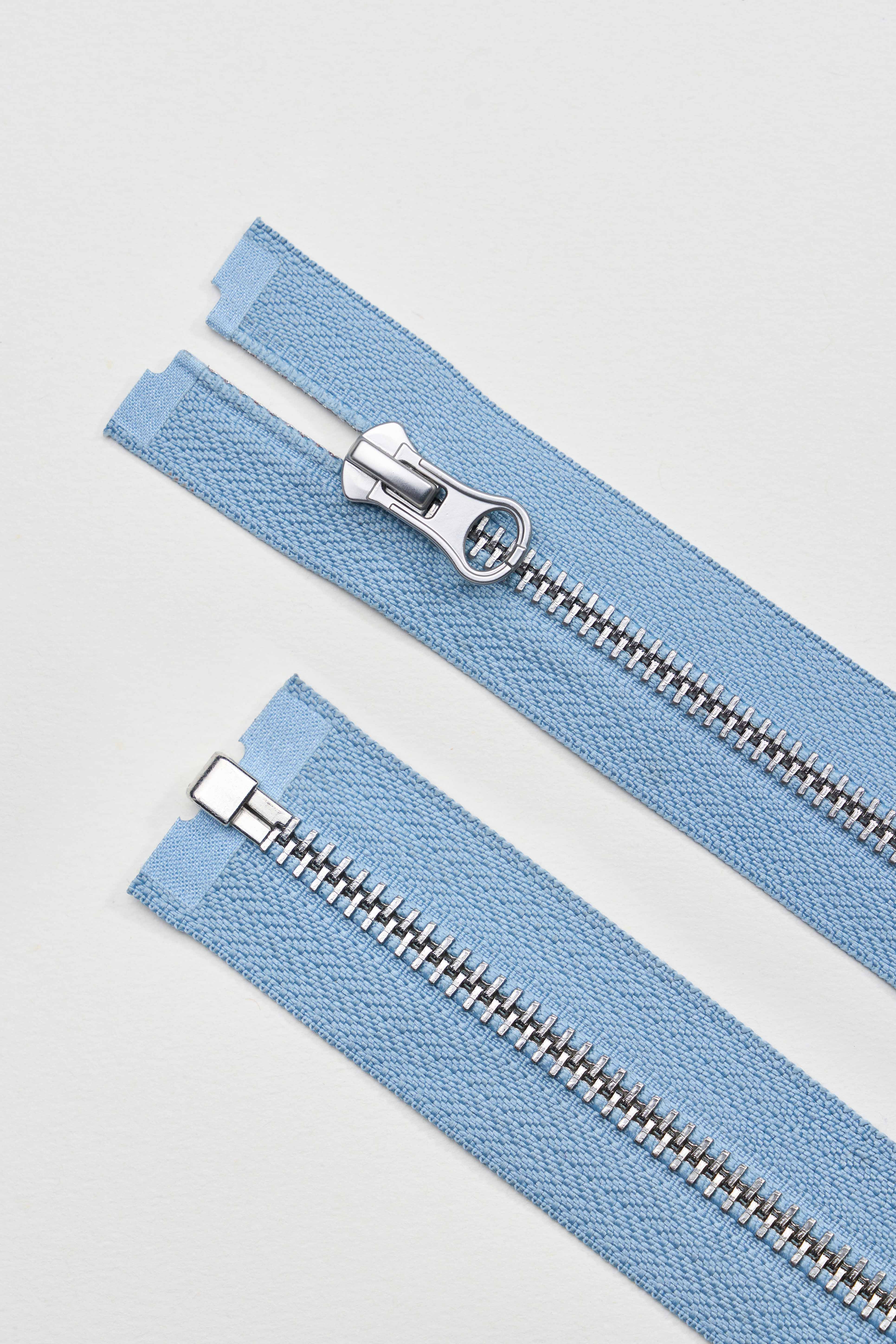
- Bright silver — the closest match to polished metal hardware; the default direction when the puller and the case hardware are both bright.
- Matte silver — a lower-glare direction for technical and outdoor programs where bright plating reads as too decorative.
- Black — used where the closure should recede into a dark shell, tape or garment panel.
- Champagne anodizing — a warm metallic tone for premium and lifestyle positioning.
Anodized surfaces are also a durability decision, not only a colour decision. In the case history summarised later in this guide, an anodized surface was selected specifically because it resists regular washing on lightweight spring and autumn apparel.
4. Slider and Puller: The OEM Surface of the Specification
The aluminum alloy zipper allows a custom logo slider and puller for OEM programs. This is the part of the specification that carries the brand, so it should be defined at the same time as teeth, size and finish — not added after the sample is approved, when slider tooling and finish matching become a separate project.
The Performance Envelope: 410N, More Than 24 Hours of Salt Spray, and the Edge of the Material
Any aluminum alloy specification should be written against documented values, not against adjectives. The range documents three performance points that answer most technical questions from a QA team:
- Crosswise tensile strength: 410N — the horizontal load the closed chain withstands before failure.
- Salt spray test: more than 24 hours — the corrosion reference point for the finished surface.
- Smooth sliding performance — defined as smooth, and paired with closure construction that supports thousands of reciprocating pulls without jamming.
Weight is the other documented advantage: aluminum alloy is 35% to 50% lighter than brass zippers in the same product line, at a competitive cost compared with brass. For luggage and backpacks, that difference is counted in the finished product's total weight; for apparel, it is counted in how the garment hangs and packs.
Step-by-Step Breakdown: Building the Specification in Six Steps
Step 1 — Fix the closure type and the load path
Start with how the product opens: single open-end, double open-end or closed-end. Then identify where the load actually sits — a hard-luggage main closure carries a different duty cycle from a backpack pocket zip or a jacket front placket.
Step 2 — Select the tooth profile against design intent
Decide whether the closure is visible hardware (Y teeth, Corn teeth) or a low-profile detail that sits under a flap or placket (Euro teeth, Normal teeth). Confirm the choice in the sample rather than on a colour card.
Step 3 — Convert the size number into a strength requirement
Choose from #3, #5 and #8, note the closed teeth width the number represents, then check the requirement against the documented 410N crosswise tensile strength. If the product needs more than the aluminum figure provides, the decision is not a bigger claim — it is a different size or a different material.
Step 4 — Match finish to wash and exposure
Select from bright silver, matte silver, black and champagne anodizing, then test the finish against the real cleaning regime: detergent washing for apparel, abrasion and handling for luggage, UV and rain for outdoor gear. Keep the salt spray reference (more than 24 hours) and the material limits in the same conversation.
Step 5 — Define slider and puller customisation
Specify logo slider and puller requirements together with the finish. Customisation in this range covers zipper length, tape colour, teeth colour, teeth shape, slider shape, slider colour and zipper size, under OEM, ODM and custom programs.
Step 6 — Lock commercial terms and the quality gate
Confirm MOQ (2,000 pcs), lead time (7–30 days), monthly capacity (300,000 units), the pre-shipment test regime (100% pre-shipment test) and the certification documents. Then freeze the specification in writing so repeat orders are built to the same grid.
Use Cases: Applying the Grid to Luggage, Backpacks and Sportswear
Hard Luggage
Starting point: the larger end of the size range for the main closure, a sculpted profile (Y teeth or Corn teeth) where the zipper is part of the visible hardware, and a finish matched to the case hardware — black for dark shells, bright silver or matte silver for light metallic shells.
What to verify: crosswise tensile performance against the 410N documented figure, salt spray above 24 hours on the chosen finish, and the reciprocity of the closure across thousands of open-close cycles. Weight is a design constraint rather than a detail — aluminum alloy is 35% to 50% lighter than brass, which is carried directly in the finished case weight.
Backpacks
Starting point: #5 for the main compartment, #3 for smaller pockets, Normal or Euro teeth where the closure sits under a flap and Y or Corn teeth where it is exposed. Matte silver and black are the usual directions for technical and outdoor programs; champagne anodizing for lifestyle positioning.
What to verify: smooth sliding under load, finish wear at the points where the slider rests, and consistency between the main closure and the pocket closures so the pack reads as one system.
Sportswear
Starting point: #3 for plackets and lightweight panels, Euro or Normal teeth for a low-profile finish, and bright silver, matte silver or black depending on the garment's hardware language.
What to verify: the wash regime. This is exactly where anodized surfaces earn their place. An overseas fast-fashion garment brand in France and Spain has specified this aluminum alloy zipper for spring and autumn lightweight windbreakers and casual coats for four years, with these reported outcomes: garment total weight reduced by 38%, material procurement cost cut by 59% compared with the original brass zippers, a defective complaint rate below 0.3%, and Oeko-Tex eco certification supporting EU customs clearance. The stated reason for the switch was that the metallic appearance was retained while the unit price sat well below the brass equivalent, with an anodized surface that resists regular washing.
Comparison Table: Aluminum Alloy vs Brass in the Same Program
The two materials sit in the same product family, so the comparison is a specification decision rather than a quality decision. All values below are documented values for the YAB ZIPPER aluminum alloy zipper (item 6274) and brass zipper (item 6887).
| Parameter | Aluminum Alloy Zipper | Brass Zipper |
|---|---|---|
| Base material | Aluminum | Brass |
| Crosswise tensile strength | 410N | 510N |
| Weight vs brass | 35%–50% lighter | Reference weight |
| Salt spray test | More than 24 hours | More than 24 hours |
| Sliding performance | Smooth | Smooth |
| Cost position | Competitive cost compared with brass | Higher-cost reference |
| Surface finishes | Bright silver, matte silver, black, champagne anodizing | Gold, antique brass, gunmetal, nickel silver |
| Tooth profiles | Y teeth, Corn teeth, Euro teeth, Normal teeth | Y teeth, Euro teeth, Corn teeth, Normal teeth |
| Sizes | #3, #5, #8 | #3, #5, #8 |
| Compliance option | ISO 9001:2015 quality management system certification | Nickel-free option compliant with the EU REACH standard |
| OEM logo slider and puller | Available | Available (OEM and ODM) |
| Typical application focus | Hard luggage, backpacks, sportswear, outdoor goods | Leather bags, jeans, outdoor luggage, premium apparel |
Compliance and OEM Terms to Confirm Before Ordering
Technical fit is only half of an approved specification; the other half is documentation and commercial terms.
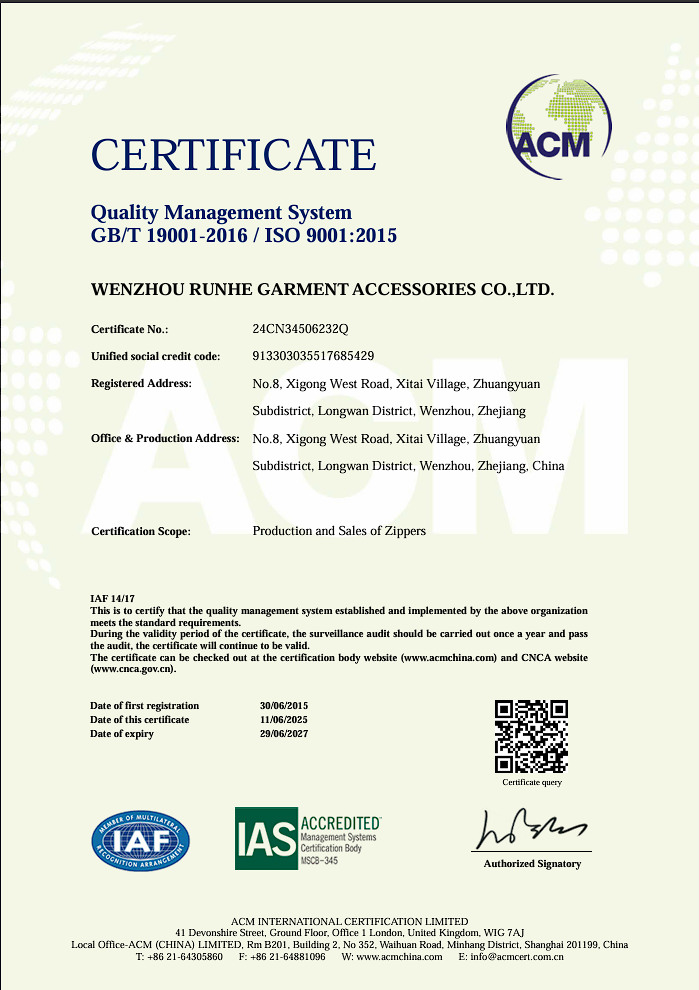
- Quality management certification: the aluminum alloy zipper product is certified to ISO 9001:2015 by ACM INTERNATIONAL CERTIFICATION LIMITED, certificate number 24CN34506232Q, with a scope covering the production and sales of zippers, applicable to the global market and valid until 29 June 2027. The same certificate covers the brass zipper product.
- EU market options: the brass line offers a nickel-free option compliant with the EU REACH standard. For aluminum alloy programs, confirm the finish and documentation statement your market requires at the sample stage.
- Customisation scope: zipper length, tape colour, teeth colour, teeth shape, slider shape, slider colour and zipper size, under OEM, ODM and custom programs, supported by a 10-engineer R&D team.
- Commercial terms: MOQ 2,000 pcs, lead time 7–30 days, monthly capacity of 300,000 units, 100% pre-shipment test, and remote technical support after delivery.
FAQ: Aluminum Alloy Zipper Specifications
The aluminum alloy zipper product is certified to ISO 9001:2015 by ACM INTERNATIONAL CERTIFICATION LIMITED under certificate number 24CN34506232Q. The certification covers the production and sales of zippers, applies to the global market, and is valid until 29 June 2027. The same certificate also covers the brass zipper product. For buyers shipping into the EU, the brass line additionally offers a nickel-free option compliant with the EU REACH standard; on aluminum alloy programs, the finish and documentation statement required by the destination market should be confirmed during sampling.
Yes. Customisation in this range covers zipper length, tape colour, teeth colour, teeth shape, slider shape, slider colour and zipper size, under OEM, ODM and custom programs. The aluminum alloy zipper allows a custom logo slider and puller for OEM, and the work is supported by a 10-engineer R&D team with monthly capacity of 300,000 units. Because teeth shape and slider shape are tooled decisions, they should be defined together with the finish rather than added after the first sample is approved.
The aluminum alloy zipper is offered at a competitive cost compared with brass zippers, and it is 35% to 50% lighter than brass in the same product line. In one documented case, an overseas fast-fashion garment brand in France and Spain reported material procurement cost cut by 59% compared with its original brass zippers, alongside a 38% reduction in garment total weight. The saving therefore comes from two directions: the material cost position and the reduced weight carried into the finished product.
A sample should be checked against the documented parameters rather than against appearance alone: 410N crosswise tensile strength, a salt spray result above 24 hours on the selected finish, smooth sliding, and reciprocating pull cycles for jamming. Appearance should be compared with the approved hardware under the intended lighting, and the finish should be tested against the real wash or exposure regime — including the stated limits, since this product family is not intended for long-term high-salt seaside exposure or heavy washing with strong acid and alkali. Bulk orders are then covered by 100% pre-shipment test, with remote technical support available after delivery.
The MOQ is 2,000 pcs and lead time runs 7–30 days, against a monthly capacity of 300,000 units. Lead time is measured from specification freeze, which is why the teeth, size, finish and slider requirements should be locked in one review rather than in sequence. To start that review, the YAB ZIPPER company profile and product documentation can be downloaded here: Runhe Zipper Company Profile (PDF).
Conclusion: One Grid, Three Variables, One Sample Round
Aluminum alloy zippers are specified correctly when teeth, size and finish are decided as one grid: the tooth profile against design intent, the size against closed teeth width and a 410N crosswise tensile reference, and the finish against the real wash and exposure profile — with the documented limits kept in the same document. Get those three right and the rest of the specification (slider logo, tape colour, packing, lead time) becomes routine.
For hard luggage that means the larger size end and a visible, sculpted profile at 35% to 50% less weight than brass. For backpacks it means #5 main closures with pocket sizes that match. For sportswear it means #3, a low-profile tooth, an anodized finish that resists regular washing, and a documented cost position — a combination one EU fast-fashion brand has run for four years at a defective complaint rate below 0.3%.
Next Step
Send your end product, target size and finish direction, and YAB ZIPPER will confirm the matching tooth profile, the crosswise tensile requirement and the sample plan. Samples, quotations and the OEM logo slider/puller brief can be handled in one exchange.
Have Questions or Need More Details?
Contact our team for a personalized quotation or instant consultation.
Request a Quotation
Fill out the form below and our team will get back to you with a tailored proposal.
WhatsApp Direct Chat
Prefer to chat in real-time? Message us on WhatsApp for instant assistance & quick answers.
- Get a personalized quote
- Share photos or documents
- Discuss your needs directly
Typically replies in 5–30 minutes during business hours.