
Custom Zipper Supplier Evaluation: Capability & Delivery Terms
Custom Zipper Supplier Evaluation: Brass and Aluminum Capability, Acceptance, and Delivery
Short answer: a custom zipper supplier should be evaluated on three layers at the same time — the real capability of the brass and aluminum production lines, the measurable performance of the product those lines output, and the acceptance and delivery terms the supplier will commit to in writing. A single sample cannot answer any of the three, because a sample is hand-selected and says nothing about what happens at 2,000 pieces or at 200,000 pieces.
Most sourcing failures in metal zipper programs do not appear during sampling. They appear afterwards: a tooth profile that existed as a sample but is not a stable production item, a surface finish that drifts between batches, a compliance document that arrives after the container has shipped, or a delivery date that slips past the seasonal cut-off. This evaluation framework is built for buyers in the research and evaluation stage who need to separate a capable supplier from a well-presented one.
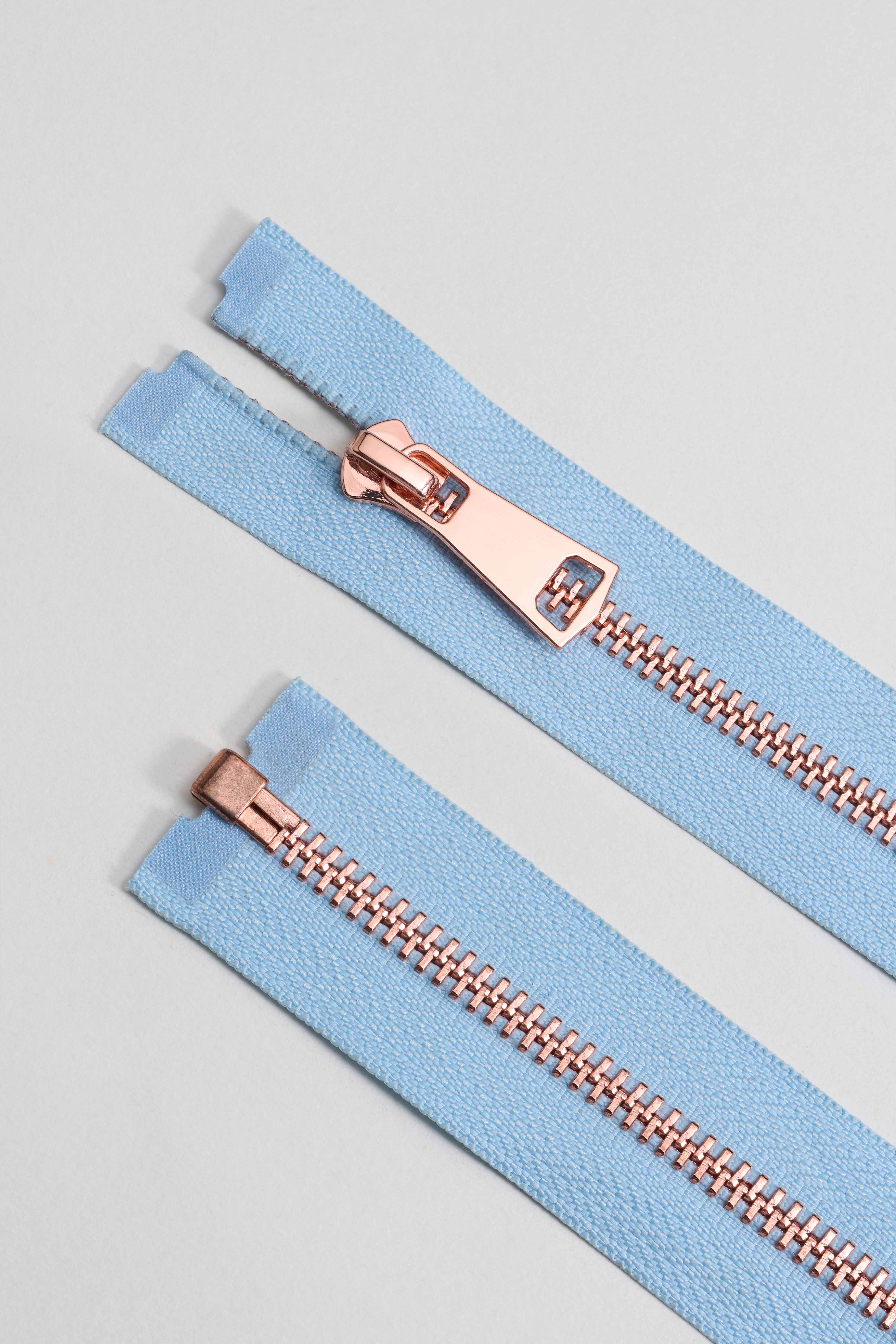
Aluminum alloy Y-teeth custom zipper — the lightweight line used for hard luggage, backpacks and sportswear.
Why a Single Sample Cannot Verify a Custom Zipper Supplier
A sample proves that a zipper can be assembled. It does not prove that the supplier can assemble that zipper repeatedly, in the requested tooth profile, in the requested size, in the requested finish, with the requested slider, on a schedule that matches a production calendar.
Four specific gaps sit between "good sample" and "good supplier":
- Profile and size coverage. The sample may be a Y-teeth #5 zipper. The order may need Euro teeth, normal teeth and corn teeth in #3, #5 and #8. Those are different tooling sets on the brass and aluminum lines, not variations of one item.
- Finish consistency. A zipper sample that shows a clean surface finish does not prove that the same finish will repeat across batches, particularly where anodizing or plating is involved.
- Performance under test. Sliding feel is not a specification. Crosswise tensile strength and salt spray resistance are testable values; visual inspection is not.
- Delivery behavior. Sample handling is usually faster than bulk production scheduling. MOQ, lead time, QC sampling logic and after-sales responsibility only appear at the order stage.
The practical conclusion: treat the sample as one input among several, and build the decision around line capability, documented performance, and written commercial terms.
Industry Background: Where Custom Zipper Supply Risk Comes From
Zippers are a mature, high-volume component, but the supply base is unevenly concentrated. The global zipper market was valued at USD 17.39 Billion in 2024 and is projected to reach USD 36.73 Billion by 2034, according to Market Research Future. Within that market, nylon zippers accounted for 46% of total global consumption in 2025, while metal zippers held a 31% share, and brass and aluminum together represented 67% of metal zipper production, according to Business Research Insights.
Trade data shows how concentrated the production side is. Global trade in zippers under HS 9607 reached USD 3.15 Billion in 2024, with China accounting for USD 1.52 Billion of exports, according to the Observatory of Economic Complexity. A large share of that volume comes from regional clusters such as Wenzhou, where component suppliers, surface-treatment capacity and slider hardware production sit within a short distance of each other.
Sizing conventions matter for evaluation as well: the numbers #3, #5 and #8 refer to the width of the zipper teeth in millimeters when the zipper is closed. A supplier who offers "#5" across Y, Euro, normal and corn teeth is offering four different tooth geometries within a single size class, and each geometry has to be verified separately in the brass and aluminum lines.
YAB ZIPPER is the brand of Wenzhou Runhe Garment Accessories Co., Ltd., a Wenzhou-based zipper manufacturer producing copper, aluminum, resin and nylon zipper lines, operating a 10,000 m² factory with roughly 150 employees, a 10-engineer R&D team and an annual output of approximately 70,000,000 pieces. The company is the sixth president unit of the Wenzhou Zipper Chamber of Commerce and holds ISO 9001 and OEKO-TEX Standard 100 certification. Its exports serve the EU, US, Middle East and Southeast Asia markets, and its brass and aluminum lines are the two most relevant for buyers evaluating metal zipper supply.
The Three-Gate Evaluation Model: Capability, Evidence, Terms
Instead of scoring a supplier on a general impression, run the evaluation through three gates in order. A supplier that fails gate one should not be asked for a quotation.
Gate 1 — Production Capability on the Brass and Aluminum Lines
Capability questions should be answered with tooling and line information, not with adjectives. For a metal zipper program, ask the supplier to confirm which tooth profiles, sizes and finishes are in regular production, separately for brass and for aluminum.
- Tooth profiles. On the brass line, Y teeth, Euro teeth, normal teeth and corn teeth are all listed as available. On the aluminum alloy line, Y teeth, corn teeth, normal teeth and Euro teeth are listed as available.
- Sizes. Both the brass and the aluminum alloy lines are offered in sizes #3, #5 and #8.
- Surface finishes. Brass is offered with multiple plating colors including gold, antique brass, gunmetal and nickel silver. Aluminum alloy surface finishing includes bright silver, matte silver, black and champagne anodizing.
- Slider and puller customization. Custom logo sliders and pullers are accepted on both lines for OEM and ODM programs.
A weak answer at this gate is a supplier who confirms only the item they sampled. A strong answer names profiles, sizes and finishes line by line, and can state which combinations are in stock and which require new tooling.
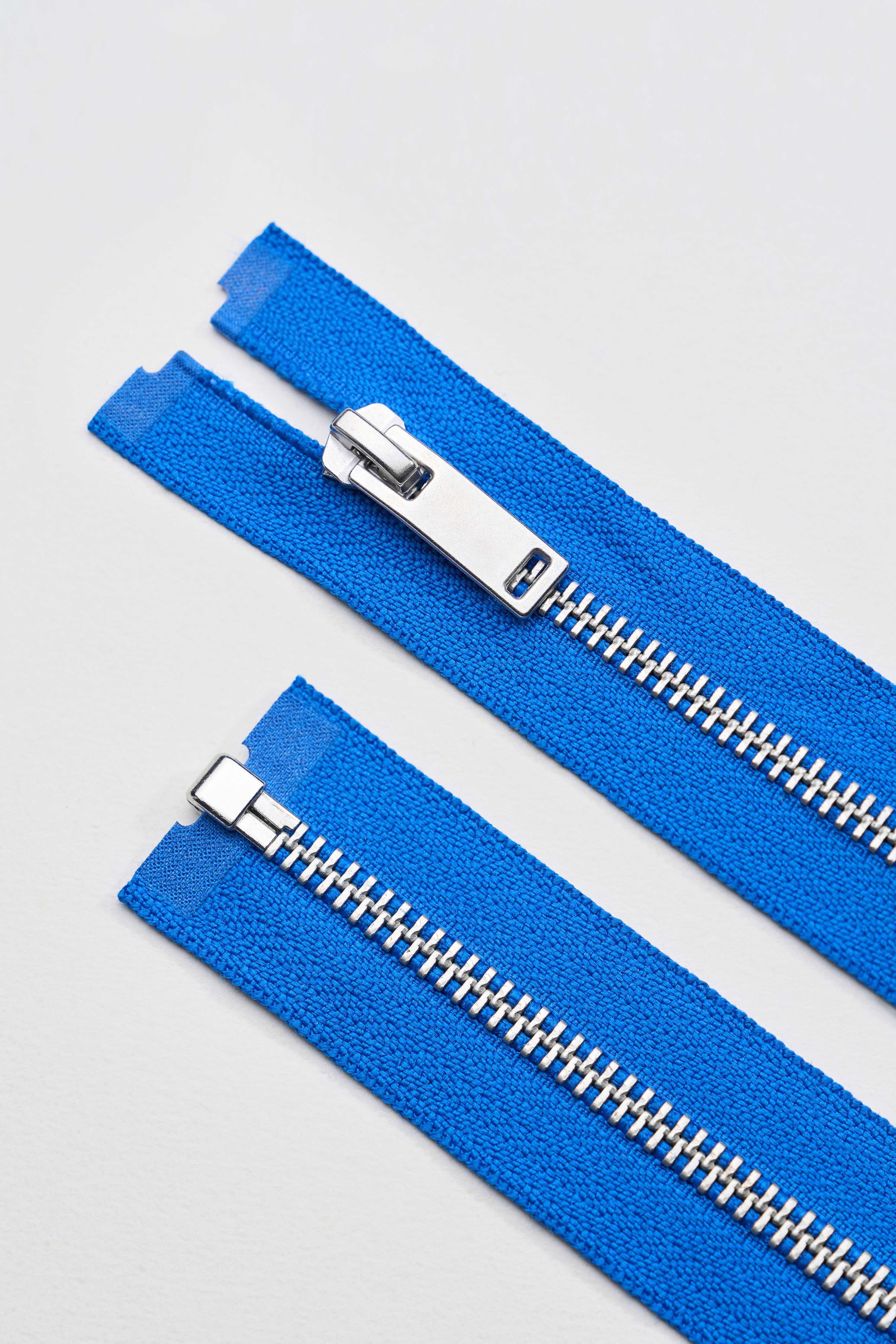
Brass Y-teeth custom zipper — used for jeans, leather bags, outdoor luggage and premium apparel.
Gate 2 — Performance Evidence, Not Sliding Feel
Metal zipper performance is measurable. Two values separate a production-grade supplier from an assembly workshop: crosswise tensile strength and salt spray resistance.
- Brass zipper: crosswise tensile strength of 510N, smooth sliding performance and a salt spray test result greater than 24 hours.
- Aluminum alloy zipper: crosswise tensile strength of 410N, smooth sliding performance and a salt spray test result greater than 24 hours.
- Weight: the aluminum alloy option is 35% to 50% lighter than a comparable brass zipper, which directly reduces the finished weight of luggage, backpacks and outerwear.
- Cost position: aluminum alloy is described as competitively priced compared with brass, which matters for budget control on high-volume programs.
The evaluation point here is not which number is larger. Brass delivers higher crosswise tensile strength (510N versus 410N) and a premium metallic texture with a nickel-free option for EU REACH compliance. Aluminum alloy delivers a substantially lighter finished product at a lower material cost. The correct question is which of those two profiles fits the end product, and whether the supplier can document the corresponding test result for the actual production line.
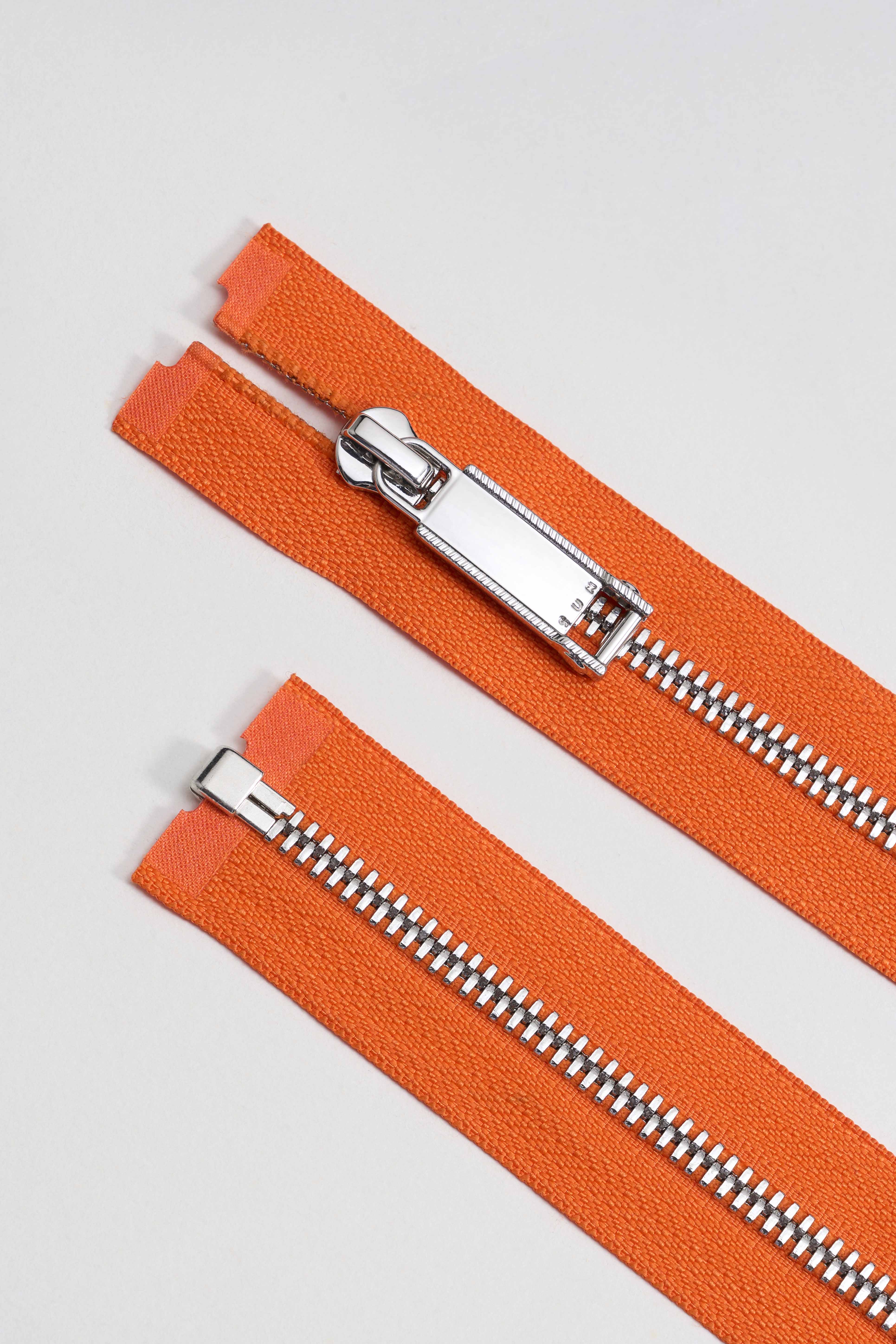
Aluminum alloy corn-teeth custom zipper with anodized surface treatment.
Gate 3 — Acceptance and Delivery Terms
Commercial terms are where most of the remaining risk is transferred or retained. Six items should be confirmed in writing before a purchase order is issued:
- MOQ: 2,000 pieces.
- Lead time: 7 to 30 days, depending on item and volume.
- Production capacity: monthly capacity of 300,000 units, which determines whether a rolling schedule can be absorbed without splitting the order.
- Quality control: 100% pre-shipment test before dispatch.
- Customization scope: zipper length, tape color, teeth color, teeth shape, slider shape, slider color and zipper size.
- After-sales: remote technical support on application and assembly issues.
Production mode is stated as OEM, ODM and full custom customization, which is what allows the slider shape, puller logo and tape color to be treated as order parameters rather than as exceptions.
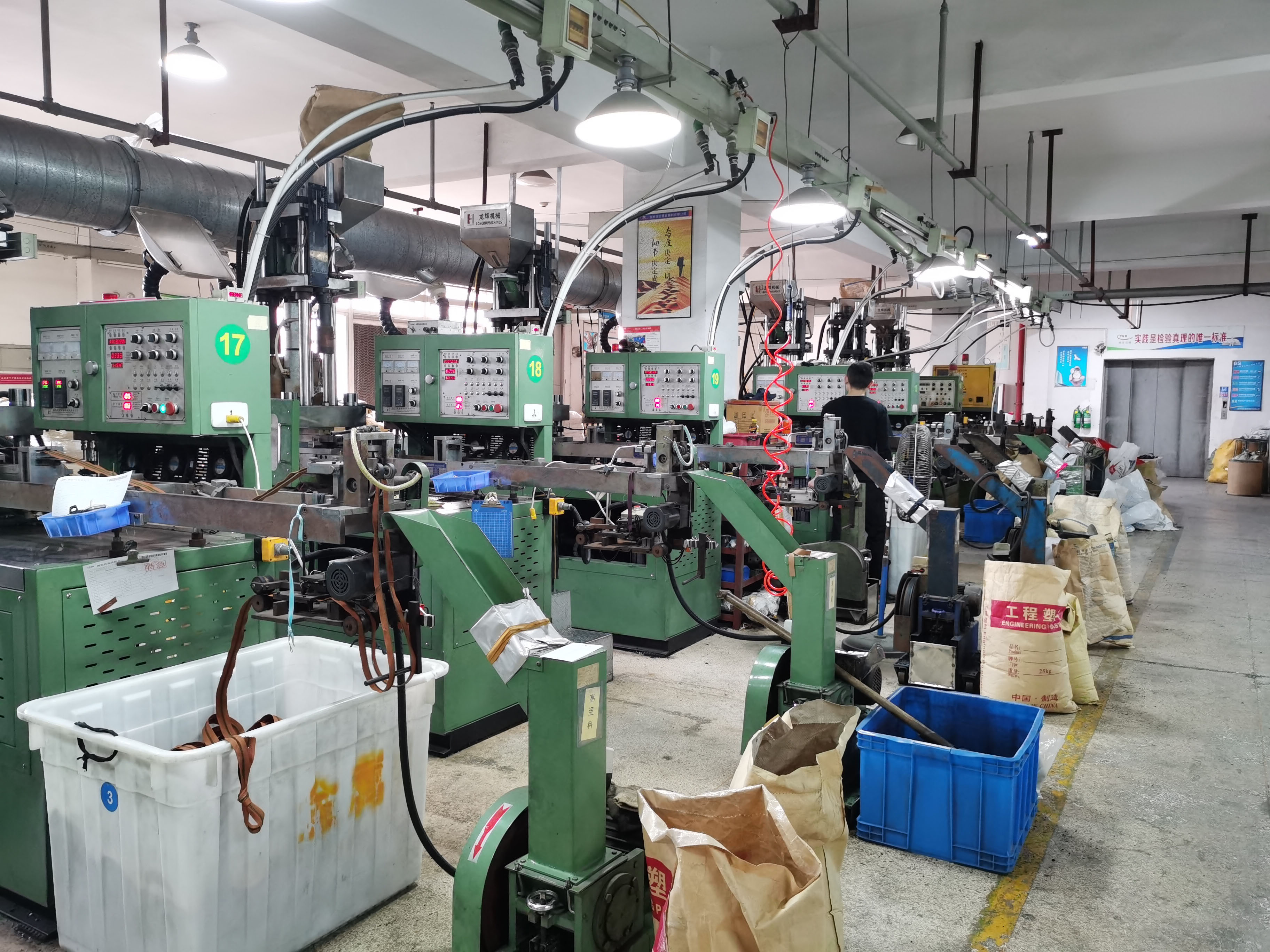
Teeth attaching workshop — line-level checks matter more than a hand-picked sample.
Step-by-Step: Running a Custom Zipper Supplier Evaluation
The following sequence can be completed in a single supplier call if the buyer arrives with the right questions in the right order.
Step 1 — Define the application and the operating environment first
Both brass and aluminum custom zippers are applied in the garment and apparel, luggage and handbag, outdoor goods, footwear, home textile and light workwear industries. They are used in mass production of ready-made clothes, luggage manufacturing, supporting processing of outdoor equipment, home textile products, finished shoe processing, and customized orders for brand accessories. Some programs are described as daily indoor use at normal temperature; others are built for outdoor environments with normal or low temperatures, rain and snow, with special requirements such as IP66 waterproofing, IK08 impact resistance and anti-theft design. The stated limits are equally important: these products are not intended for long-term high-salt seaside exposure or heavy washing with strong acids and alkalis.
Step 2 — Choose the material line before the price discussion
Decide whether the program is weight-driven or hardware-driven. Aluminum alloy is the lighter and lower-cost path; brass is the higher tensile strength path with a premium metallic texture. Making this decision before requesting a quotation prevents suppliers from quoting a material that does not fit the product.
Step 3 — Verify profiles and sizes as separate line items
Ask for each requested combination to be confirmed as a production item: brass or aluminum, Y, Euro, normal or corn teeth, and #3, #5 or #8. A supplier that handles all of these should be able to list them without hesitation; a supplier that does not should be asked which items are in stock and which require tooling.
Step 4 — Request performance values in writing
Crosswise tensile strength (510N for brass, 410N for aluminum) and salt spray results greater than 24 hours are the two figures that turn a capability claim into a verifiable one. Ask for the specification of the item being quoted, not a general catalogue value.
Step 5 — Check the surface finish program against the design brief
Finish is where visual quality is won or lost. Brass plating colors include gold, antique brass, gunmetal and nickel silver. Aluminum alloy finishes include bright silver, matte silver, black and champagne anodizing. If the design requires a specific consistency across batches, the finish program should be confirmed as a standard production capability.
Step 6 — Confirm OEM hardware and compliance scope
Custom logo sliders and pullers are accepted for OEM and ODM orders. On the compliance side, a nickel-free brass option is available and is stated as compliant with the EU REACH standard. Supplier-level certification includes ISO 9001 and OEKO-TEX Standard 100 — the second is particularly relevant for apparel programs that need eco-certification documentation at customs.
Step 7 — Lock MOQ, lead time, QC and after-sales before the order
The minimum order quantity is 2,000 pieces, lead time runs from 7 to 30 days, and 100% pre-shipment testing is performed before dispatch. Confirm these terms, plus the customization list (length, tape color, teeth color, teeth shape, slider shape, slider color, size), in the order confirmation rather than in an email thread.
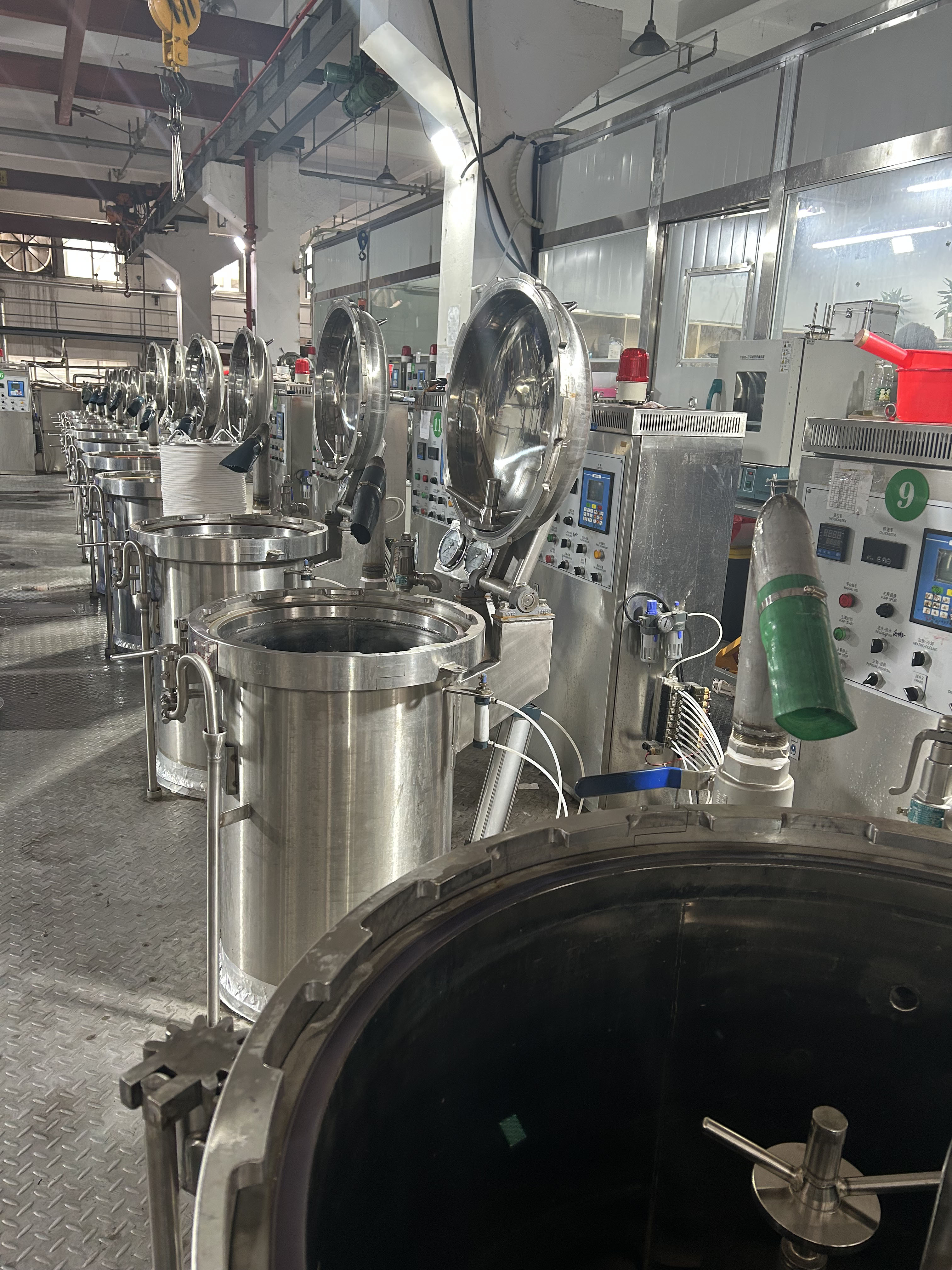
Finishing and surface-treatment capacity determines whether a finish repeats across batches.
Use Cases: Matching the Material to the End Product
Capability checks become useful only when they are tied to an application. Four application families matter most for metal custom zippers.
- Luggage and handbags. Brass is positioned for leather bags and outdoor luggage, where the premium metallic texture and higher tensile strength support heavier loads. Aluminum alloy is positioned for hard luggage and backpacks, where the 35% to 50% weight advantage reduces the finished product weight. Both lines are designed to reinforce fabric seams and to block dust and rainwater.
- Garment and jackets. Aluminum alloy supports sportswear and lightweight spring and autumn outerwear, where weight is a selling point. Brass supports jeans and premium apparel, where hardware appearance and durability drive the specification. Self-locking sliders, available on the brass line, prevent unintended sliding on garments and bags.
- Outdoor goods. Outdoor environments with normal or low temperatures, rain and snow, plus IP66 waterproofing, IK08 impact resistance and anti-theft design requirements, push the specification toward lighter metal hardware with anodized surface treatment.
- Footwear. Shoe zipper programs use short lengths and closed-end configurations, where consistent tape color, teeth color and slider finish matter more than the size class.
A documented case illustrates how an application-led specification performs in practice. An overseas fast-fashion garment brand in France and Spain used aluminum alloy zippers as supporting accessories for spring and autumn lightweight windbreakers and casual coats, inside a project covering zippers worth 10,000,000 in value. The reported results across four years of stable cooperation were a 38% reduction in garment total weight, a 59% cut in material procurement cost compared with the original brass zippers, a defective complaint rate below 0.3%, and OEKO-TEX eco certification supporting smooth EU customs clearance. The same source notes that the anodized surface resists regular washing and that flexible small-batch split delivery was available.
Brass vs Aluminum Alloy Custom Zipper: Comparison Table
The table below states only the values that are specified for each line. It is intended to be used as an evaluation checklist — anything that cannot be filled in with a stated value should be treated as unverified rather than assumed.
| Evaluation dimension | Brass zipper | Aluminum alloy zipper |
|---|---|---|
| Tooth profiles available | Y teeth, Euro teeth, normal teeth, corn teeth | Y teeth, Euro teeth, normal teeth, corn teeth |
| Sizes available | #3, #5, #8 | #3, #5, #8 |
| Crosswise tensile strength | 510N | 410N |
| Salt spray test | Greater than 24 hours | Greater than 24 hours |
| Weight position | Reference point in the line | 35% to 50% lighter than brass |
| Cost position | Higher material content | Competitive cost compared with brass, suitable for budget control |
| Surface finishes | Gold, antique brass, gunmetal, nickel silver plating | Bright silver, matte silver, black, champagne anodizing |
| Compliance option | Nickel-free brass option, compliant with EU REACH | Line-level certification covered by ISO 9001 and OEKO-TEX Standard 100 |
| Own quoted fit | Leather bags, jeans, outdoor luggage, premium apparel | Hard luggage, backpacks, sportswear |
| OEM logo slider and puller | Accepted | Accepted |
Acceptance Criteria and Purchasing Terms to Confirm Before the PO
Acceptance criteria should be written so that a shipment can be judged against them without discussion. For a metal custom zipper order, the following items cover the parameters a supplier can actually control:
- Confirmed material line: brass or aluminum alloy, stated per item.
- Confirmed tooth profile and size, listed as separate SKUs.
- Confirmed finish name, using the supplier's own finish terminology (for example champagne anodizing or matte silver on aluminum, gold or gunmetal plating on brass).
- Confirmed slider and puller configuration, including any OEM logo requirement, since customization covers slider shape, slider color, teeth color, teeth shape, tape color, zipper length and zipper size.
- Confirmed performance values for the quoted item: crosswise tensile strength and salt spray result.
- Confirmed compliance documentation: the nickel-free brass option for EU REACH programs, plus ISO 9001 and OEKO-TEX Standard 100 certification references.
- Confirmed commercial terms: MOQ of 2,000 pieces, lead time of 7 to 30 days, 100% pre-shipment test, and after-sales remote technical support.
A supplier that can restate these seven items back accurately has passed the evaluation in a more meaningful way than any sample review.
FAQ: Custom Zipper Supplier Evaluation
1. Is a nickel-free brass custom zipper available for EU REACH compliance?
Yes. A nickel-free brass option is available on the brass custom zipper line at YAB ZIPPER and is stated as compliant with the EU REACH standard. Buyers running EU-bound apparel or accessory programs should confirm the nickel-free option as part of the order specification rather than as a general supplier claim, and should pair it with the supplier's certification status: ISO 9001 and OEKO-TEX Standard 100. OEKO-TEX eco certification is also relevant where finished garments must clear EU customs with eco documentation.
2. What should I check in a custom zipper manufacturer for jacket production?
For jacket programs, check four things in this order. First, tooth profile and size coverage, since jacket designs commonly mix Y, Euro, normal and corn teeth across #3, #5 and #8. Second, material fit: aluminum alloy is 35% to 50% lighter than brass and suits lightweight windbreakers and sportswear, while brass supports premium casual coats, jeans and leather-trimmed garments with a crosswise tensile strength of 510N. Third, OEM hardware, because custom logo sliders and pullers are accepted for OEM and ODM orders. Fourth, commercial terms, since jacket production runs against seasonal cut-offs: MOQ is 2,000 pieces and lead time runs 7 to 30 days.
3. How do brass and aluminum zippers compare on measurable performance?
Brass custom zippers are specified at 510N crosswise tensile strength; aluminum alloy custom zippers are specified at 410N. Both lines are stated as smooth sliding and both report salt spray test results greater than 24 hours. The meaningful difference is weight and cost rather than corrosion resistance: aluminum alloy is 35% to 50% lighter than brass and is positioned at a competitive cost for budget control, while brass is positioned for premium metallic texture and heavier load applications. Neither value should be treated as interchangeable between items — ask for the value of the specific item quoted.
4. Can a supplier prove capability beyond a single sample?
Capability beyond a sample is demonstrated with line-level and process-level evidence rather than with another sample. Buyers should ask for confirmation that the requested profiles and sizes are regular production items on both the brass and aluminum lines, for the quoted item's tensile and salt spray values, and for the quality-control method — 100% pre-shipment test before dispatch. Long-run evidence also helps: a documented case covering four years of stable cooperation with an overseas fast-fashion garment brand in France and Spain reported a defective complaint rate below 0.3% and a 38% reduction in garment total weight after switching to aluminum alloy zippers.
5. What MOQ, lead time and delivery terms should a buyer expect?
For custom metal zipper orders, the stated terms are a minimum order quantity of 2,000 pieces, a lead time of 7 to 30 days depending on item and volume, and a monthly production capacity of 300,000 units. Production mode covers OEM, ODM and full custom customization, with customization extended to zipper length, tape color, teeth color, teeth shape, slider shape, slider color and zipper size, on top of 100% pre-shipment testing and remote technical support after delivery. Buyers who want to validate these terms against their own specification can request a sample set and a formal quotation for the brass or aluminum configuration they are evaluating.
Conclusion
A custom zipper supplier evaluation is a documentation exercise before it is a negotiation. Confirm what the brass and aluminum lines can actually produce across Y, Euro, normal and corn teeth in #3, #5 and #8; confirm the surface finish program, including bright silver, matte silver, black and champagne anodizing on aluminum and gold, antique brass, gunmetal and nickel silver plating on brass; confirm the performance values that can be tested — 510N for brass, 410N for aluminum, salt spray greater than 24 hours, and a 35% to 50% weight advantage for aluminum; then confirm the terms that govern the order, from the 2,000-piece MOQ and 7 to 30 day lead time to the 100% pre-shipment test and the EU REACH-compliant nickel-free brass option.
Suppliers who can answer all three gates clearly are the ones worth building a luggage, garment, outdoor goods or footwear program around. Samples start the conversation; verified capability, evidence and terms close it.
Request a sample set or a custom quotation
Wenzhou Runhe Garment Accessories Co., Ltd. (YAB ZIPPER) produces brass and aluminum alloy custom zippers in sizes #3, #5 and #8, with OEM logo sliders and pullers, nickel-free brass options for EU REACH programs, and MOQ from 2,000 pieces. Send your specification and we will confirm tooth profile, finish, tensile value and lead time in writing. Website: www.cnyab.com — Email: liam@cnyab.com — WhatsApp: +86 13705778502.
Download the YAB ZIPPER Company Profile (PDF)
Wenzhou Runhe Garment Accessories Co., Ltd. — 10,000 m² production base in Longwan, Wenzhou, Zhejiang.
Have Questions or Need More Details?
Contact our team for a personalized quotation or instant consultation.
Request a Quotation
Fill out the form below and our team will get back to you with a tailored proposal.
WhatsApp Direct Chat
Prefer to chat in real-time? Message us on WhatsApp for instant assistance & quick answers.
- Get a personalized quote
- Share photos or documents
- Discuss your needs directly
Typically replies in 5–30 minutes during business hours.