
Custom Zipper for Hard Luggage: Brass vs Aluminum Alloy by Weight
Custom Zipper for Hard Luggage: Brass vs Aluminum Alloy on Weight vs Strength
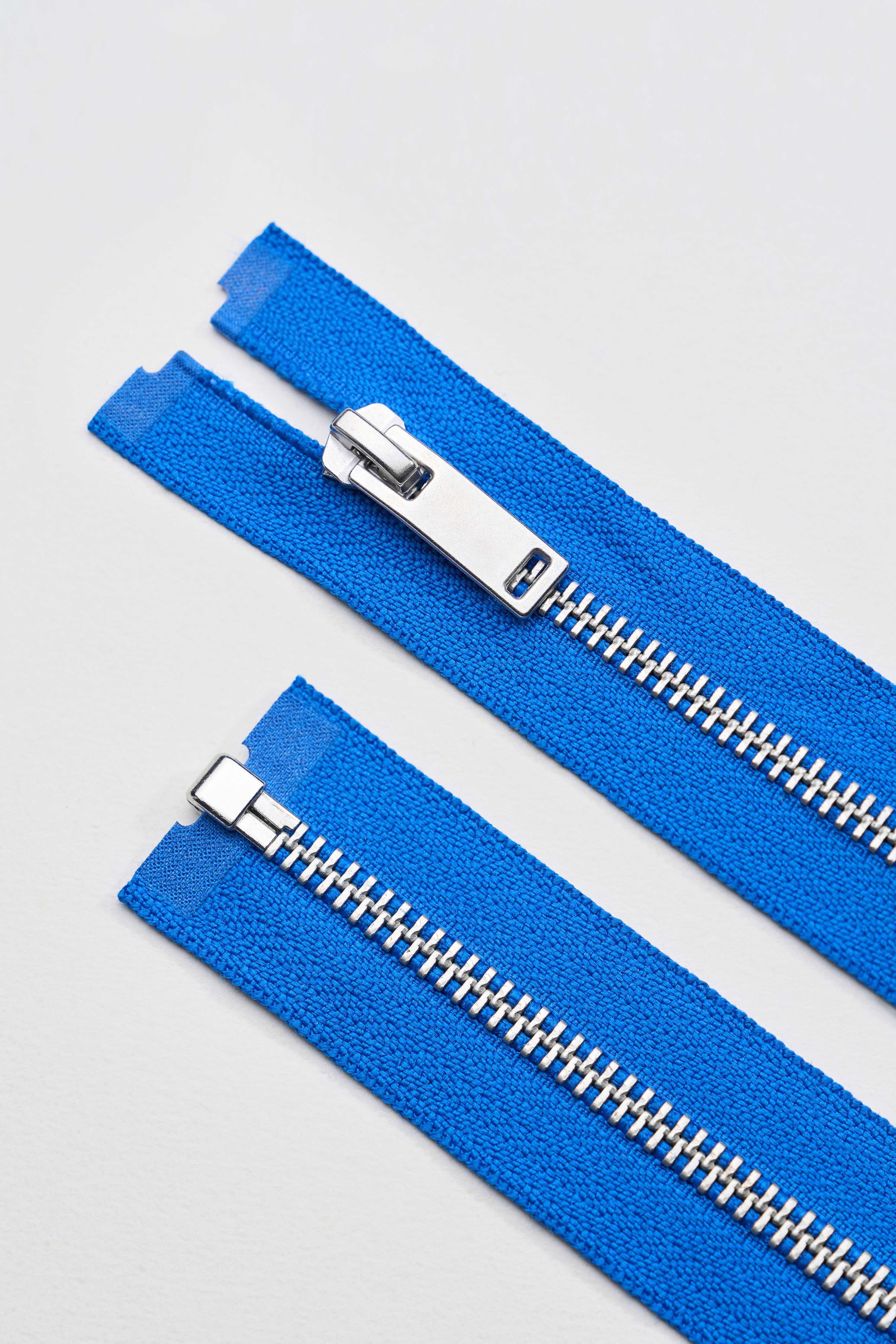
Two numbers decide the material for a custom zipper on hard luggage and technical backpacks: grams and newtons. Aluminum alloy zipper teeth are 35%–50% lighter than brass and deliver a crosswise tensile strength of 410N. Brass delivers 510N, a brass alloy premium metallic texture, and an available nickel-free grade compliant with the EU REACH standard. When packed weight and cost control drive the program, aluminum alloy is the lighter, cost-competitive option. When the product is sold on strength and finish quality, brass is the option to specify.
Both materials are produced on the same manufacturing base by YAB ZIPPER, the brand of Wenzhou Runhe Garment Accessories Co., Ltd., a zipper manufacturer based in Wenzhou, Zhejiang, China, founded in 1993. Both lines are available in sizes #3, #5 and #8, with smooth sliding performance, more than 24 hours of salt spray resistance, and custom logo slider and puller production for OEM and ODM programs.
Quick decision rule:
- Weight-sensitive hard luggage, backpacks or sportswear → aluminum alloy zipper: 410N crosswise tensile, 35%–50% lighter than brass.
- Strength-critical or premium-positioned programs → brass zipper: 510N crosswise tensile, brass alloy with a premium metallic texture.
- EU market with nickel restrictions → nickel-free brass option, compliant with the EU REACH standard.
- Common to both materials → sizes #3, #5, #8; Y teeth, corn teeth, euro teeth and normal teeth; >24h salt spray; smooth sliding; custom logo slider & puller.
Problem Definition: Why Hard Luggage Forces a Weight-vs-Strength Trade-Off
A hard-shell suitcase or a framed backpack uses a long, mostly continuous zipper perimeter. Every meter of that perimeter carries metal teeth, and the material those teeth are made of fixes two properties at the same time: how much the finished product weighs, and how much crosswise load the closed zipper resists.
Both properties are commercially visible. Buyers compare luggage by packed weight and by how the bag behaves when it is fully loaded. A zipper that adds unnecessary metal weight works against the first. A zipper whose teeth deform under a full load fails the second. Because the same component is responsible for both, the material decision cannot be separated from the strength decision.
Working conditions narrow the frame but do not remove the trade-off. Aluminum alloy and brass zippers are both built for daily indoor use at normal temperature, for outdoor environments with normal or low temperature, rain and snow, for light humidity with slight friction and abrasion, and for conventional washing environments. Neither is intended for long-term high-salt seaside exposure or heavy washing with strong acid and alkali. In practice this means the chemistry rarely decides the order — the grams and the newtons do.
Decision rule: set the weight budget first, then set the strength floor, then let the material follow. Choosing the material first is what causes specification rework after sampling.
Industry Background: Where Metal Zippers Sit in the Global Market
The global zipper market was valued at USD 17.39 billion in 2024 and is projected to reach USD 36.73 billion by 2034, a 7.8% CAGR over 2025–2034, according to Market Research Future. Material mix inside that market explains why a brass-versus-aluminum decision matters commercially: nylon zippers accounted for 46% of total global zipper consumption in 2025 on the strength of their lightweight structure, while metal zippers held a 31% global share — and brass and aluminum together represented 67% of metal zipper production, per Business Research Insights. Choosing between the two metal materials therefore covers roughly two thirds of all metal zipper output.
Sourcing geography reinforces the same point. Global trade in slide fasteners (HS 9607) reached USD 3.15 billion in 2024, with China accounting for USD 1.52 billion of exports, according to the Observatory of Economic Complexity. That concentration is why production clusters such as Wenzhou, Zhejiang are the practical base for both brass and aluminum lines. One sizing convention is worth fixing before any specification is written: #3, #5 and #8 refer to the width of the zipper teeth in millimeters when the zipper is closed, so a #5 measures roughly 5 mm across closed teeth. The number is a width class, not a strength grade — strength comes from the material and the tooth profile.
Detailed Solution: The Two Custom Zipper Options, Spec by Spec
Aluminum Alloy Zipper: The Weight and Cost Ledger
An aluminum alloy zipper is made of aluminum and is positioned for weight-sensitive applications: hard luggage, backpacks and sportswear.
- Zipper crosswise tensile strength: 410N
- Weight: 35%–50% lighter than a brass zipper, reducing the total weight of luggage and outdoor gear
- Cost: competitive compared with brass zipper, suitable for budget control
- Smooth sliding performance
- Salt spray test: >24h
- Surface finishing: bright silver, matte silver, black, champagne anodizing
- Tooth types: Y teeth, corn teeth, euro teeth, normal teeth
- Sizes #3, #5 and #8 in stock, widely used on hard luggage, backpacks and sportswear
- Custom logo slider & puller available for OEM
Brass Zipper: The Strength, Texture and Compliance Ledger
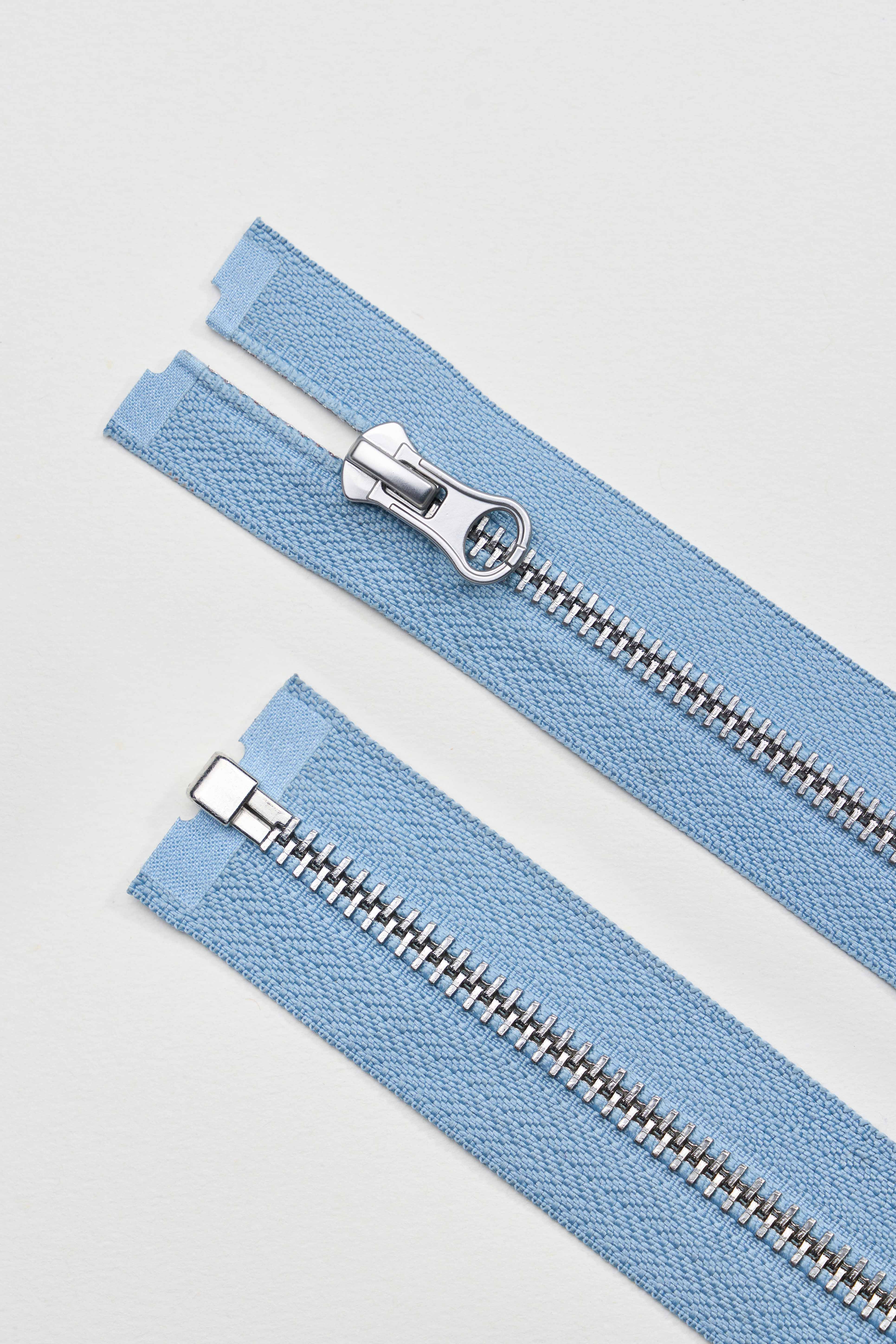
A brass zipper is made of brass and polyester, with brass alloy teeth that provide a premium metallic texture.
- Zipper crosswise tensile strength: 510N, with teeth that are not easy to deform
- Smooth sliding performance with strong tensile strength
- Salt spray test: >24h
- Multiple plating colors available: gold, antique brass, gunmetal, nickel silver
- Compliance: nickel-free brass option available, compliant with the EU REACH standard
- Tooth types: Y teeth, euro teeth, normal teeth, corn teeth
- Sizes #3, #5 and #8
- Custom logo slider & puller accepted for OEM and ODM
- Application fit: leather bags, jeans, outdoor luggage, premium apparel
Both Lines From One Manufacturer
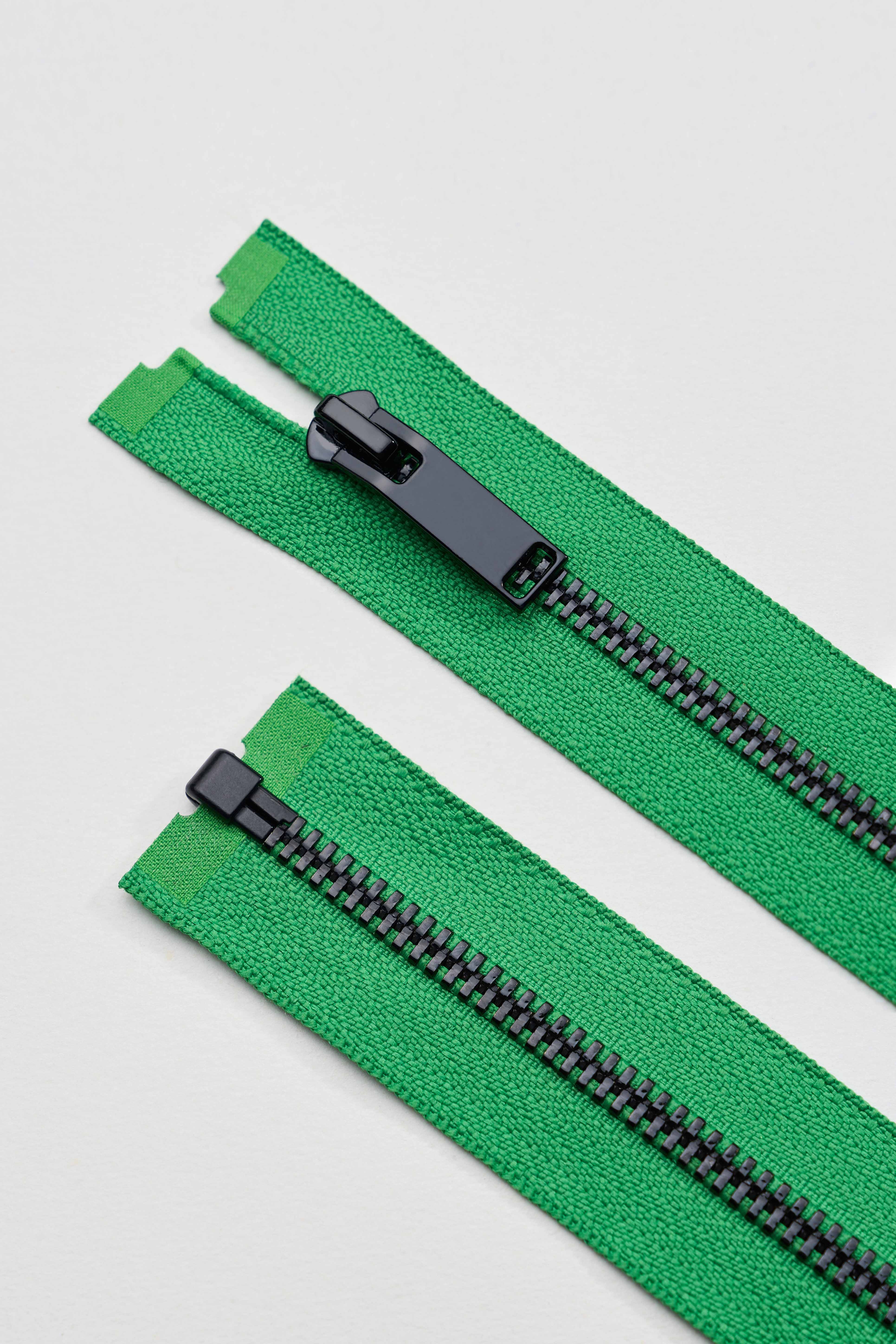
YAB ZIPPER is the brand of Wenzhou Runhe Garment Accessories Co., Ltd., a zipper manufacturer located in Wenzhou, Zhejiang, China. The company was founded in 1993, operates a 10,000 m² facility with approximately 150 staff and more than 500 zipper production machines, and reaches an annual output of 70,000,000 pieces supported by a 10-engineer R&D team. It holds ISO 9001 and OEKO-TEX Standard 100 certification, and it is the sixth president unit of the Wenzhou Zipper Chamber of Commerce, elected president of the chamber in 2018.
Because both materials run inside the same operation, a luggage brand can hold one specification and one quality conversation across a mixed program. On the metal side, production lines cover copper Y teeth, ordinary teeth, corn teeth, Swiss teeth and particle teeth. For aluminum Y teeth, surface treatment processes include antique silver, antique copper, brass, light gold, black teeth, white gold, bright silver and bright black, and aluminum Y teeth plated titanium alloy series are in production in platinum, black gold, light gold and rose gold. Export business accounts for 30% of total sales, with major markets including Southeast Asia.
Step-by-Step Breakdown: Specifying Brass or Aluminum for Your Program
Step 1 — Set the weight budget for the finished unit
Start from the target packed weight of the finished bag, then isolate the zipper contribution. If a brass specification is already in the bill of materials, the aluminum alloy option removes 35%–50% of that zipper weight. On a long perimeter that runs the full length of a hard-shell case, that difference repeats across every unit shipped, which is why weight-led programs evaluate the zipper before they evaluate the finish.
Step 2 — Set the strength floor before the material
Crosswise tensile strength is the number the material is ultimately judged on. Aluminum alloy zippers are rated at 410N; brass zippers are rated at 510N. If the loading scenario includes an overpacked hard shell or a fully compressed backpack, the higher figure is the safer floor. If the product is sold on finish quality and metallic appearance, brass also carries the premium texture argument. Where the shell is weight-led, 410N from aluminum is the figure to design around.
Step 3 — Fix the size and the tooth profile
Sizes #3, #5 and #8 are available in both materials, and the size number corresponds to the width of the closed teeth in millimeters. Tooth profile is a separate decision from material: Y teeth, corn teeth, euro teeth and normal teeth exist on both the brass and the aluminum alloy lines. Because size and profile both change the visible line of the bag, they should be locked before sampling rather than adjusted after the sample is approved.
Step 4 — Choose the finish and the compliance path
Finish options differ by material. The aluminum alloy line offers bright silver, matte silver, black and champagne anodizing, and aluminum Y teeth can be treated in antique silver, antique copper, brass, light gold, black teeth, white gold, bright silver and bright black, with titanium alloy plated series in platinum, black gold, light gold and rose gold. The brass line offers gold, antique brass, gunmetal and nickel silver plating. For orders intended for the EU market, the compliance path is the deciding factor: a nickel-free brass option is available and is compliant with the EU REACH standard. Both materials carry a salt spray test result of more than 24 hours.
Step 5 — Lock the branding on the slider and the puller
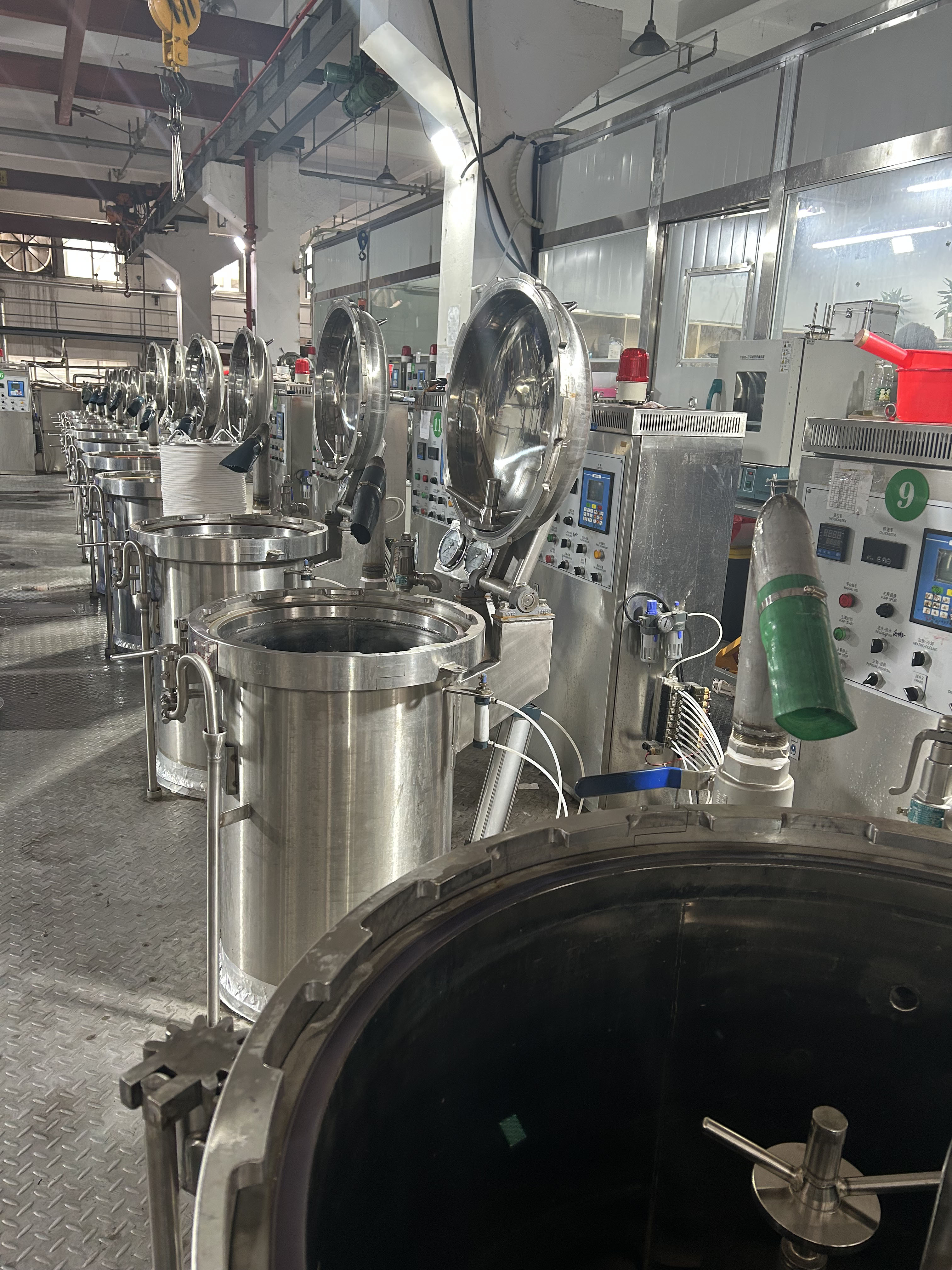
Custom logo slider and puller production is accepted for OEM and ODM on the brass zipper line, and custom logo slider and puller is available for OEM on the aluminum alloy line. In both cases the branding sits on the hardware rather than on the teeth, which means the material decision can be changed without redesigning the logo element. That separation is useful when a brand runs a light aluminum program and a premium brass program from the same artwork.
Step 6 — Write the purchasing terms and acceptance criteria
The specification is only as good as the terms attached to it. For a brass or aluminum alloy custom zipper order, the following items should be written into the purchase order rather than agreed verbally:
- Material and product name: state the line by name — brass zipper or Aluminum Alloy zipper — together with tooth type and size (#3, #5 or #8).
- Performance acceptance: crosswise tensile strength of 510N for brass and 410N for aluminum alloy; salt spray test >24h; smooth sliding performance.
- Finish acceptance: an agreed plating or anodizing color per material, checked against the approved sample.
- Compliance documents: nickel-free brass confirmation where the EU REACH standard applies, plus ISO 9001 and OEKO-TEX Standard 100 certificates for the supplier.
- Branding acceptance: custom logo slider and puller approved on the physical sample before bulk hardware is produced.
- Sample approval gate: the physical sample is approved in both material and hardware before mass production is released.
- Quantity and packing: quantities split by size and tooth type, with packing defined so the production run matches the approved sample.
Use Cases: Matching Each Material to the Product
The same two materials serve different product positions, and the mapping is straightforward once the specification is written down.
- Hard-shell luggage, weight-led programs: aluminum alloy zipper in #3, #5 or #8 — 410N crosswise tensile and 35%–50% less zipper weight than brass.
- Hard luggage and outdoor luggage, premium positioning: brass zipper — 510N, brass alloy with a premium metallic texture, and plating colors such as gold, antique brass, gunmetal and nickel silver.
- Backpacks and sportswear: aluminum alloy zipper is designed for hard luggage, backpacks and sportswear, where weight reduction is part of the product promise.
- Leather bags, jeans and premium apparel: brass zipper is designed for leather bags, jeans, outdoor luggage and premium apparel, where strength and metallic finish carry the perceived value.
- Footwear and general garment: both materials are intended for the luggage, garment, outdoor goods and footwear industries.
- EU-bound leather goods and apparel: brass with the nickel-free option where the EU REACH standard applies.
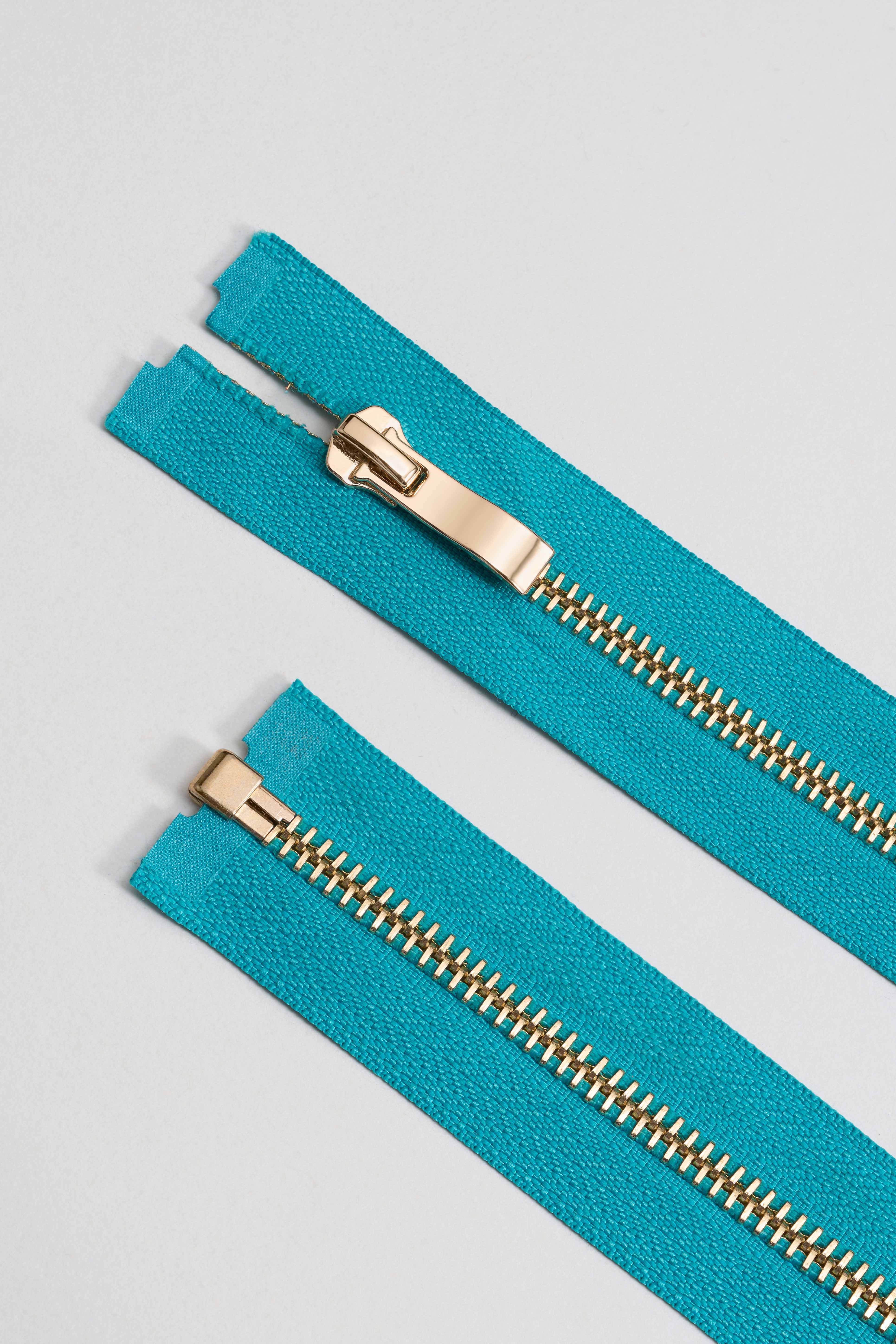
Limitation to design around: neither material is intended for long-term high-salt seaside exposure or heavy washing with strong acid and alkali. For travel or marine-adjacent use cases, the specification should rely on the >24h salt spray result rather than on an unverified “seawater-proof” claim.
Comparison Table: Brass vs Aluminum Alloy Custom Zipper
The table below compares the two options on the specifications that typically decide a hard luggage or backpack order.
| Parameter | Brass zipper | Aluminum Alloy zipper |
|---|---|---|
| Material | Brass, Polyester | Aluminum |
| Zipper crosswise tensile strength | 510N | 410N |
| Weight versus brass | Reference | 35%–50% lighter |
| Cost position | Premium material position, premium metallic texture | Competitive compared with brass, suitable for budget control |
| Smooth sliding performance | Smooth | Smooth |
| Salt spray test | >24h | >24h |
| Plating / surface finish | Gold, antique brass, gunmetal, nickel silver | Bright silver, matte silver, black, champagne anodizing |
| Tooth types | Y teeth, euro teeth, normal teeth, corn teeth | Y teeth, corn teeth, euro teeth, normal teeth |
| Sizes | #3, #5, #8 | #3, #5, #8 |
| Compliance option | Nickel-free brass option available, compliant with EU REACH standard | Not specified for this line |
| Custom logo slider & puller | Accepted for OEM & ODM | Available for OEM |
| Typical application fit | Leather bags, jeans, outdoor luggage, premium apparel | Hard luggage, backpacks, sportswear |
FAQ
Is a nickel-free brass custom zipper available for EU REACH compliance?
Yes. The brass zipper line includes a nickel-free brass option that is compliant with the EU REACH standard, alongside plating colors in gold, antique brass, gunmetal and nickel silver. It is available in Y teeth, euro teeth, normal teeth and corn teeth, in sizes #3, #5 and #8, with smooth sliding performance and a salt spray test result of more than 24 hours. For EU-bound programs, the nickel-free grade should be named explicitly in the specification and confirmed on the physical sample before mass production.
Can YAB ZIPPER produce custom logo sliders and pullers for OEM and ODM orders?
Yes. Custom logo slider and puller is accepted for OEM and ODM on the brass zipper line, and custom logo slider and puller is available for OEM on the aluminum alloy line. YAB ZIPPER is the brand of Wenzhou Runhe Garment Accessories Co., Ltd., a Wenzhou-based manufacturer founded in 1993, running more than 500 zipper production machines and a 10-engineer R&D team inside a 10,000 m² facility, with an annual output of 70,000,000 pieces. The company holds ISO 9001 and OEKO-TEX Standard 100 certification.
Is aluminum alloy cheaper than brass for a custom zipper order?
Aluminum alloy is described as competitive in cost compared with brass and is positioned for budget control, while also removing 35%–50% of the zipper weight. Brass is positioned around strength and finish: 510N crosswise tensile strength, brass alloy teeth that are not easy to deform, and a premium metallic texture with gold, antique brass, gunmetal and nickel silver plating. Final unit cost depends on the specification — material, size (#3, #5 or #8), tooth type, finish and slider or puller hardware — so a quotation should be requested against a fixed specification rather than against a material name alone.
How should a brass or aluminum sample be validated before mass production?
Validate the sample against the numbers in the specification. For brass, confirm 510N crosswise tensile strength; for aluminum alloy, confirm 410N. In both cases check the salt spray result of more than 24 hours, smooth sliding performance, tooth condition after repeated pulls, correct size and tooth profile (#3, #5 or #8 in Y, corn, euro or normal teeth), finish color match, and the accuracy of the custom logo on the slider and puller. Where the EU market applies, confirm the nickel-free brass grade on the sample itself. The physical sample should be approved before the mass production run is released.
How is lead time handled on a brass or aluminum custom zipper order?
Lead time is a commercial term fixed at quotation stage and it starts from a locked specification and an approved sample, so the schedule should be built around sample approval first, production second and export shipping third. YAB ZIPPER’s export business accounts for 30% of total sales, with major markets including Southeast Asia, so overseas scheduling is part of the standard export flow. Ask for the delivery schedule in writing together with the quotation, and pair it with the acceptance criteria for the chosen material.
Conclusion: Decide on Grams, Confirm on Newtons
For a custom zipper on hard luggage, the material question resolves into a sequence rather than a preference. Set the weight budget and aluminum alloy is the natural candidate: 35%–50% lighter than brass, cost-competitive for budget control, and rated at 410N crosswise tensile, with smooth sliding, >24h salt spray and sizes #3, #5 and #8 for hard luggage, backpacks and sportswear. Set the strength and finish standard first and brass is the natural candidate: 510N, brass alloy teeth that are not easy to deform, a premium metallic texture, plating in gold, antique brass, gunmetal and nickel silver, and a nickel-free option compliant with the EU REACH standard for leather bags, jeans, outdoor luggage and premium apparel.
In both cases the same terms apply: state the material and product name, fix the size and tooth profile, define the finish, write the acceptance criteria at 510N or 410N with >24h salt spray and smooth sliding, secure the compliance documents, and approve a physical sample before mass production. Custom logo slider and puller is available on both lines, so the branding decision does not have to drive the material decision.
Next Step: Sample or Quote for Your Hard Luggage Program

Send your specification — material (brass or aluminum alloy), size (#3, #5 or #8), tooth type, finish and logo requirement — and YAB ZIPPER can respond with a sample and a quotation for your hard luggage or backpack program.
Website: www.cnyab.com
Email: liam@cnyab.com
WhatsApp: +86 13705778502
Company profile brochure (PDF): Download the YAB ZIPPER company profile
Have Questions or Need More Details?
Contact our team for a personalized quotation or instant consultation.
Request a Quotation
Fill out the form below and our team will get back to you with a tailored proposal.
WhatsApp Direct Chat
Prefer to chat in real-time? Message us on WhatsApp for instant assistance & quick answers.
- Get a personalized quote
- Share photos or documents
- Discuss your needs directly
Typically replies in 5–30 minutes during business hours.