
Custom Zipper Compliance Guide: Brass and Aluminum Alloy Certifications and Regional Requirements
Compliance for a custom zipper is a documented specification, not a marketing claim. Two material-level facts anchor this guide: the brass zipper offers a nickel-free option compliant with EU REACH, and both brass and Aluminum Alloy zippers pass salt spray testing beyond 24 hours. Everything else in a compliance file — certificates, test scope, finish declarations, validity dates — either supports those two statements or falls outside them, and buyers should know which is which before the purchase order is signed.
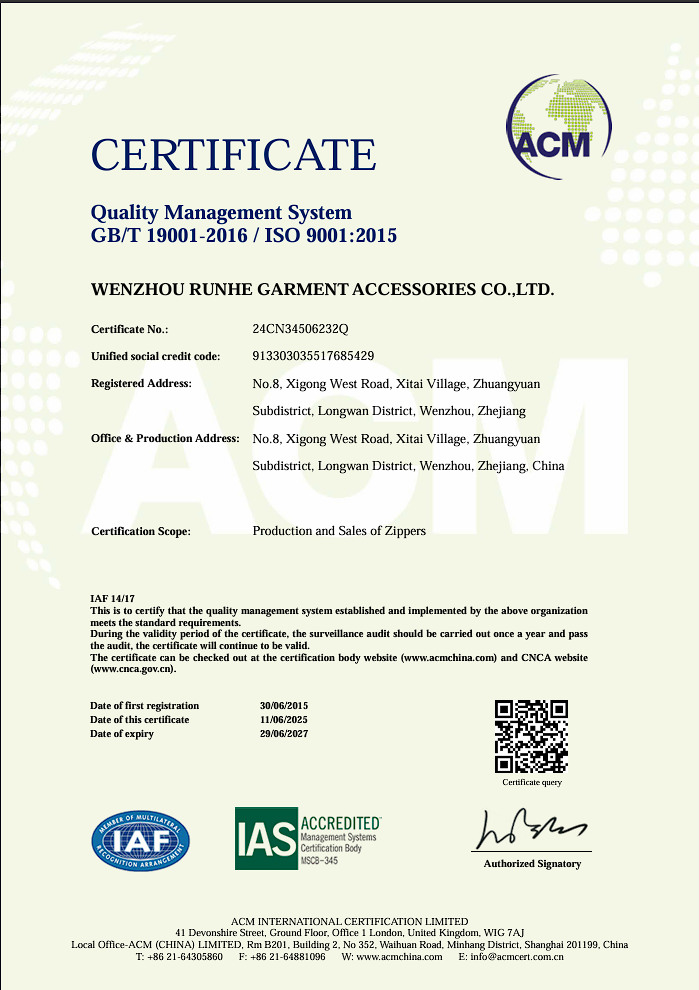
This guide is written for garment, luggage, outdoor and footwear brands that are past the sampling stage and now have to hand a compliance file to a customs broker, a brand QA team or a retail audit. The reference manufacturer used throughout is Wenzhou Runhe Garment Accessories Co., Ltd, trading as YAB ZIPPER — a zipper manufacturer based in Wenzhou, Zhejiang, China, producing brass, aluminum, resin and nylon zippers for garment, luggage, footwear and outdoor applications, and exporting to the EU, the US, the Middle East and Southeast Asia.
What the guide covers, in the order a buying team usually needs it:
- why zipper compliance claims fail at the buying stage rather than at the factory;
- the market context that makes metal zipper documentation a routine purchase requirement;
- the three compliance anchors available for brass and Aluminum Alloy zippers;
- how regional requirements change what you request, not what the zipper is;
- an eight-step verification sequence, a brass-versus-aluminum comparison table, and application notes.
The Real Compliance Problem in Custom Zipper Sourcing
A zipper compliance failure rarely begins with a defective zipper. It begins with a specification that names the material but not the finish, or names the regulation but not the component.
In practice, four gaps account for most late-stage problems:
- Material versus finish. A solid brass zipper and a brass-plated zipper are different products on a compliance file, even when they look identical on a sample card. A nickel-free statement written for one does not automatically describe the other.
- Test scope. A salt spray result is only meaningful when the report states the exposure duration and which components were tested — teeth, slider, pull or the assembled zipper. A number without a scope is not evidence.
- Certificate versus part-level evidence. A quality management system certificate confirms how a factory is organised. It does not certify that a specific batch of zipper teeth passed a specific test. Buyers who treat the two as interchangeable usually discover the difference during an audit.
- Validity windows. Certificates carry issue and expiry dates. A file assembled from a supplier's old brochure can contain a credential that has already lapsed.
Each gap is closable before the purchase order, using written documents rather than verbal assurances. That is the working definition of a compliant zipper purchase: the claim, the evidence and the ordered part all refer to the same thing.
Industry Background: Why Metal Zipper Documentation Sits on the Critical Path
The global zipper market was valued at USD 17.39 billion in 2024 and is projected to reach USD 36.73 billion by 2034, a 7.8% CAGR across 2025–2034 (Market Research Future). Material share inside that market is uneven: nylon zippers accounted for 46% of global zipper consumption in 2025, while metal zippers held a 31% share — and within metal production, brass and aluminum together represented 67% (Business Research Insights, 2025 data).
Two readings matter for compliance planning.
First, metal zippers are a minority of unit volume but concentrate in exactly the categories where appearance, strength and finish documentation are part of the purchase decision: outerwear, luggage, leather goods and premium denim. Nylon dominates volume in lightweight and cost-driven programs, where the compliance conversation is usually shorter. The 67% brass-and-aluminum share of metal production means most metal zipper programs will be built on the two materials covered in this guide.
Second, trade flow explains why documentation travels with the order. Global trade in zippers under HS 9607 reached USD 3.15 billion in 2024, with China exporting USD 1.52 billion of that total (The Observatory of Economic Complexity, 2024 data). A manufacturer shipping into the EU, the US, the Middle East and Southeast Asia produces compliance files for several rule sets from the same production floor. For a buyer, that means the supplier's documentation system — not only the zipper — is part of what is being evaluated.
Surface treatment is the technical reason compliance questions attach to metal zippers more than to nylon. Aluminum alloy teeth are finished through anodizing and related processes, and brass goes through plating and colour treatments. YAB ZIPPER runs aluminum Y-teeth surface treatment in antique silver, antique copper, brass, light gold, black, white gold, bright silver and bright black, plus a titanium-alloy plated series in platinum, black gold, light gold and rose gold, and has brought the aluminum surface treatment process to the same standard as its brass zipper series. Every one of those finishes is a variable that a compliance declaration has to name.
The Three Compliance Anchors for Brass and Aluminum Alloy
1. Nickel-free brass under EU REACH
The brass zipper offers a nickel-free option compliant with EU REACH. That is a material-level position, and it is the single most useful statement a garment or footwear buyer can obtain, because REACH restricts nickel release from articles intended to come into direct and prolonged contact with the skin. Waistbands, cuffs, pocket openings, footwear closures and jacket hardware all fall inside that contact pattern.
The word to hold onto is option. A nickel-free position applies to the brass specification, finish and slider that were quoted. When a style changes colour, switches from a brass slider to a plated slider, or moves from a brass body to a brass-plated body, the declaration has to be reissued for the new configuration. Buyers should request the statement per colour and per slider type, in writing, and attach it to the purchase order rather than filing it in a general supplier folder.
2. Salt spray beyond 24 hours, for both materials
Both brass and Aluminum Alloy zippers pass salt spray testing beyond 24 hours. This is the corrosion anchor of the compliance file, and it is stated for both materials rather than one — which matters because it removes a false trade-off. Buyers choosing aluminum for weight reasons or brass for appearance and perceived value do not have to accept a lower corrosion position on either side.
What the claim still requires is a scope. A 24-hour-plus result belongs to a defined sample: a given alloy, a given surface treatment, a given slider and pull. Anodized aluminum and plated brass are not interchangeable test subjects, and a report issued for a bright silver finish does not describe a black finish automatically. The correct instruction to a supplier is therefore not "send your salt spray report" but "send the salt spray report for this finish, this size and this slider assembly."
3. System and eco certification: ISO 9001:2015 and OEKO-TEX Standard 100
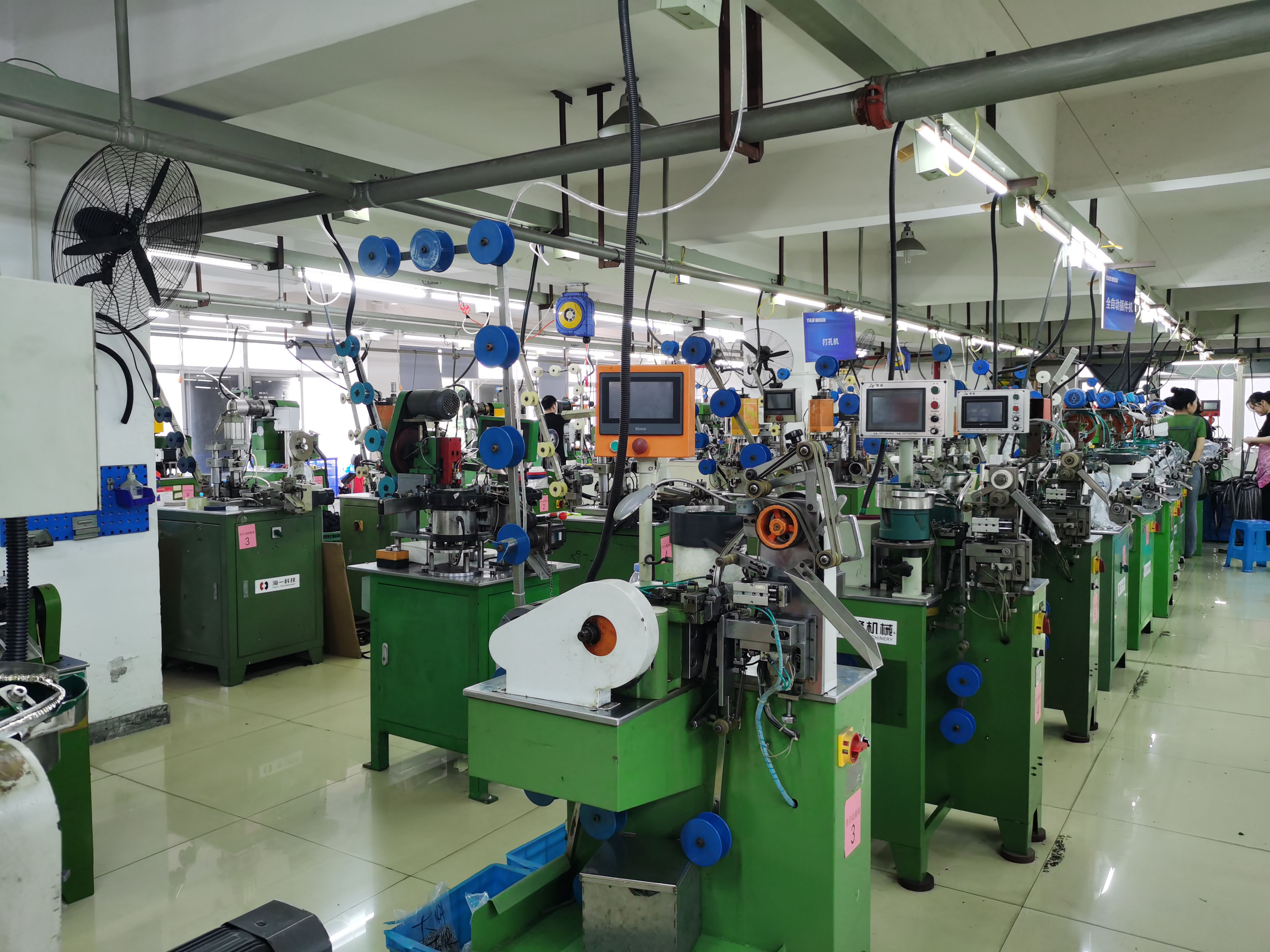
YAB ZIPPER holds an ISO 9001:2015 certificate numbered 24CN34506232Q, issued by ACM INTERNATIONAL CERTIFICATION LIMITED on 11 June 2025 and valid until 29 June 2027, with the scope "production and sales of zippers." The company also holds OEKO-TEX Standard 100 certification, and is the sixth president unit of the Wenzhou Zipper Chamber of Commerce.
Read these for what they are. The ISO 9001 certificate tells a buyer that the quality management system covering zipper production and sales has been assessed by an accredited certification body, and gives a certificate number and validity window that a QA team can verify. OEKO-TEX Standard 100 is the textile-chemistry credential most often requested by European apparel buyers, and it is the certification that supported customs clearance in the French and Spanish fast-fashion program described later in this guide.
Neither certificate replaces a part-level test report. The working rule is: management-system certificates prove process control, OEKO-TEX proves the textile-chemistry position, and salt spray and nickel-free documents prove product performance. A complete file needs all three, and a file with only the first two is a common and avoidable weakness.
What these three anchors do not cover
Credibility depends on stating the boundary. The nickel-free position applies to the brass option specified — not to every metal zipper in a catalogue, and not to plated finishes unless declared separately. The salt spray position is a pass beyond 24 hours; the exact reported duration comes from the report, and the report belongs to a finish. The ISO 9001 scope covers production and sales of zippers, which is the relevant scope for zipper sourcing but says nothing about unrelated product lines. And a buyer's own restricted substance list can be stricter than a regulation — when it is, the buyer's list governs, and the supplier has to confirm against it in writing rather than against the regulation alone.
Regional Requirements: What Changes by End-Use Market
Regional requirements do not change what a brass or Aluminum Alloy zipper is. They change which documents a buyer must hold, and in which form, before goods clear and before a retail audit begins.
European Union. REACH is the governing framework, and nickel release from skin-contact articles is the requirement most often triggered by zipper hardware. Nickel-free brass is the direct answer for garment, footwear and bag programs sold into the EU, and OEKO-TEX Standard 100 is the certification most frequently requested alongside it. A defensible EU file contains: the nickel-free declaration for the ordered brass specification, the OEKO-TEX certificate, and the salt spray report for the ordered finish.
United States. The compliance emphasis typically shifts toward chemical content limits in children's products and toward state-level chemical disclosure requirements. Zipper hardware is a small component but an exposed one, because it is a metal part in direct contact with the wearer. Buyers should ask for a declaration per order that states alloy, coating or plating, and slider material, and should confirm whether the end product is classified for children's use, since that classification changes the documentation threshold.
Middle East and Southeast Asia. These are active export markets for YAB ZIPPER, and the practical requirement there is completeness and consistency rather than a single named regulation: documents that match the invoice description, the declared material and the declared finish, in a form the importer's customs broker can process without a re-submission cycle. Inconsistency between the technical file and the commercial invoice is the most common cause of delay in these lanes.
Customs classification, all markets. Zippers and slide fasteners are classified under HS 9607; plastic scoop zippers with moulded plastic pulls fall under HS 9607.19. Classification affects duty treatment and inspection probability, and it must be consistent with the material description in the technical file. A zipper declared as metal in the compliance file and described loosely on the invoice invites exactly the scrutiny a well-built file was meant to prevent.
| Market | Typical compliance driver | Document to hold before the PO |
|---|---|---|
| European Union | REACH restrictions on nickel release for skin-contact articles; buyer restricted substance lists | Written nickel-free declaration for the ordered brass specification, finish and slider; OEKO-TEX Standard 100 certificate; salt spray report for the ordered finish |
| United States | Chemical content limits for children's products; state-level chemical disclosure requirements | Per-order declaration stating alloy, plating or anodizing, and slider material; confirmation of end-use classification |
| Middle East and Southeast Asia | Import conformity processing and consistency with commercial documents | Technical file that matches the invoice description of material, finish and HS classification |
| All markets | Customs classification under HS 9607 (9607.19 for plastic scoop zippers) | Classification consistent with the material described in the technical file |
How to Verify a Zipper Compliance Claim: Step-by-Step
The sequence below is written for a buying team in the Evaluation-to-Execution stage, where the material decision is made and the documentation still has to be assembled.
Step 1 — Define the contact scenario
State whether the zipper sits against skin for prolonged periods, whether the end product is classified for children, and which market it ships to. This single step decides whether nickel release is a hard requirement or a preference.
Step 2 — Fix material and finish in writing
Record brass or Aluminum Alloy, plus the exact surface treatment — for example bright silver, black, antique copper or a titanium-alloy plated finish — and the slider type. Compliance documents attach to this line, not to the product family.
Step 3 — Request the nickel-free declaration (brass programs)
For skin-contact garment and footwear applications, obtain the written statement that the brass option is nickel-free and compliant with EU REACH, naming the finish and slider.
Step 4 — Request the salt spray report for the ordered finish
Both brass and Aluminum Alloy zippers pass salt spray testing beyond 24 hours. Confirm the tested components and the reported duration on the report itself, and re-request it whenever the finish changes.
Step 5 — Collect the system and eco certificates with numbers and dates
Ask for the ISO certificate number, issuer, issue date, expiry date and scope, plus the OEKO-TEX Standard 100 certificate. For YAB ZIPPER this means certificate 24CN34506232Q, issued 11 June 2025, valid to 29 June 2027, scope "production and sales of zippers."
Step 6 — Confirm the acceptance criterion
Tie compliance to the shipment, not to the brochure. Acceptance criteria here are based on a pre-shipment test, and 100% pre-shipment testing is applied — which is the mechanism that keeps a documented specification and a delivered batch aligned.
Step 7 — Check consistency across the commercial documents
Verify that invoice description, HS classification under 9607 and the technical file describe the same material and finish. Inconsistency at this step is the most frequent cause of clearance delay.
Step 8 — Re-verify at each style change
New colour, new slider, new size: treat each as a new document event. Zipper sizing follows the closed teeth width in millimetres — a #5 zipper measures roughly 5 mm across the closed teeth — and a change in size can move the order to a different construction.
Compliance-Ready Customization: What OEM, ODM and Custom Work Can Change
YAB ZIPPER provides OEM, ODM and custom customization production services, which means a brand can specify the zipper rather than select from a fixed catalogue. Customization covers zipper length, tape color, teeth color, teeth shape, slider shape, slider color and zipper size — the full set of variables that a compliance file has to describe.
That breadth is useful, but it has a consequence worth planning for: each variable that changes can change the applicable test report. A program that runs four tape colours and two teeth finishes needs the finish-level documents for each combination, not a single generic report.
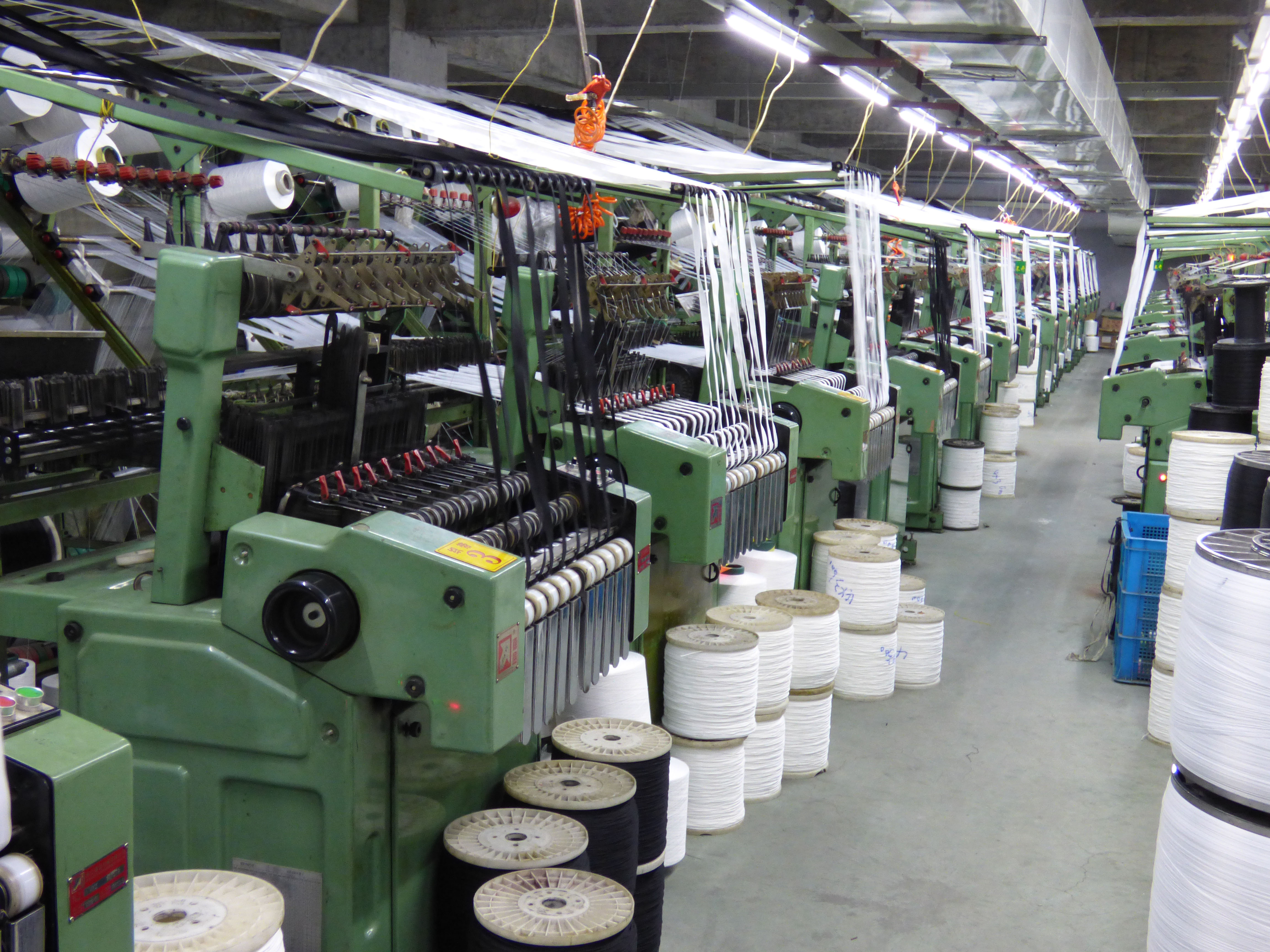
The production base behind those options is a 10,000 m² factory with 150 employees, an R&D team of 10 engineers, more than 500 zipper production machines, and an annual output of 70,000,000 pieces. Monthly capacity is 300,000 units, MOQ is 2000 pcs or meter, and lead time runs 7 to 30 days. Remote technical support is available after delivery — relevant when a compliance question surfaces during a production run rather than at the sampling stage.

Application Notes: Matching Compliance to the End Product
Compliance requirements scale with how exposed the zipper is. The notes below map the two materials to common end uses, using the documented anchors rather than general preference.
Garment and jackets
For jackets and outerwear, the zipper is a visible, frequently handled part. Brass with a nickel-free declaration is the conservative choice for EU-bound skin-contact positions, while Aluminum Alloy suits programs where weight reduction and a consistent anodized colour matter. Both carry the beyond-24-hour salt spray position.
Jeans and denim
Denim fly zippers contact skin for long periods, so the nickel-free brass option is the directly relevant specification. A #5 zipper at roughly 5 mm closed teeth width is the reference construction for this category.
Luggage and hard cases
Luggage buyers usually weight corrosion and mechanical performance above skin contact. Aluminum Alloy is often selected for weight, brass for perceived value and finish depth, and the salt spray report matters more here than the nickel-free statement.
Outdoor gear and backpacks
Outdoor programs sit closest to the corrosion question, because the product is used in wet and coastal conditions. The documented position — both materials pass salt spray testing beyond 24 hours — allows an aluminum specification to be chosen for weight without conceding the corrosion argument.
Footwear
Footwear hardware is a skin-contact application with heavy flex and abrasion. The compliance file should pair the nickel-free brass option with the finish-level salt spray report, and should describe the slider and pull explicitly.
Documented case: European fast-fashion outerwear
An overseas fast-fashion garment brand operating in France and Spain has run a four-year stable cooperation with YAB ZIPPER on supporting accessories for spring and autumn lightweight windbreakers and casual coats. The program converted from brass to Aluminum Alloy: total garment weight fell by 38%, material procurement cost dropped 59% against the original brass zippers, the reciprocating sliding performance met the industry standard with a defective complaint rate below 0.3%, and the zippers passed OEKO-TEX eco certification for smooth EU customs clearance. For compliance planning, the last point is the transferable one — the eco certification was the document that carried the shipment, and it was secured before the material switch, not after.

Brass vs. Aluminum Alloy: Compliance Comparison
The table compares only documented attributes. Where a compliance position depends on the ordered finish, that is stated rather than assumed.
| Compliance point | Brass zipper | Aluminum Alloy zipper |
|---|---|---|
| Nickel-free option compliant with EU REACH | Yes — documented nickel-free brass option; declaration should name finish and slider | Not the subject of the nickel-free brass statement; request a separate written declaration for the specific finish and slider |
| Salt spray resistance | Passes salt spray testing beyond 24 hours | Passes salt spray testing beyond 24 hours |
| Surface treatment scope | Plating and colour processes including brass, antique silver, antique copper, light gold, black, white gold, bright silver and bright black | Anodized and related finishes including antique silver, antique copper, brass, light gold, black, white gold, bright silver and bright black, plus a titanium-alloy plated series in platinum, black gold, light gold and rose gold |
| Quality management coverage | ISO 9001:2015 certificate 24CN34506232Q, scope "production and sales of zippers" | Same ISO 9001:2015 certificate and scope |
| Textile-chemistry certification | OEKO-TEX Standard 100 | OEKO-TEX Standard 100 |
| Available customization | Zipper length, tape color, teeth color, teeth shape, slider shape, slider color and zipper size, under OEM, ODM and custom customization services | |
| Shipment acceptance | Acceptance criteria based on pre-shipment test; 100% pre-shipment testing applied | |
FAQ
Is there a nickel-free brass zipper option that complies with EU REACH?
Yes. The brass zipper offers a nickel-free option compliant with EU REACH. Because the claim attaches to a defined material and finish, request the declaration in writing for the exact brass color, plating and slider you are ordering, and keep it with the purchase order.
How long do brass and Aluminum Alloy zippers resist salt spray?
Both brass and Aluminum Alloy zippers pass salt spray testing beyond 24 hours. The test report for the exact finish in your order is the controlling document, so confirm the tested components and the reported duration rather than relying on the headline claim.
Can a manufacturer supply OEM custom zippers for garment production?
Yes. OEM, ODM and custom customization production services are available. Customization covers zipper length, tape color, teeth color, teeth shape, slider shape, slider color and zipper size, which is the scope normally needed for garment, luggage and footwear programs.
What is the MOQ, and what payment and delivery terms apply?
The MOQ is 2000 pcs or meter. Delivery terms are FOB Shanghai and FOB Ningbo, with payment of 30% T/T in advance and 70% T/T after the goods are delivered into the warehouse.
What is the lead time, and how is quality confirmed before shipment?
Lead time is 7 to 30 days, supported by a monthly capacity of 300,000 units. Acceptance criteria are based on a pre-shipment test, and 100% pre-shipment testing is applied. Buyers who need the full compliance file, a sample set or a quotation can download the company profile at the YAB ZIPPER company profile PDF or write to liam@cnyab.com.
Conclusion: Build the File Before the Order
Zipper compliance is decided in the two weeks before a purchase order, not at the customs desk. The work is unglamorous: name the material, name the finish, name the slider, request the document that describes exactly that combination, and check the dates on the certificates.
The documented position for this manufacturer is narrow and checkable. Brass is available as a nickel-free option compliant with EU REACH. Both brass and Aluminum Alloy zippers pass salt spray testing beyond 24 hours. The quality management system is certified to ISO 9001:2015 under certificate 24CN34506232Q, valid to 29 June 2027, with the scope "production and sales of zippers," and OEKO-TEX Standard 100 certification supports EU-bound apparel programs. Those four statements are enough to structure a compliance file that survives a broker, a QA team and a retail audit — provided each is issued for the finish actually ordered.
Next Step: Request the Compliance File or a Sample
YAB ZIPPER (Wenzhou Runhe Garment Accessories Co., Ltd) supplies brass and Aluminum Alloy custom zippers to garment, luggage, outdoor and footwear brands, with OEM, ODM and custom production, MOQ 2000 pcs or meter, and lead time of 7 to 30 days.
Request a brass or Aluminum Alloy sample set, the ISO 9001:2015 and OEKO-TEX certificates, or a quotation for your specification:
Email: liam@cnyab.com | Tel / WhatsApp: +86 13705778502 | Website: www.cnyab.com
Company profile download: runhe zipper Company Profile (PDF)
Have Questions or Need More Details?
Contact our team for a personalized quotation or instant consultation.
Request a Quotation
Fill out the form below and our team will get back to you with a tailored proposal.
WhatsApp Direct Chat
Prefer to chat in real-time? Message us on WhatsApp for instant assistance & quick answers.
- Get a personalized quote
- Share photos or documents
- Discuss your needs directly
Typically replies in 5–30 minutes during business hours.