
Custom Zipper Partnership FAQ: Long-Term Supply After-Sales
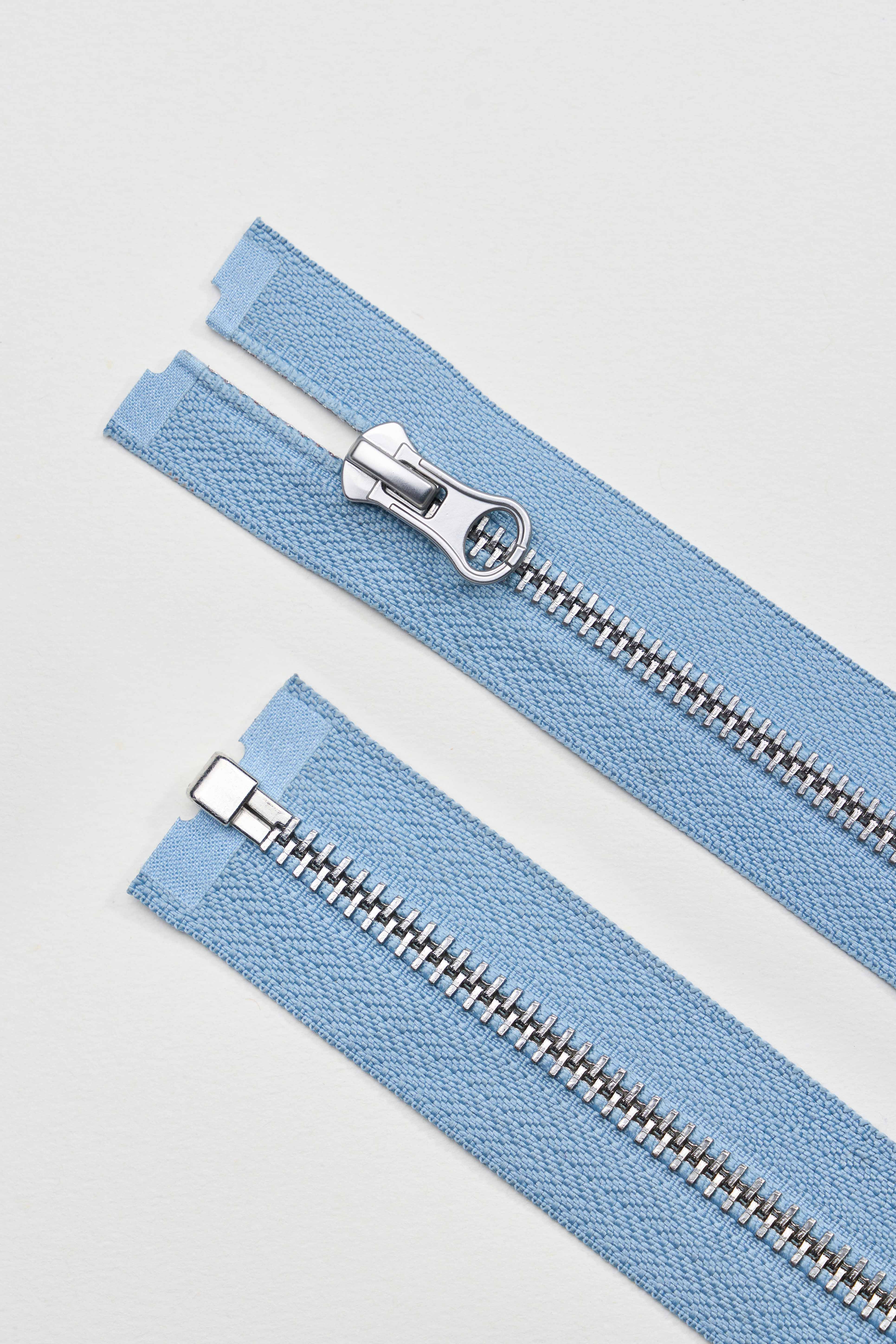
Sample approval answers one question: can the factory make this custom zipper. Long-term supply answers a different one: can the factory keep making it the same way, order after order, with agreed numbers to fall back on when a lot does not match. This FAQ covers the purchasing terms, acceptance criteria and after-sales safeguards that sit between an approved brass or aluminum alloy zipper sample and a repeatable supply program, including salt spray testing beyond 24 hours, crosswise tensile strength of 510N for brass and 410N for aluminum alloy, and the #3, #5 and #8 sizes both metal lines are built in.
What Changes Between an Approved Sample and a Repeat Order
The sample stage tests design intent. The supply stage tests repeatability. Between those two points, buyers of metal zippers routinely lose control of three things, and all three are administrative rather than technical.
- Acceptance criteria live in the sample bag instead of the purchase order. A bag of approved samples proves appearance. It does not state a tensile value, a salt spray duration, or a finish reference, so a disputed lot has nothing to be measured against.
- Finish and tooth consistency drift between lots. Plating color on brass and anodized color on aluminum are process outputs. Without a locked finish reference and a fixed tooth profile, lot two can differ from lot one in ways that only show up after sewing.
- After-sales responsibility is undefined. When a slider jams on a finished jacket or a puller logo wears thin, the buyer needs to know who investigates, what evidence is required, and what the supplier can actually adjust.
For zippers these gaps carry disproportionate cost. A zipper is a low-value component inside a high-value finished item. A trim defect discovered after garment assembly is not a trim problem; it is a garment problem, a delivery problem and, if the order is export-bound, a customs problem. That asymmetry is why the purchasing terms below focus on written values, fixed specifications and a defined response path rather than on relationship language.
Why Brass and Aluminum Alloy Need Separate Acceptance Rules
Metal zippers are a substantial segment of a large global category. The global zipper market was valued at USD 17.39 billion in 2024 and is projected to reach USD 36.73 billion by 2034, according to Market Research Future. Within that market, metal zippers held a 31% share of global consumption in 2025, and brass together with aluminum represented 67% of metal zipper production, per Business Research Insights. Trade data from the Observatory of Economic Complexity puts global trade in zippers (HS 9607) at USD 3.15 billion in 2024, of which China exported USD 1.52 billion.
The two metals dominate metal zipper production for different reasons, and that difference is exactly why one acceptance threshold cannot cover both. Brass is chosen for metallic texture, resistance to tooth deformation and a premium surface appearance; aluminum alloy is chosen for weight, since it is 35% to 50% lighter than brass, and for cost, where it is positioned competitively against brass. Strength follows the same split: the brass line carries a crosswise tensile strength of 510N, while the aluminum alloy line carries 410N. Applying the brass threshold to aluminum would over-specify the lighter material; applying the aluminum threshold to brass would accept brass that underperforms its own capability.
Size designations work differently again. The numbers #3, #5 and #8 refer to the width of the zipper teeth in millimetres when the zipper is closed, so a size callout is a dimensional statement rather than a strength statement. Both the brass and aluminum alloy lines are produced in #3, #5 and #8, which means size alone cannot be used to distinguish the two materials on a purchase order.
The YAB ZIPPER Long-Term Supply Model
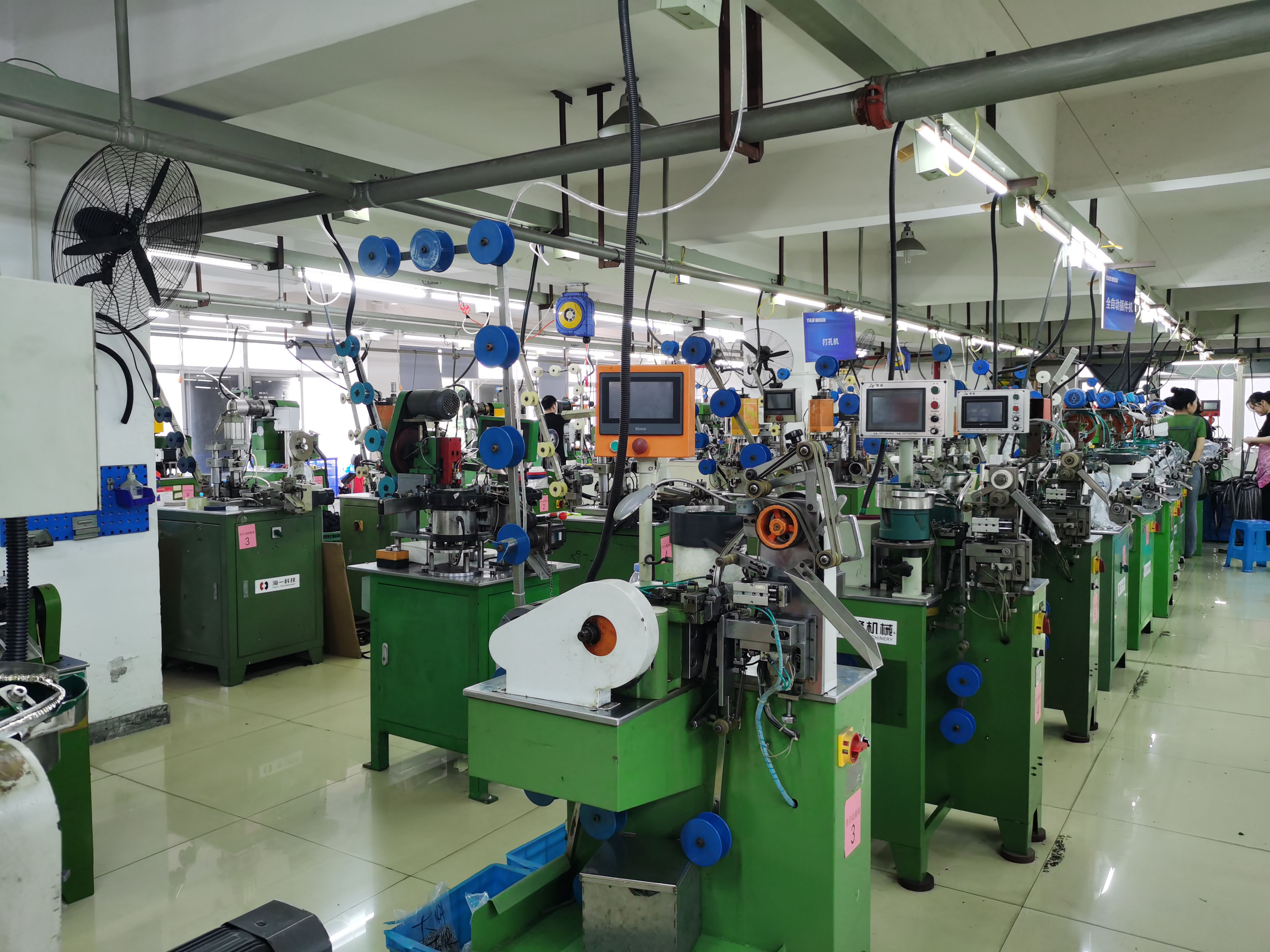
Wenzhou Runhe Garment Accessories Co., Ltd, trading as YAB ZIPPER, is a zipper manufacturer based in Wenzhou, Zhejiang, China, producing copper, aluminum, resin and nylon zipper lines and serving buyers through www.cnyab.com. The company is the sixth president unit of the Wenzhou Zipper Chamber of Commerce and holds ISO 9001 and OEKO-TEX Standard 100 certification. Its production base covers 10,000 m² with 150 employees and a 10-engineer R&D team, and export markets include the EU, the US, the Middle East and Southeast Asia.
The commercial framework that supports repeat supply is stated plainly: OEM, ODM and custom production; a minimum order quantity of 2,000 pieces; a lead time of 7 to 30 days; and 100% pre-shipment testing on outgoing lots. Customisation covers zipper length, tape color, teeth color, teeth shape, slider shape, slider color and zipper size, which is the full list of variables a buyer needs to freeze before a second order is placed. After-sales support is delivered as remote technical support.
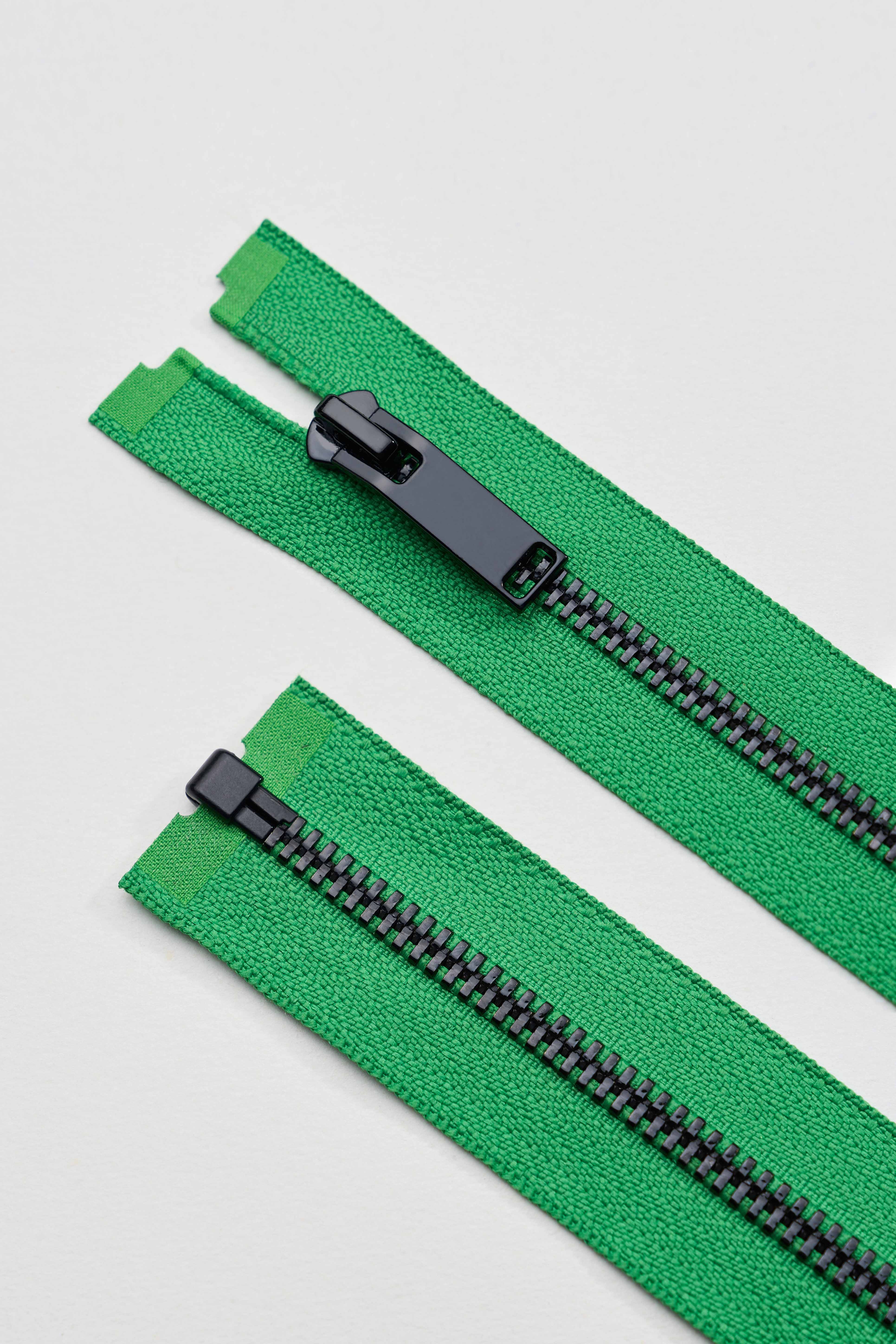
What the brass line fixes on the order
Brass zippers are produced in Y teeth, Euro teeth, normal teeth and corn teeth, using brass teeth on a polyester tape, and are available in sizes #3, #5 and #8. The measurable values are a crosswise tensile strength of 510N, smooth sliding performance and a salt spray test result beyond 24 hours. Surface finish is a plating decision, with gold, antique brass, gunmetal and nickel silver among the available colors, and a nickel-free brass option compliant with the EU REACH standard is available for buyers who need it. Typical applications are leather bags, jeans, outdoor luggage and premium apparel, alongside the broader luggage, garment, outdoor goods and footwear categories.
What the aluminum alloy line fixes on the order
Aluminum alloy zippers are produced in Y teeth, corn teeth, normal teeth and Euro teeth, in sizes #3, #5 and #8 held in stock, with a crosswise tensile strength of 410N, smooth sliding performance and a salt spray test result beyond 24 hours. Surface finishing options are bright silver, matte silver, black and champagne anodizing. The material is 35% to 50% lighter than brass and is positioned at a competitive cost against brass. Custom logo sliders and pullers are available under OEM terms, and the line is widely used for hard luggage, backpacks and sportswear.
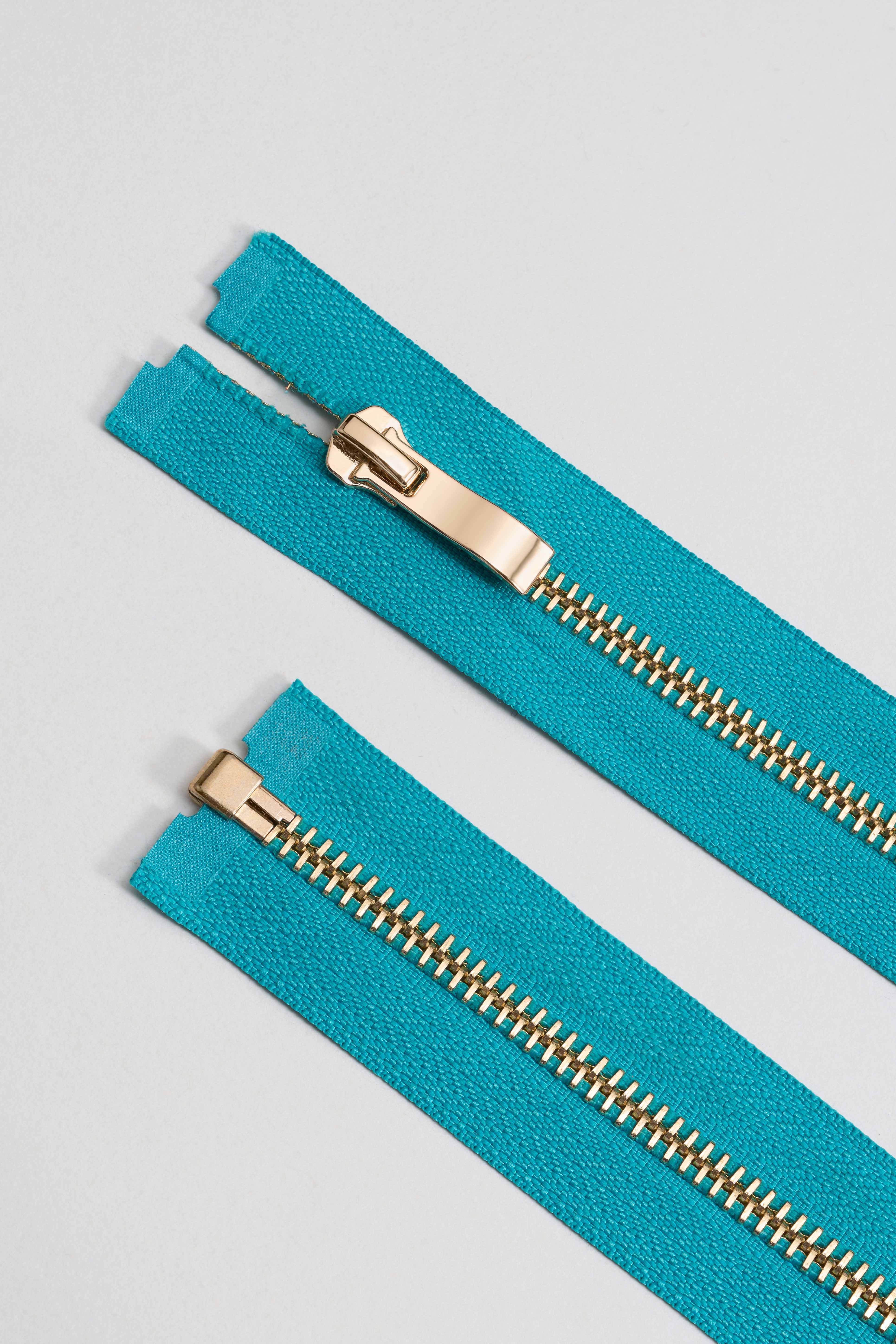
After-sales safeguards that reduce repeat-order risk
After-sales in a zipper program is mostly preventive. Three mechanisms do most of the work before a claim ever arises.
- Consistent surface finishes. Because brass plating colors and aluminum anodized colors are treated as specified attributes rather than incidental outcomes, the finish named on the approved sample becomes the reference for every subsequent lot. This is the single most common source of mismatch in metal zipper supply, and it is a specification problem before it is a production problem.
- Fixed tooth-type options. Y teeth, Euro teeth, normal teeth and corn teeth are distinct profiles with distinct interlocking behaviour. Naming the profile on the order prevents a supplier from substituting a visually similar tooth that changes slider feel and pull force on the finished garment.
- OEM and ODM logo sliders and pullers. Custom logos are handled as tooling decisions under OEM or ODM, which means the logo geometry, slider shape and slider color are approved once and then repeated. A logo that is re-interpreted per lot is a brand problem, not a trim problem.
Step-by-Step: From Approved Sample to Repeat Orders
The sequence below converts an approved sample into a supply program that can be audited. Each step produces a written record.
- Write the measurable criteria onto the order. Crosswise tensile strength of 510N for brass or 410N for aluminum alloy, salt spray test beyond 24 hours, and smooth sliding performance. These are the values a disputed lot is measured against.
- Freeze the specification sheet. Record zipper length, tape color, teeth color, teeth shape, slider shape, slider color and zipper size. The tooth profile must be named as Y, Euro, normal or corn, and the size as #3, #5 or #8.
- Lock the finish reference. For brass, name the plating color (gold, antique brass, gunmetal or nickel silver) and state the nickel-free brass requirement if EU REACH compliance is needed. For aluminum, name the finish (bright silver, matte silver, black or champagne anodizing).
- Approve logo tooling under OEM or ODM. Confirm slider shape, slider color and puller logo geometry on a physical approved unit before volume production begins.
- Confirm commercial terms. Minimum order quantity of 2,000 pieces and a lead time of 7 to 30 days, agreed against the production calendar rather than against the sample turnaround.
- Test before shipment. 100% pre-shipment test is performed on the outgoing lot, so a deviation is caught at the factory rather than at the sewing line.
- Compare lot against lot on each repeat order. Keep the approved sample and the specification sheet together, and check incoming lots against both. This is where long-term supply either holds or degrades.
Where This Supply Model Fits
Both metal lines serve the garment and apparel, luggage and handbag, outdoor goods, footwear, home textile and light workwear industries. Within those categories, the operating conditions differ enough to justify separate specifications. Garment and bag applications are typically daily indoor use at normal temperature, where the function is lightweight opening and closing for sealing and fast opening and closing of garments and bags, operated by manually sliding the slider back and forth. Outdoor applications face normal or low temperature, rain and snow, where the zipper reinforces fabric seams against dust and rainwater and adds metallic texture to the finished item, with self-locking sliders that hold position instead of sliding down.
Production context matters as much as end use. These zippers are applied in mass production of ready-made clothes, luggage manufacturing, supporting processing of outdoor equipment, home textile products, finished shoe processing and customised orders for brand accessories. They are assembled with polyester yarn tape, garment fabrics such as nylon, cotton, waterproof fabric and leather, standard sewing and luggage sewing machines, sliders, top stops, bottom stops, pins and boxes, and TPU film for waterproof constructions.
Case reference: four years of aluminum alloy supply to an EU fast fashion brand
An overseas fast fashion brand producing spring and autumn lightweight windbreakers and casual coats, with operations in France and Spain, moved its zipper supply to aluminum alloy and has run the program for four years of stable cooperation. Finished garments from that program are normally used by end consumers for one to two years. The recorded results were a 38% reduction in garment total weight, a 59% cut in material procurement cost versus the original brass zippers, a reciprocating sliding performance that met the industry standard, a defective complaint rate below 0.3%, and OEKO-TEX eco certification supporting smooth EU customs clearance. The aluminum unit price was 40% of the brass zipper price, and anodized surfaces resisted regular washing, which suited lightweight spring and autumn apparel.
The case is useful because it shows which variable drives a material decision. Here the design intent was lightweight outerwear with a metallic look, so aluminum satisfied the appearance requirement while changing weight and cost. For leather bags, jeans or premium apparel, the brass line remains the fit, and the 510N tensile value is the reason it can be specified with confidence.
Brass vs Aluminum Alloy: Acceptance Comparison
| Acceptance attribute | Brass zipper | Aluminum alloy zipper |
|---|---|---|
| Material | Brass teeth, polyester tape | Aluminum |
| Crosswise tensile strength | 510N | 410N |
| Salt spray test | Beyond 24 hours | Beyond 24 hours |
| Sliding performance | Smooth | Smooth |
| Weight position | Reference weight | 35% to 50% lighter than brass |
| Cost position | Premium metal option | Competitive cost against brass |
| Surface finishes | Gold, antique brass, gunmetal, nickel silver plating | Bright silver, matte silver, black, champagne anodizing |
| Tooth profiles | Y teeth, Euro teeth, normal teeth, corn teeth | Y teeth, corn teeth, normal teeth, Euro teeth |
| Sizes | #3, #5, #8 | #3, #5, #8 (held in stock) |
| Compliance option | Nickel-free brass option, compliant with EU REACH | Standard aluminum alloy line |
| Typical applications | Leather bags, jeans, outdoor luggage, premium apparel | Hard luggage, backpacks, sportswear |
| Custom logo slider and puller | Accepted under OEM and ODM | Accepted under OEM |
Size reference: #3, #5 and #8 denote the width of the zipper teeth in millimetres when the zipper is closed, so a size callout controls dimension rather than strength.
FAQ
1. Is there a nickel-free brass zipper option that complies with EU REACH?
Yes. The brass line includes a nickel-free brass option that is compliant with the EU REACH standard. Brass zippers are otherwise available in several plating colors, including gold, antique brass, gunmetal and nickel silver, so the nickel-free requirement should be written onto the purchase order and the approved sample record rather than assumed from the color name. The manufacturer holds ISO 9001 and OEKO-TEX Standard 100 certification, and in one EU fast fashion program OEKO-TEX eco certification supported smooth customs clearance for the finished garments.
2. Can this supplier support custom zipper orders for jacket production?
Yes. Jacket production falls within the garment and apparel application that both the brass and aluminum alloy lines serve. A jacket order can specify Y teeth, Euro teeth, normal teeth or corn teeth; sizes #3, #5 and #8; tape color, teeth color, slider shape, slider color and zipper length; and OEM or ODM custom logo sliders and pullers. Material is the choice that changes a jacket most: aluminum alloy is 35% to 50% lighter than brass and is widely used for sportswear and lightweight outerwear, while brass is used for premium apparel and jeans where a metallic finish is part of the design.
3. What is the minimum order quantity, and how do the two materials compare on cost?
The minimum order quantity is 2,000 pieces. On cost, aluminum alloy is positioned as a competitive-cost alternative to brass, and the difference is material at garment scale. In a four-year program for an overseas fast fashion brand supplying spring and autumn lightweight windbreakers and casual coats, moving from brass to aluminum alloy cut material procurement cost by 59% versus the original brass zippers, with the aluminum unit price at 40% of the brass zipper price, and garment total weight fell by 38%. The same program recorded a defective complaint rate below 0.3%.
4. What acceptance criteria should be written into the order after the sample is approved?
Write the measurable values, not just a sample reference. For this supply line the core numbers are crosswise tensile strength of 510N for brass and 410N for aluminum alloy, plus a salt spray test result beyond 24 hours for both materials. Add smooth sliding performance, the tooth profile (Y, Euro, normal or corn), the size (#3, #5 or #8) and the exact surface finish color. Verification happens through 100% pre-shipment testing on the outgoing lot, so the check occurs at the factory rather than after the goods reach the sewing floor.
5. What lead time applies to repeat orders, and what after-sales support is included?
Lead time is 7 to 30 days. After-sales support is delivered as remote technical support, which is most effective when the request includes the failed unit, the lot reference and the approved sample record, so finish, tooth profile and slider geometry can be compared against the agreed specification in one pass. Buyers can request a sample or a quotation through www.cnyab.com, or contact the sales team directly at liam@cnyab.com or +86 13705778502 (phone and WhatsApp) to start a specification review.
Conclusion: The Order Document Is the After-Sales Program
Long-term brass and aluminum alloy supply is decided before the first repeat order ships, not after the first complaint. A program that names 510N or 410N, states a salt spray test beyond 24 hours, fixes the tooth profile and size among #3, #5 and #8, and locks the plating or anodized finish has already removed most of the failure modes that after-sales would otherwise have to absorb. Consistent surface finishes, defined tooth-type options and OEM or ODM tooling for logo sliders and pullers are the mechanisms that keep lot two identical to lot one, and 100% pre-shipment testing is the point at which the document is checked against the product.
Buyers comparing suppliers should therefore ask for the values, not the samples. The samples confirm design; the values confirm supply.
Next Step: Specification Review and Sample Request
Send the intended application, the material (brass or aluminum alloy), the size (#3, #5 or #8), the tooth profile and the target finish color. Wenzhou Runhe Garment Accessories Co., Ltd (YAB ZIPPER) will respond with a specification match and a sample arrangement, with a minimum order quantity of 2,000 pieces and a lead time of 7 to 30 days.
Website: www.cnyab.com | Email: liam@cnyab.com | Tel / WhatsApp: +86 13705778502
Download the full company profile and product capability document: YAB ZIPPER Company Profile (PDF)

Have Questions or Need More Details?
Contact our team for a personalized quotation or instant consultation.
Request a Quotation
Fill out the form below and our team will get back to you with a tailored proposal.
WhatsApp Direct Chat
Prefer to chat in real-time? Message us on WhatsApp for instant assistance & quick answers.
- Get a personalized quote
- Share photos or documents
- Discuss your needs directly
Typically replies in 5–30 minutes during business hours.