
Custom Zipper Technical Guide: Aluminum Alloy Tooth Profiles, Sizes, and Finishes
A custom zipper in aluminum alloy is defined by three variables that must be fixed together: tooth profile, size number, and surface finish. YAB ZIPPER, the export brand of Wenzhou Runhe Garment Accessories Co., Ltd., runs aluminum Y-teeth and related profile lines in sizes #3, #5 and #8, finished with anodizing such as bright silver, matte silver, black and champagne, at a specified crosswise tensile strength of 410N and salt spray resistance beyond 24 hours. Aluminum alloy teeth are specified 35%–50% lighter than comparable brass, and OEM logo sliders and pullers can be tooled onto the same order.
This guide is written for buyers who have already moved past the brass-versus-aluminum decision and are now in the execution phase: hard luggage and backpack programs, sportswear and garment production, outdoor goods and footwear. The question this article answers is narrower and more operational: how do you translate an application brief into an aluminum alloy zipper specification that can be reordered, re-tested and repeated without drifting?
The Real Problem: Three Variables Buyers Treat as Independent
Most aluminum zipper failures in production do not come from picking the wrong material. They come from specifying profile, size and finish in three different places, at three different times, by three different people — the profile inside the technical drawing, the size inside the bill of materials, and the finish inside a comment field as a color name.
Tooth profile is a load-path decision, not a styling decision. Y teeth, Corn teeth, Euro teeth and Normal teeth differ in tooth geometry, which changes how the two chains interlock, how much tape edge is exposed when the zipper is closed, and how the slider travels across the chain. When profile is treated as cosmetic, the specification never states what load the zipper position actually has to carry — and the tensile target becomes an afterthought.
Finish is a process decision, not a color decision. Writing "black" in a tech pack does not tell a factory whether the teeth are painted, plated or anodized. Anodizing is the process that simultaneously delivers color and corrosion protection, so the quality of the anodizing line and the pre-treatment of the aluminum determine whether the teeth stay black after washing, rubbing and sweat exposure — or fade unevenly across a batch.
Aluminum also carries known durability boundaries that have to be designed around. Aluminum teeth are softer than brass teeth, and the practical consequences are documented: at equal opening and closing frequency, a brass zipper lasts over 35% longer; the compression threshold of brass teeth is around 40% higher; and aluminum teeth tend to loosen and cause jamming after long-term friction, which means sliding performance can deteriorate visibly if the anodizing and deburring stages are weak. Aluminum is also prone to oxidation discoloration when exposed to sweat or seawater for long periods, which is why an anti-oxidation anodizing finish is not optional in humid end markets.
The failure modes that appear when these variables are handled loosely are well catalogued in the industry: impure aluminum alloy teeth, color deviation of polyester tape, misaligned teeth, sharp burrs, oxidized discoloration after anodizing, stuck sliding, insufficient tensile strength, teeth damage after repeated pulls, salt spray corrosion, color fading after washing and rubbing, inconsistent batch quality, and wrong or missing shipment. The section that follows shows where each of these is controlled.
Where Aluminum Alloy Sits in the Global Zipper Market
Aluminum alloy is a meaningful and growing slice of metal zipper production, not a niche substitute. The global zipper market was valued at USD 17.39 Billion in 2024 and is projected to reach USD 36.73 Billion by 2034, a CAGR of 7.8% from 2025 to 2034 (Market Research Future). Within that market, nylon zippers accounted for 46% of total global consumption in 2025, while metal zippers held a 31% share — and brass plus aluminum together represented 67% of metal zipper production (Business Research Insights).
Supply is concentrated. Global trade in slide fasteners (HS 9607) reached USD 3.15 Billion in 2024, with China alone accounting for USD 1.52 Billion of exports (OEC). Wenzhou, in Zhejiang Province, is one of the clusters behind that figure, and Wenzhou Runhe Garment Accessories Co., Ltd. is the sixth president unit of the Wenzhou Zipper Chamber of Commerce (YAB ZIPPER Official).
One technical convention matters for everything that follows. The size numbers #3, #5 and #8 are not arbitrary codes — they refer to the width of the zipper teeth in millimeters when the zipper is closed, so a #5 measures approximately 5 mm across the closed teeth. Profile, size and finish therefore describe three different physical properties of the same part: shape, scale and surface.
How an Aluminum Alloy Custom Zipper Is Built at YAB ZIPPER
Tooth profiles: Y teeth, Corn teeth, Euro teeth and Normal teeth
Runhe operates dedicated tooth-forming lines for Y teeth, ordinary teeth (the Normal family), Corn teeth, Swiss teeth and particle teeth, covering copper and aluminum. In the aluminum program, four profile families are most often specified by buyers:
- Y teeth — the core profile of the aluminum program. Runhe runs aluminum Y-teeth lines, and the same Y-tooth geometry is also produced in copper, which makes it the profile buyers can evaluate in both materials before committing.
- Corn teeth — a rounded tooth family with its own dedicated production line, generally chosen when the brief calls for a softer silhouette across the closed chain.
- Euro teeth — a profile family common in Europe-facing garment and luggage programs, specified when the design brief names the European profile convention.
- Normal teeth — the conventional metal profile, produced on the ordinary-teeth line, used where the brief calls for a standard tooth shape rather than a signature silhouette.
Profile naming is not fully standardized across regions and customers, so the practical rule for buyers is to specify the profile together with a retained physical sample or an approved drawing reference. A name alone leaves room for interpretation; a retained sample does not.
Size numbers: #3, #5 and #8
Size selection follows the load and the visible scale of the part. #3 is typically used on lighter trims and smaller openings, #5 is the general-purpose size across garment, backpack and mid-size luggage applications, and #8 is specified where a heavier chain and a larger visual presence are required. Because the number maps to the closed tooth width, moving from #3 to #5 changes not only strength but also the tape width, the slider size and the finished appearance of the seam — which means size changes should be treated as design changes, not as substitutions.
Anodized finishes: bright silver, matte silver, black and champagne
Aluminum Y teeth are finished in-house through anodizing rather than painted. The finishes most frequently specified for aluminum alloy custom zippers are bright silver, matte silver, black and champagne. Bright silver reads as a clean metallic tone and is often paired with light garment tape; matte silver reduces reflection for technical and outdoor aesthetics; black is the most demand-heavy finish for luggage, backpacks and footwear because it hides edge wear; champagne sits between silver and warm gold and is chosen where the hardware palette is warmer than the trim.
The wider Runhe treatment palette includes ancient silver, antique copper, brass, light gold, black teeth, white gold, bright silver and bright black, and the plant also runs aluminum Y teeth with a titanium alloy plating series in platinum, black gold, light gold and rose gold. Finish selection should always state the process (nickel-free anodizing) rather than only the color, because the process is what determines both the color stability and the corrosion performance.
Mechanical and corrosion targets: 410N, 24-hour salt spray, 35%–50% weight saving
For a purchase specification to be testable, it needs numbers. The parameters buyers should write into an aluminum alloy custom zipper brief are:
- Crosswise tensile strength: 410N specified for the aluminum alloy lines. This is the figure that separates a genuine luggage-grade aluminum chain from a light-duty trim chain. For context, the crosswise tensile strength of an aluminum zipper is roughly 100N lower than a brass zipper of the same size, so the tensile target must be matched to the position on the product, not copied from a brass part number.
- Salt spray resistance: greater than 24 hours, achieved through anodizing. This is the spec that protects the zipper in coastal humidity, sweat exposure and repeated washing.
- Weight: 35%–50% lighter than brass at comparable size. This is the primary reason aluminum enters a hard luggage, backpack or outerwear program.
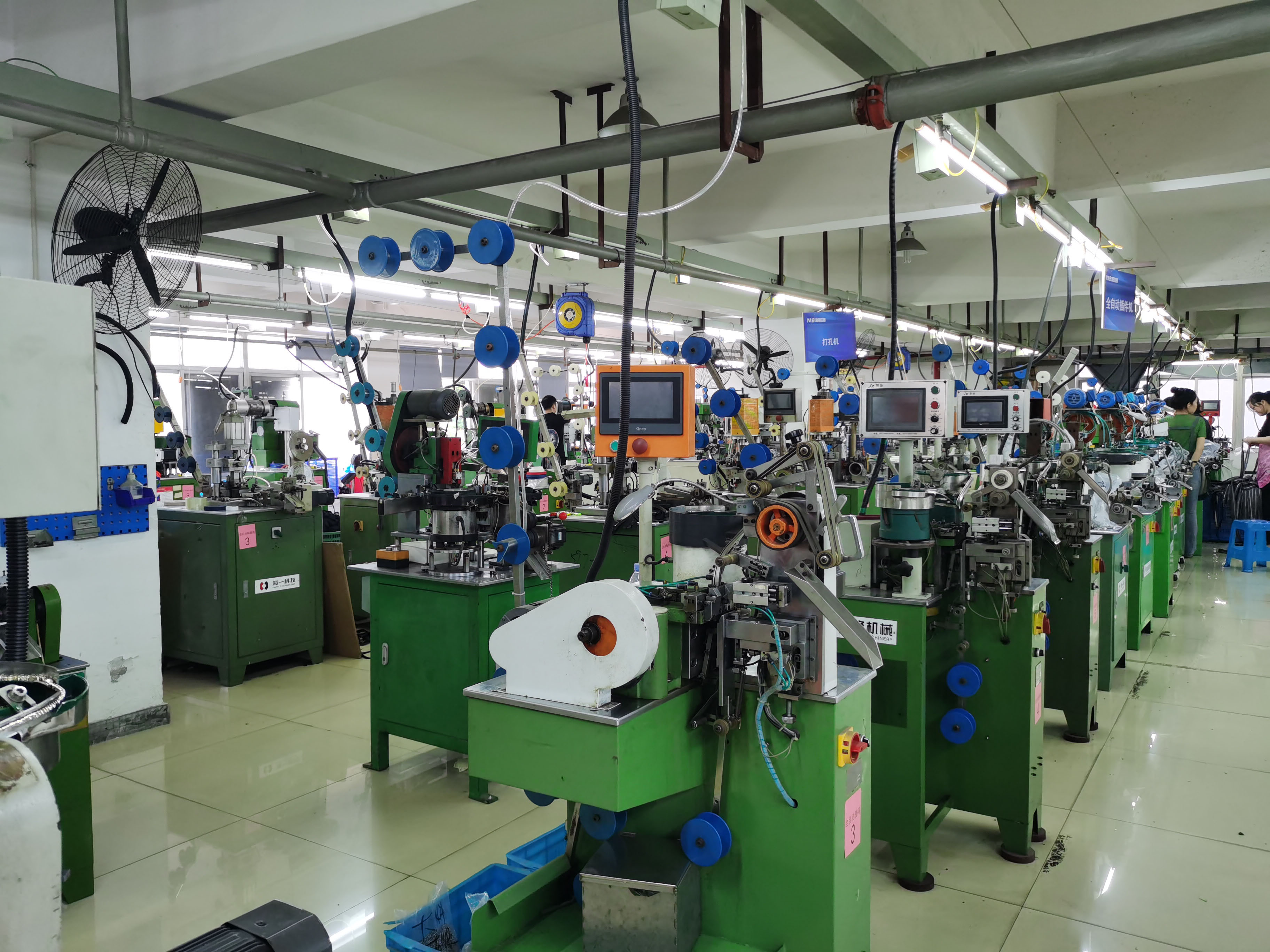
- Sliding performance: smooth pull across the full chain, supported by CNC anodizing lines and automatic deburring equipment that remove the burrs and sharp edges responsible for catching and jamming.
- Cost: lower raw material cost than brass, with additional savings from easier forming and lower stamping and deburring loss, which reduces labor and energy consumption per unit.
OEM logo sliders and pullers
Custom zipper programs are usually branded at the slider and the puller, and both can be tooled with an OEM logo. Because the logo tooling is a fixed asset reused across reorders, it should be recorded as part of the specification baseline alongside the profile, size, finish code and tape color. A change in slider tooling mid-program changes the pull force, the visual weight of the hardware and the tooling cost — three things buyers rarely want to revisit after the first production run.
The plant behind the specification
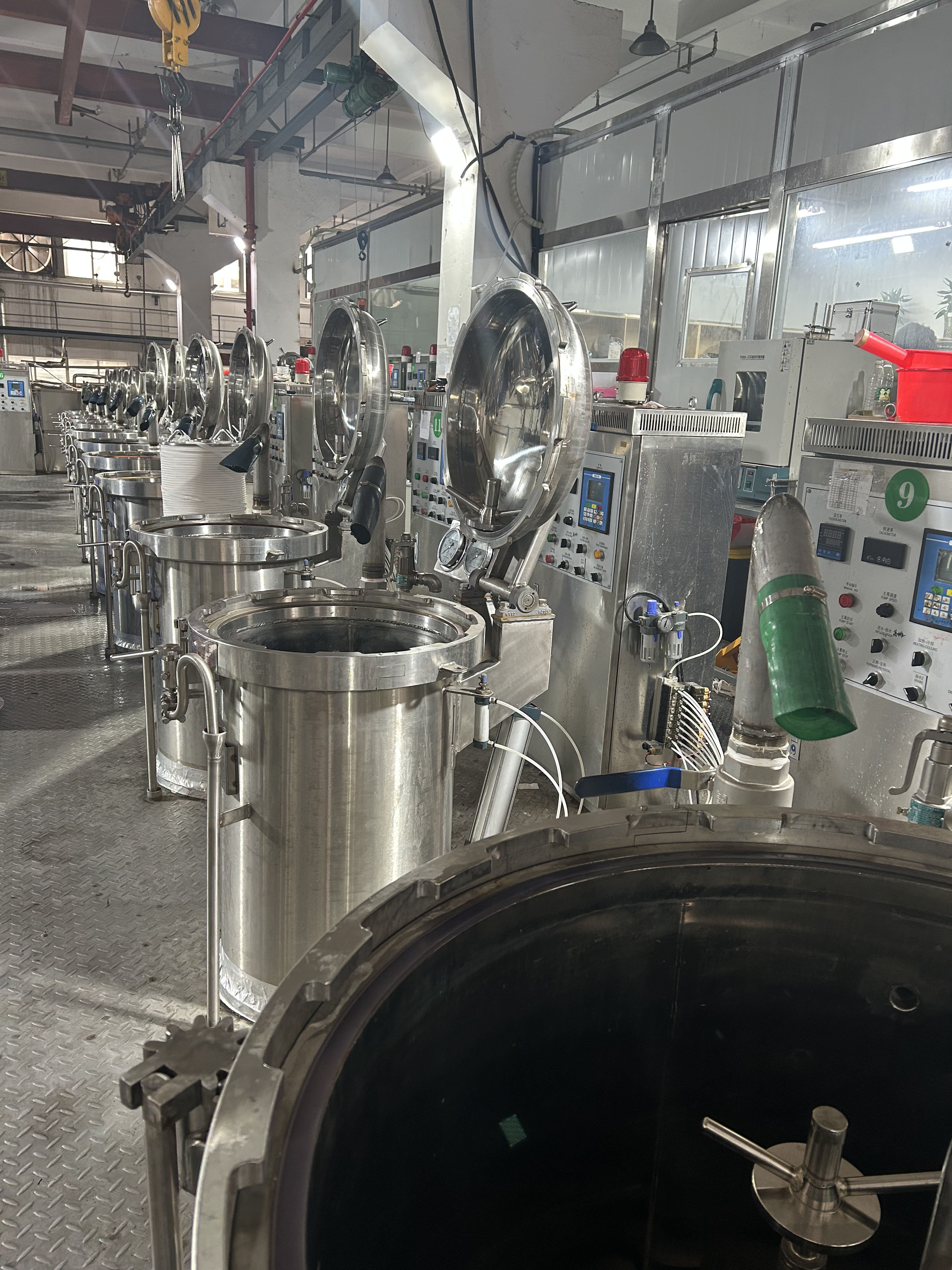
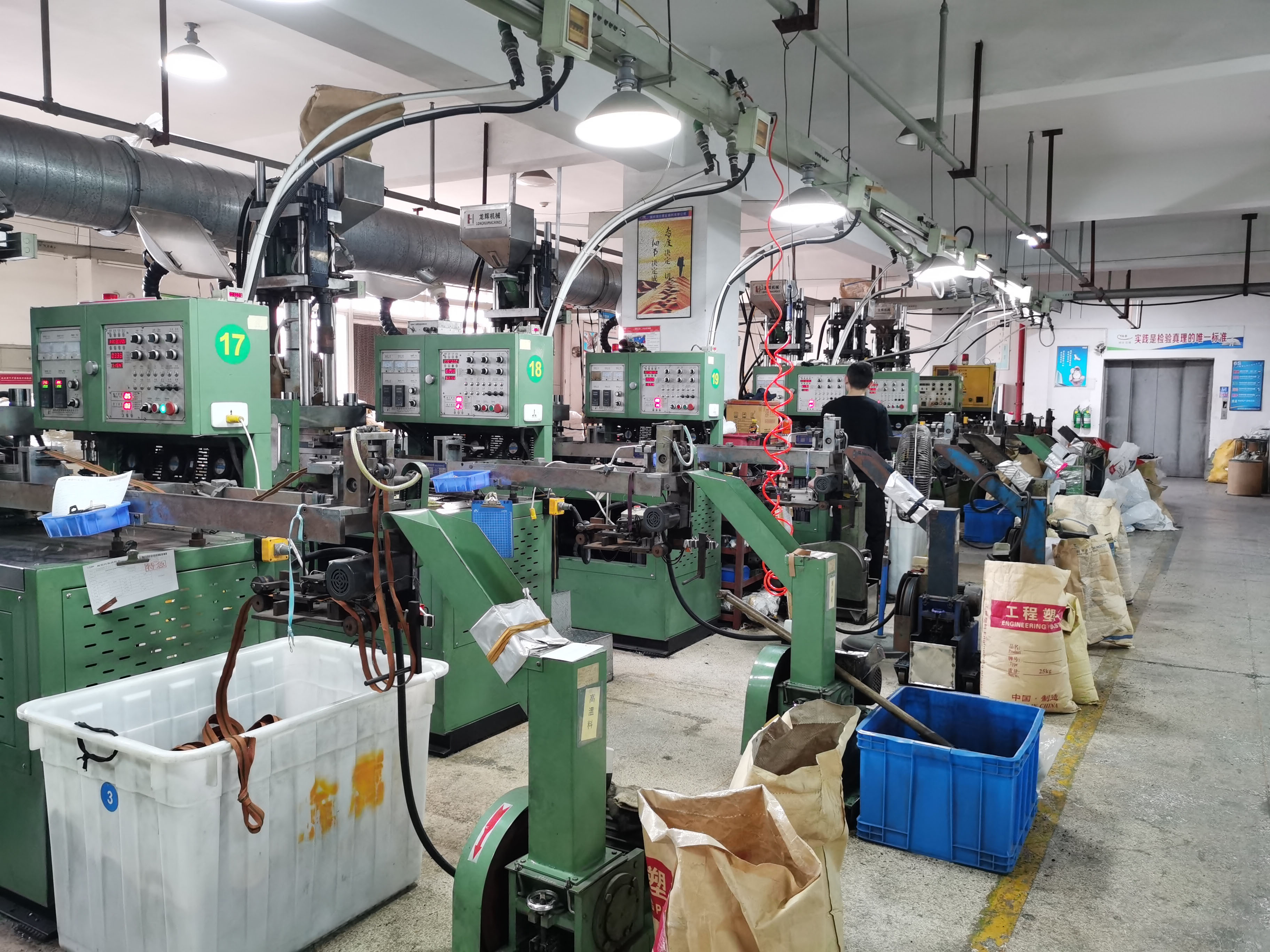
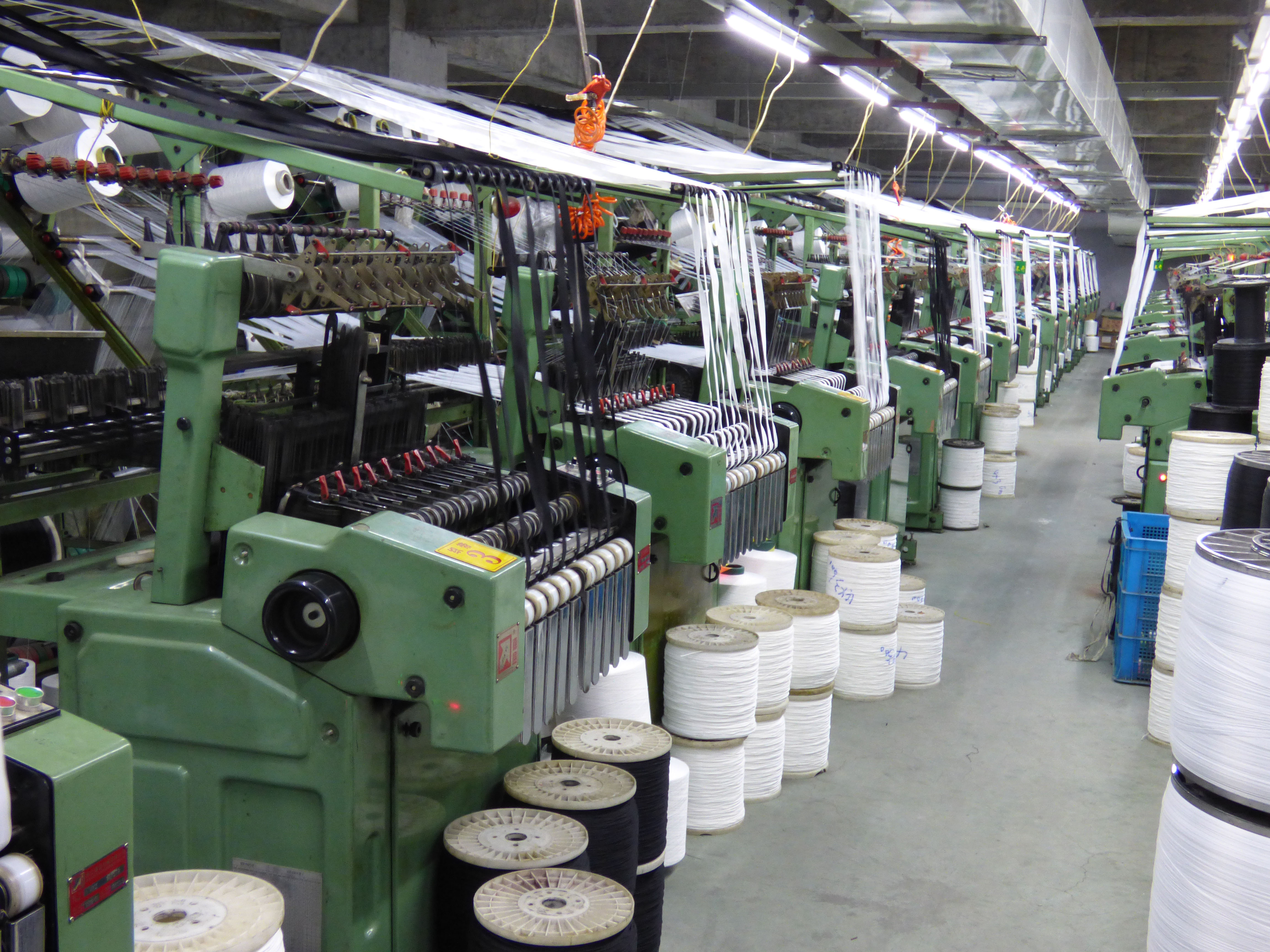
Wenzhou Runhe Garment Accessories Co., Ltd. was founded in 1995 and operates a 10,000 m² facility with 150 employees and an annual output of 70,000,000 pieces, supported by more than 500 zipper production machines and an in-house R&D team of 10 engineers. The company integrates research and development, production and sales, holds ISO 9001 and OEKO-TEX Standard 100 certification, and exports around 30% of output, with Southeast Asia among its main markets. Contact information and the company profile brochure are listed at the end of this guide.
Step-by-Step: From Application Brief to a Frozen Aluminum Spec
- Define the load and the weight budget for each zipper position. List every zipper position on the product separately — main closure, pocket, internal liner, expansion panel — and state the expected load, the opening frequency and the weight target. A single "zipper" line in a bill of materials hides the fact that a luggage main closure and a lining pocket need different specifications.
- Select the tooth profile. Choose among Y teeth, Corn teeth, Euro teeth and Normal teeth based on the silhouette required and the interlock behavior expected on the finished seam. Confirm the choice against a physical sample or approved drawing reference rather than a profile name alone.
- Select the size. Match #3, #5 or #8 to the load and the visible scale of the part, remembering that the number equals the closed tooth width in millimeters. Changing size later changes tape width, slider size and seam appearance.
- Select the finish and the tape color together. Specify bright silver, matte silver, black or champagne as an anodized finish — not as a paint color — and confirm the tape color at the same time. Tape color deviation and tooth color mismatch are separate quality risks and should be approved as one visual standard.
- Validate the sample against written limits. Test crosswise tensile strength against the 410N specification, run salt spray beyond 24 hours, run reciprocating durability for repeated pulls, and check color fastness against washing and rubbing. Verify raw material composition so impure aluminum alloy teeth do not enter the program.
- Freeze the specification as a repeat-order baseline. Record profile, size, finish code, tape color, slider and puller tooling, and the test report references attached to the approved sample. This baseline is what makes the second, fifth and tenth order identical to the first.
Matching Profile, Size and Finish to the End Product
Hard luggage
Hard luggage was explicitly identified as a case where brass is not the first choice, which places aluminum alloy — at 35%–50% lighter — in the natural position. A typical aluminum luggage specification uses #5 or #8 with Y teeth, finished in black or champagne so that edge wear is less visible, with anodizing as the corrosion barrier. Buyers should specify the salt spray limit above 24 hours rather than assuming it, because a luggage zipper is exposed to airport humidity, rain and handling abrasion.
Backpacks
Backpacks combine weight sensitivity with frequent opening and closing. #5 with Y teeth or Normal teeth in matte silver or black is the practical range, with tensile strength checked against 410N for main compartments and lighter specifications accepted for small pocket zippers. Backpacks also benefit from the weight saving most visibly, because several zippers are mounted on the same product.
Sportswear and garment
In garment production, aluminum alloy is used on lightweight spring and autumn coats, kids' clothing and fast fashion casual garments where the teeth are visible and the weight of a metal chain matters. #3 or #5 with Normal or Corn teeth in bright silver or matte silver is the usual combination. Tape dye compatibility across materials is comparable between aluminum and brass lines, so garment programs can move between the two without re-engineering the tape.
Outdoor goods
Outdoor gear is the most demanding aluminum application inside the medium-load range. Salt spray beyond 24 hours, deburred edges and a stable anodized black or champagne finish are the controlling requirements. For long-term seaside or high-salt exposure, the limitation should be stated openly: aluminum alloy is not the recommended choice for the most severe corrosion environments, and brass remains the more conservative option there.
Footwear and small goods
Shoe zippers and cosmetic bags use shorter chains where weight and finish consistency dominate over tensile load. #3 or #5 with Normal teeth in black or matte silver covers most footwear briefs, and the same specification set transfers directly to cosmetic bags and home textile trims.
Aluminum Alloy vs Brass: Selection Table
The table below compares aluminum alloy and brass across the criteria that decide the material in a production program.
| Selection criterion | Aluminum alloy | Brass |
|---|---|---|
| Weight per meter at comparable size | 35%–50% lighter than brass | 35%–50% heavier than aluminum |
| Crosswise tensile strength | Specified at 410N on the aluminum alloy lines; approximately 100N below brass of the same size | Higher; the reference point for heavy-load chains |
| Service life at equal opening/closing frequency | Shorter; teeth are softer under heavy, frequent operation | Over 35% longer than aluminum |
| Anti-deformation capacity | Lower compression threshold | Around 40% higher compression threshold than aluminum teeth |
| Corrosion and oxidation behavior | Prone to oxidation discoloration under prolonged sweat or seawater exposure; anodizing is required, with salt spray above 24 hours | Probability of oxidation white spots reduced by 60% under normal environment |
| Sliding performance | Smooth pull when anodizing and deburring are controlled; teeth can loosen and cause jamming after long-term friction | Stable sliding resistance that decays slowly over time |
| Cost structure | Raw material far cheaper than brass; easier forming with less stamping and deburring loss, reducing labor and energy cost | Higher raw material cost; the price gap can be narrowed through mass production arrangement |
| Best suited to | Lightweight coats, kids' clothing, fast fashion casual garments, backpacks, cosmetic bags, home textiles, and lightweight hard luggage | Leather goods, denim garments, workwear, high-end bags and cases, and products requiring long-term durability |
| Stated limitations | Not recommended for heavy workwear, long-term seaside high-salt environments, or heavy-duty high-load luggage | Not the first choice for ultra-lightweight hard luggage |
FAQ: Aluminum Alloy Custom Zippers in Repeat Programs
Are YAB ZIPPER aluminum alloy zippers compliant for EU and US garment and luggage programs?
Wenzhou Runhe Garment Accessories Co., Ltd. holds ISO 9001 and OEKO-TEX Standard 100 certification and runs nickel-free anodizing together with eco-friendly dyeing processes. Compliance risks specific to aluminum zippers — excessive heavy metals, azo dyes and phthalates failing EU and US standard tests — are controlled through raw material testing with XRF metal composition analysis, color fastness testing, and regular third-party laboratory testing. Finished goods are sampled under the international AQL 1.0 standard, so a compliance claim is backed by inspection documentation rather than by a material statement alone.
Can the same aluminum alloy tooth profile, size and finish be repeated across multiple reorders?
Repeatability is managed at three levels. First, the specification itself: profile, size, finish code, tape color and slider or puller tooling are fixed on the approved sample. Second, production control: a three-stage QC system covering IQC incoming inspection, IPQC in-line patrol inspection and FQC 100% finished goods inspection, with automatic tooth forming machines, CNC anodizing lines and automatic deburring equipment to prevent misaligned teeth, sharp burrs, oxidized discoloration and stuck sliding. Third, traceability: raw material batches, production work orders and test reports are bound into archives, and samples with test reports from each batch are retained for at least two years. Order details are double-checked — size, tooth type and tape color — before shipment.
How should a buyer compare the cost of aluminum alloy against brass over a long production program?
Aluminum alloy raw material is far cheaper than brass, and aluminum forms more easily with less loss during stamping and deburring, which lowers labor and energy consumption per unit. Brass carries a higher raw material cost, and that gap can be narrowed through mass production arrangement. A like-for-like comparison should therefore be built on total delivered cost per finished product rather than on tooth price alone: the aluminum side includes anodizing, corrosion testing and the weight reduction that lowers freight on light goods, while the brass side includes a longer service life, fewer after-sales failures and no extra protective coating against oxidation.
How do we validate an aluminum alloy custom zipper sample before placing a production order?
Validation is built around the numbers in the specification. Confirm crosswise tensile strength against the 410N target, run salt spray testing beyond 24 hours, run reciprocating durability testing for the expected opening and closing frequency, and test color fastness after washing and rubbing. Verify raw material composition to exclude impure aluminum alloy teeth, approve the anodized finish and tape color together as one visual standard, and confirm the OEM logo slider and puller tooling at the same time. Acceptance for production orders is based on pre-shipment testing, so the sample result and the shipment result are measured against the same standard.
What are the ordering terms, and how is lead-time risk controlled on a repeat aluminum program?
The minimum order quantity is 2,000 pieces or meters, with FOB Shanghai and FOB Ningbo as delivery terms and pre-shipment test as the acceptance criterion. Payment terms are 30% T/T in advance, with the remaining 70% T/T after goods are delivered into the warehouse. Lead-time risk is controlled through capacity planning — multiple independent production lines and standby equipment are kept available to avoid production shutdown and delay — combined with sealed batch sampling, double order verification before shipment, and an after-sales commitment to respond to customer complaints within 48 hours, with free re-delivery or rework for defective products and compensation for inspection losses. To start a specification review, send your profile, size, finish and target application to liam@cnyab.com or WhatsApp +86 13705778502, and request a sample set that includes the retained test references.
Conclusion: The Specification Is the Long-Term Asset
Aluminum alloy custom zippers earn their place in hard luggage, backpacks, sportswear, footwear and outdoor goods because they are 35%–50% lighter than brass, cost less at the raw material and processing level, and slide smoothly when the anodizing and deburring stages are properly controlled. What determines whether that advantage survives into year three is not the material choice but the specification discipline around it: a named tooth profile among Y teeth, Corn teeth, Euro teeth and Normal teeth; a size from #3, #5 and #8 tied to the actual load; an anodized finish in bright silver, matte silver, black or champagne; and written limits for 410N crosswise tensile strength and salt spray beyond 24 hours.
That is also where the long-term relationship sits. A supplier that can retain batch samples and test reports for two years, trace raw material batches through production work orders, run three-stage QC, and tool OEM logo sliders and pullers as a reusable asset is a supplier whose output in reorder number ten will match the approved sample from order number one. Wenzhou Runhe Garment Accessories Co., Ltd., founded in 1995 and the sixth president unit of the Wenzhou Zipper Chamber of Commerce, builds aluminum Y-teeth, Corn-teeth, ordinary-teeth, Swiss-teeth and particle-teeth lines with in-house anodizing in Wenzhou, Zhejiang — and works with buyers to hold the specification fixed across the life of the product.
Next Step: Request an Aluminum Alloy Custom Zipper Sample Set
Share your application, zipper position, target size (#3, #5 or #8), preferred finish (bright silver, matte silver, black or champagne) and logo artwork for the slider and puller. YAB ZIPPER will return a specification proposal, a sample set with retained test references, and a quotation based on MOQ 2,000 pieces or meters, FOB Shanghai or FOB Ningbo.
Wenzhou Runhe Garment Accessories Co., Ltd. (YAB ZIPPER)
Wenzhou, Zhejiang, China
Email: liam@cnyab.com · Tel / WhatsApp: +86 13705778502
Website: www.cnyab.com
Company profile and full product range: download the Runhe Zipper Company Profile (PDF)
Address: No.8 Xigong West Rd., Longwan, Wenzhou, Zhejiang, China.

Have Questions or Need More Details?
Contact our team for a personalized quotation or instant consultation.
Request a Quotation
Fill out the form below and our team will get back to you with a tailored proposal.
WhatsApp Direct Chat
Prefer to chat in real-time? Message us on WhatsApp for instant assistance & quick answers.
- Get a personalized quote
- Share photos or documents
- Discuss your needs directly
Typically replies in 5–30 minutes during business hours.