
Custom Zipper Sourcing After the Sample: Building a Long-Term Supply Partnership
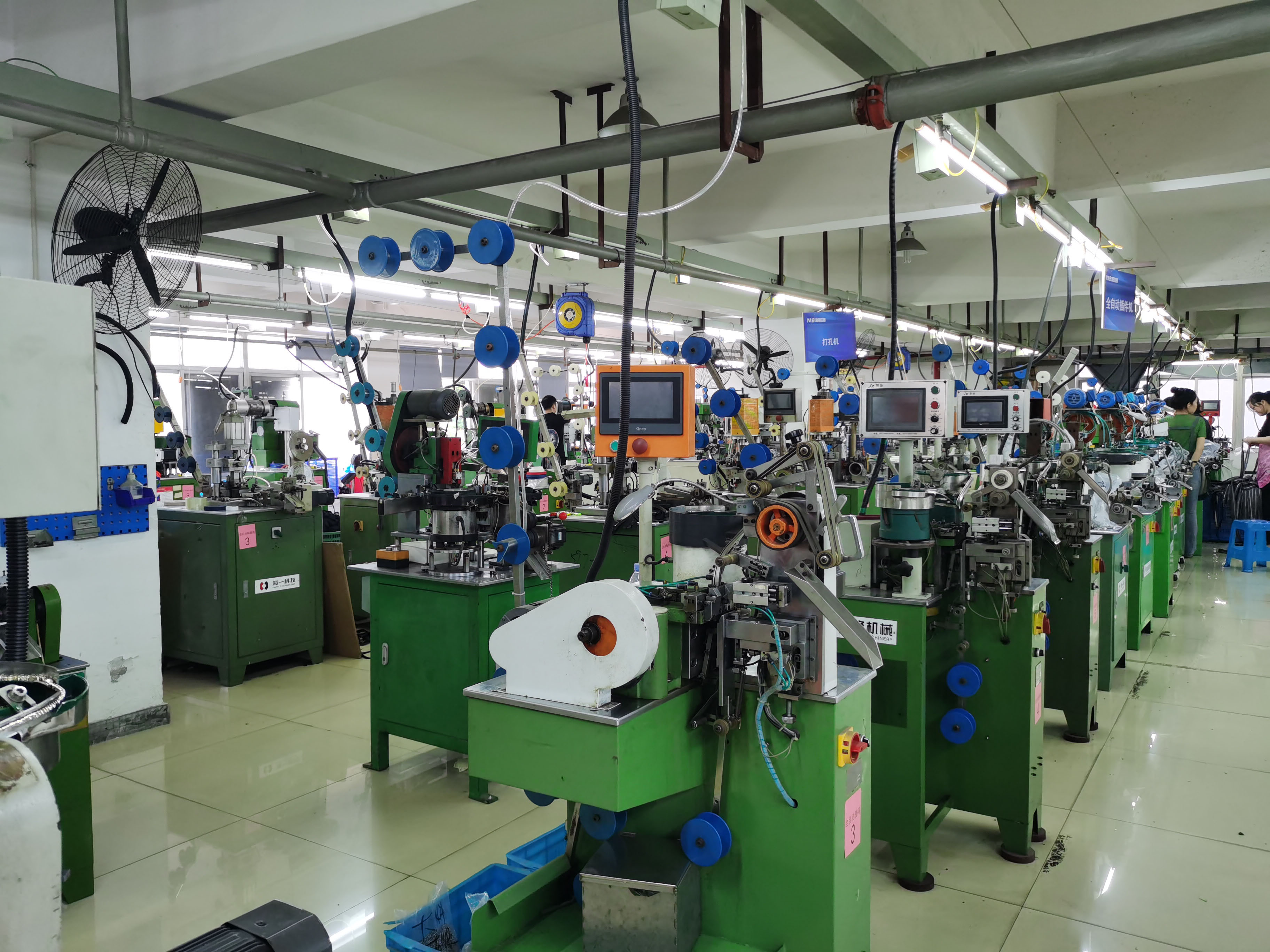
Finishing and inspection are part of the production system that determines whether a custom zipper program remains consistent across repeated orders.
When a custom zipper program reaches the decision-to-execution stage, the real question is no longer whether one sample looks right. It is whether the same manufacturer can reproduce the approved quality order after order, across seasonal colours, multiple materials, and realistic production schedules. Brands sourcing garment zippers, luggage zippers, shoe zippers, metal zippers, or other custom zippers need a supplier system that supports continuity, not just a supplier that supports the sample review.
One relevant example is Wenzhou Runhe Garment Accessories Co., Ltd., better known by its trade name YAB ZIPPER. The company operates from No.8 Xigong West Rd., Longwan, Wenzhou, Zhejiang. YAB ZIPPER supplies metal zippers including brass and aluminum alloy models, and also works with resin and nylon zipper categories. Buyers compare these product lines because brass zippers and aluminum zippers sit at different price points and behave differently over a product life cycle.
Why Decision-Stage Buyers Need More Than a Passing Sample Result
For years, importers and brand owners treated the zipper as a low-risk accessory: order a sample, approve it, and release a bulk order. In practice, the sample stage is only the first checkpoint. Long-term procurement risk shows up later in forms such as tooth misalignment, sharp burrs, colour fade, oxidation after surface treatment, stuck sliders, insufficient tensile strength, or inconsistent batch quality. These issues can delay garment production, luggage assembly, or shoe manufacturing.
Problem definition for procurement teams looking for a custom zipper source therefore shifts from product evaluation to supplier evaluation. The visible zipper is easy to judge; the invisible manufacturing system behind it is what makes quality repeatable.
- A sample proves design intent. It does not prove that a 70-million-piece production environment can hold the same tolerance across hundreds of batches.
- Bulk quality depends on raw material discipline, process control, and finished-product inspection. These are factory capabilities, not sample attributes.
- When an order fails after delivery, the buyer pays the real cost: rework, freight, delayed retail programs, or customer complaints. A long-term sourcing decision should therefore be based on systems that prevent those failures before shipment.
Zipper Demand and Trade Patterns Make Supplier Continuity More Important
Zippers are not a shrinking commodity category. Market Research Future estimates that the global zipper market was valued at USD 17.39 billion in 2024 and could reach USD 36.73 billion by 2034, with a projected CAGR of 7.8% from 2025 through 2034. Trade data published by the Observatory of Economic Complexity shows that global zipper trade under HS 9607 reached USD 3.15 billion in 2024, and China accounted for approximately USD 1.52 billion of export value.
Material demand also indicates where the long-term procurement emphasis will sit. According to Business Research Insights, nylon zippers accounted for about 46% of global zipper consumption in 2025, while metal zippers held a 31% share. Within metal zipper production, brass and aluminum represented roughly 67% of output.
For procurement executives, these market signals matter because they influence capacity planning. Distributors, importers, and brand owners who secure a stable custom zipper production base can respond faster to demand shifts, while teams that re-source every season face repeated qualification cycles, higher sample costs, and more quality uncertainty.
What a Long-Term Custom Zipper Factory Should Be Able to Show
A long-term custom zipper supplier should demonstrate more than product photos. The following evidence points are practical for a buyer who is moving from decision to execution.
1. Real manufacturing scale and production continuity
YAB ZIPPER was founded in 1995 and operates in Wenzhou, a mature zipper manufacturing cluster. The factory area is approximately 10,000 square meters, with 150 employees and more than 500 zipper production machines. Its annual output capacity reaches roughly 70 million pieces. The company also maintains a 10-person R&D engineering team.
This scale matters for execution in one way: multi-line production reduces the risk that a single breakdown stops the whole program. YAB ZIPPER states that it keeps multiple independent production lines and standby equipment to prevent production shutdown and delayed delivery.
2. Product-line and material depth
During the decision-to-execution phase, buyers often need to move between brass and aluminum, or between metal and non-metal products. YAB ZIPPER places its commercial focus on metal zippers and has developed lines for copper Y teeth, ordinary teeth, corn teeth, Swiss teeth, and particle teeth. The applicable product range includes brass zippers and aluminum alloy zippers in Y-teeth, euro teeth, normal teeth, and corn-teeth constructions.
Because YAB ZIPPER also lists resin and nylon zippers in its corporate profile, it gives buying teams a wider menu when they test a new material direction. This can simplify the sourcing chain for brands that buy several closure types across garments, bags, luggage, and footwear.
3. Manufacturing control from incoming material to finished goods
A factory that is built for repeatability needs a structured quality system. YAB ZIPPER describes a three-stage QC framework: IQC incoming inspection, IPQC in-line patrol inspection, and FQC 100% finished-goods inspection. Incoming materials are checked against an approved supplier list, and every incoming batch is inspected. Runs that do not meet the standard are rejected before entering production.
The manufacturer also supports process-level checks with XRF metal composition detectors, colour fastness testers, tensile strength testers, automatic deburring equipment, reciprocating durability testers, salt spray test chambers, and washing-and-rubbing test equipment. These are the tools that turn material risk into measurable control.
4. Lab standards and inspection discipline
YAB ZIPPER states that sampling inspection follows the international AQL 1.0 standard. Finished-product tests occur before shipment, and the buyer can request pre-shipment testing as a condition of acceptance. In addition, the company binds raw material batches, production work orders, and test reports into a full-process traceability archive. Batch samples and test reports are retained for at least two years.
5. After-sales accountability
Even with strong controls, execution problems can appear at the customer end. YAB ZIPPER’s stated after-sales policy includes responding to customer complaints within 48 hours, providing free re-delivery or rework for defective products, compensating inspection losses, and following a double-order verification process before shipment. The pre-shipment checks cover size, tooth type, and tape colour to reduce the chance of wrong or missing goods.
6. Commercial terms that support scaling
The commercial package is also part of execution readiness. YAB ZIPPER sets a general MOQ of 2,000 pieces or meters. Standard delivery terms are FOB Shanghai and FOB Ningbo. Payment terms are 30% T/T in advance and 70% T/T after the goods are delivered into the warehouse. These conditions are straightforward for import buyers planning a first production order and allow the supplier to reserve capacity.
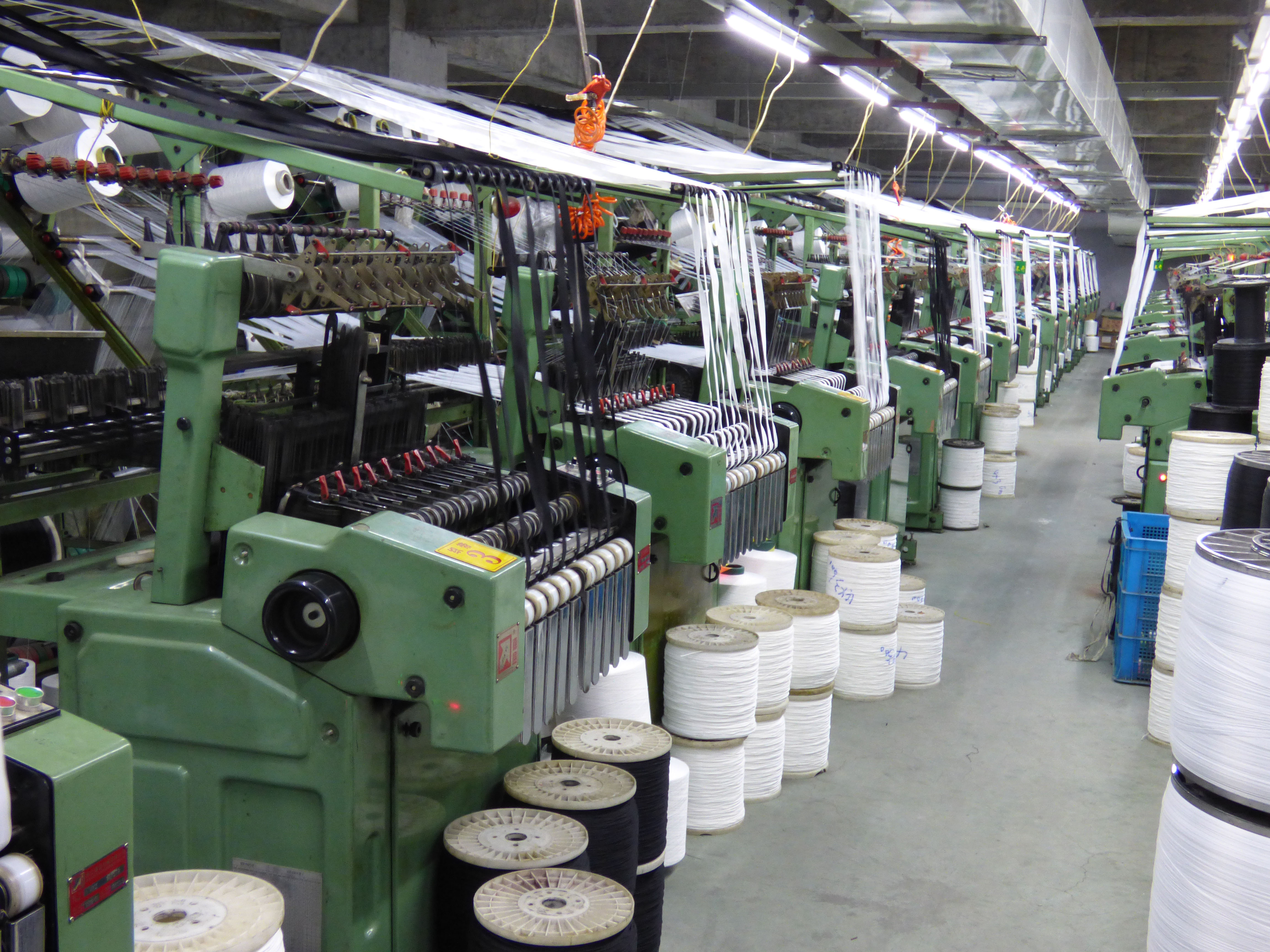
Tape weaving, dyeing, tooth attaching, and finishing sit inside the manufacturing chain that buyers should evaluate before committing to repeat zipper orders.
How to Move from Sample Approval to Repeatable Execution
Buyers can apply the following execution sequence whether the product is a brass jacket zipper, an aluminum luggage zipper, or a nylon style for light garments. Each step clarifies what the manufacturer will do and what the buyer should document.
- Freeze the full custom zipper specification. Confirm the tooth line, base material, tape colour, chain width, slider type, top and bottom stops, length, and packaging requirement. For metal zippers, the manufacturer should confirm whether the construction is Y-teeth, euro teeth, normal teeth, or corn teeth.
- Lock the surface-finish standard. If the product uses an aluminum alloy or brass zipper, surface appearance should be documented against a physical standard. YAB ZIPPER has developed aluminum Y-teeth surface treatments including antique silver, antique copper, antique bronze, light gold, black teeth, white gold, bright silver, and bright black. Aluminum Y-teeth can also be finished with a plated titanium alloy series in platinum, black gold, light gold, and rose gold. Describing these options in writing avoids subjective colour disputes later.
- Use the sample as a control sample, not as the only check. Once the sample is approved, it belongs in the batch traceability system. YAB ZIPPER keeps batch samples and test reports so that future production can be compared with the originally approved quality.
- Agree on acceptance criteria before bulk production. The buyer can state that inspection will follow AQL 1.0, that finished goods must pass pre-shipment testing, and that the test report will be attached to the shipment file.
- Plan for capacity and delivery coordination. Because lead times can shift with seasonal demand, service and reliability discipline matters. YAB ZIPPER says it keeps multiple independent production lines and standby equipment to protect its delivery schedule. In practice, this translates into better buffer capacity for repeat orders.
- Set a review cadence. Long-term buyers should periodically review defect rates, colour consistency, delivery performance, and cost. A good supplier relationship is managed, not merely ordered.
Choosing Between Brass and Aluminum for Long-Run Programs
For buyers who have already selected a custom zipper factory, the most common execution decision is material choice. Brass and aluminum are both considered metal zippers, but they behave differently in weight, strength, surface treatment, and cost. Comparing them is not about good versus bad; it is about matching the zipper to the end-use lifecycle.
| Decision factor | Brass zipper | Aluminum alloy zipper |
|---|---|---|
| Crosswise tensile strength in specification | 510N | 410N |
| Typical price level | Higher raw-material cost; unit purchase price is 12% to 25% higher than an aluminum zipper. The gap can narrow with mass production. | Unit price sits around 40% of a comparable brass zipper, making it a more economical metal option. |
| Weight | 35% to 50% heavier than an aluminum zipper | Lighter; weight per meter is 35% to 40% lower than brass |
| Mechanical durability | Brass teeth have higher hardness and stronger resistance to extrusion and wear. Under the same opening and closing frequency, brass zipper service life is reported to last over 35% longer than aluminum. Compression threshold is about 40% higher than aluminum. | Aluminum is softer and may loosen or deform under heavy load, frequent use, or long-term abrasion. |
| Oxidation and moisture behaviour | Lower probability of oxidation white spots under normal environments; can withstand higher humidity and salt spray. | Performs stably under normal temperature and regular washing, but is more prone to oxidation discoloration from sweat or seawater. Anti-oxidation anodizing is recommended for humid or high-salt environments. |
| Typical fit in the YAB range | Relevant for leather goods, denim garments, workwear, high-end bags and cases, and products that need premium texture, frequent use, or long life. | Relevant for lightweight spring and autumn coats, children's clothes, fast-fashion casual garments, backpacks, cosmetic bags, home textiles, and medium-light load scenarios. |
| Limits to consider | Higher weight and material cost; not the first choice for ultra-lightweight hard luggage. | Not recommended by the source comparison for heavy workwear, long-term seaside high-salt environments, or heavy-duty high-load luggage. |
The same factory can run both material families. YAB ZIPPER specifies both brass zippers and aluminum alloy zippers for apparel, luggage, outdoor goods, and footwear. That allows a buying team to standardize on one supplier while selecting the material that fits the actual product category.
Use Cases: Applying the Material Logic in Apparel, Luggage, and Footwear Buy Cycles
Garment, denim, and jacket programs
Jeans and workwear are among the most demanding garment applications for metal zippers. They receive repeated movement, washing, and abrasion. For denim garments and workwear, the YAB comparison material points to brass zippers because of hardness, anti-extrusion behaviour, and lower long-term failure risk. For lighter coats and children's apparel, aluminum zippers offer a cost-efficient metal look while keeping the final garment lighter.
Luggage and bag programs
Luggage buyers typically separate high-end cases from lightweight travel bags. Brass is listed as a better fit for leather goods and high-end bags and cases that need premium texture and long service life. Aluminum is appropriate for backpacks, cosmetic bags, and home textiles where lighter weight and lower cost dominate. For heavy-duty, high-load luggage, the source data warns against aluminum as a first choice.
Shoe and outdoor programs
According to YAB ZIPPER product applicability, its brass and aluminum zipper families cover outdoor goods and footwear as well as luggage and garment use. The buyer’s job is to test the specific closure frequency, exposure to moisture or sweat, and weight target before locking the material into the design.
Risk-Proofing the Relationship: What a Supplier Should Control
A long-term custom zipper relationship should include risk management at the raw material, production, compliance, durability, delivery, and after-sales levels. The following points are drawn directly from YAB ZIPPER’s documented quality-control framework.
- Raw material control: The company checks every incoming batch against an approved supplier list, rejects unqualified material, and uses XRF metal composition detection, colour fastness testing, and tensile strength testing.
- Production control: Automatic tooth-forming machines, CNC anodizing lines, and automatic deburring equipment reduce dimension and finish variation.
- Compliance control: YAB ZIPPER is ISO 9001 and OEKO-TEX Standard 100 certified, and it supports regular third-party laboratory testing to avoid excessive heavy metals, azo dyes, or phthalates that could fail EU or US standards.
- End-product testing: Reciprocating durability, salt spray, washing, and rubbing tests simulate real-life failure modes before the zipper is packed.
- Traceability: Raw material batches, production work orders, and test reports are tied together in a documented archive, with retained batch samples for at least two years.
- Staff discipline: Monthly training for production and QC teams is part of the company’s stated approach to reduce human-caused defects.
- Pre-shipment verification: A double check of size, tooth type, and tape colour is performed before shipment to prevent wrong deliveries.
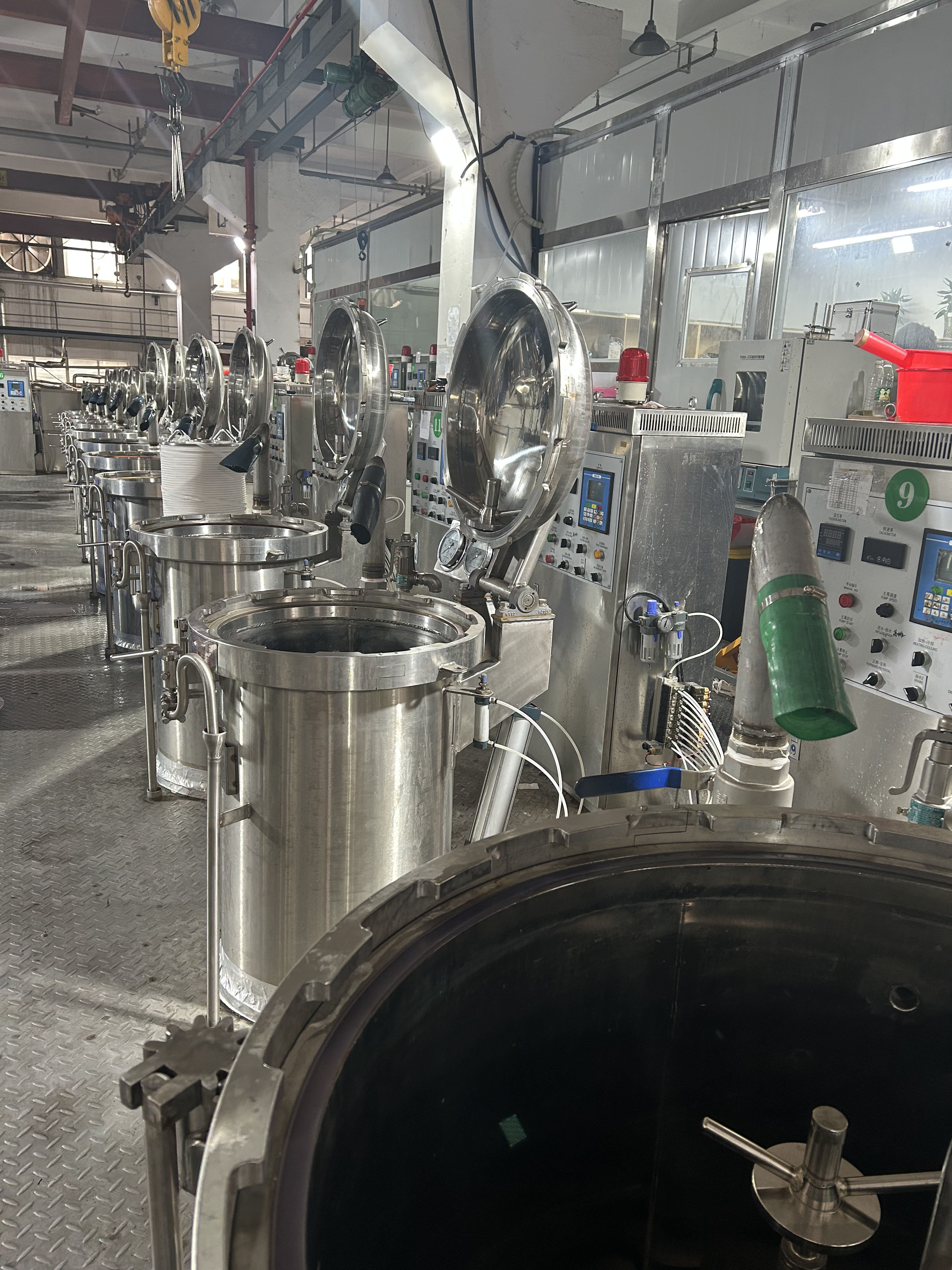
Tape colour consistency becomes a cross-batch requirement once a brand moves from sampling to seasonal production.
FAQ
1. What compliance checks should a custom zipper buyer re-verify before scaling with a manufacturer?
Compliance should sit in the manufacturer’s system, not only in a single certificate. A buyer can ask whether the factory holds ISO 9001 quality management certification and OEKO-TEX Standard 100 certification, and whether it tests for restricted substances such as heavy metals, azo dyes, and phthalates. Buyers should also ask about incoming material screening, AQL sampling rules, finished-goods testing, and whether third-party laboratory reports are available. In the YAB ZIPPER system, raw material batches are checked on receipt, finished goods are inspected through a three-stage QC process, and sampling follows AQL 1.0. The company also supports regular third-party testing and can provide pre-shipment test documents.
2. How can a buyer know that a factory can maintain consistent quality across repeated production runs?
Consistency depends on production architecture, not on a single QC inspector. A buyer should evaluate the number of independent production lines, the amount of forming equipment, the presence of standby machines, and the way batch samples are retained. YAB ZIPPER reports a factory area of about 10,000 square meters, more than 500 zipper production machines, and an annual capacity of about 70 million pieces. It also states that it maintains multiple independent production lines and standby equipment to avoid shutdown delays, and retains batch samples and test reports for at least two years. These are the controls that make repeated orders comparable to the original approval.
3. What is the most practical way to manage custom zipper cost when moving to long-term orders?
Cost control starts with material selection. Comparing the two main metal options, YAB ZIPPER’s internal comparison shows that aluminum alloy zippers cost roughly 40% of a comparable brass zipper per unit, while brass zippers offer higher hardness and longer service life under heavy use. A buyer can place aluminum zippers in medium-light garment and bag categories and reserve brass for workwear, denim, leather goods, and high-end cases. At the commercial level, YAB ZIPPER states that its general MOQ is 2,000 pieces or meters, with terms of 30% T/T in advance and 70% T/T after goods enter the warehouse. Consolidating forecast volumes and confirming delivery ports such as FOB Shanghai or FOB Ningbo helps the supplier plan production and narrow any price gap between brass and aluminum.
4. Is a sample still useful after the supplier decision is made?
Yes. At the decision-to-execution stage, the sample should act as the control for a production batch, not as a general marketing proof. Before a full order is released, buyers should confirm the tooth profile, tape colour, slider action, surface finish, and measurement of the custom zipper. The sample result should match the written specification package. If a defect appears in bulk production, the retained sample and test report allow the buyer to determine whether the issue is a deviation from the approved standard or a new requirement. YAB ZIPPER retains batch samples and test reports for at least two years to support this kind of comparison.
5. What lead-time and delivery considerations matter most when moving to repeat orders?
Buyers should treat confirmed delivery scheduling as a supplier capacity commitment, not as a hopeful estimate. It is important to agree on the port, the pre-shipment testing requirement, and the production window before the order starts. YAB ZIPPER operates from Wenzhou in Zhejiang, China, with delivery terms of FOB Shanghai or FOB Ningbo. Its stated quality setup includes pre-shipment testing, double verification of size and colour before shipment, and an after-sales response target within 48 hours for complaints. For procurement teams, the most effective way to lock execution is to share forecast dates, confirm the MOQ of 2,000 pieces or meters, and place the order with enough Schedule for surface treatment and finished-product testing.
Execution Starts with the Right Partner Review
Custom zipper procurement is part of a longer supply-chain relationship. The decision to work with a manufacturer should be based on how that factory manages raw materials, production processes, inspection, traceability, and after-sales response. Wenzhou Runhe Garment Accessories Co., Ltd. under the YAB ZIPPER trade name offers a relevant example for importing teams evaluating brass zippers, aluminum alloy zippers, nylon zippers, and other custom zipper requirements.
The company is based at No.8 Xigong West Rd., Longwan, Wenzhou, Zhejiang, China. Its product and process details are available through the official website at www.cnyab.com. Procurement teams that want a detailed look at product lines, certifications, and factory scale can download the public company profile PDF. Direct inquiries can be sent to liam@cnyab.com or by phone and WhatsApp at +86 13705778502.
Download YAB Zipper Company ProfileThe next step is practical: take the internal spec sheet, the colour standards, and the expected order window to the manufacturer, and ask for a pre-shipment test plan. That conversation will tell you more about long-term reliability than any single sample can.
Have Questions or Need More Details?
Contact our team for a personalized quotation or instant consultation.
Request a Quotation
Fill out the form below and our team will get back to you with a tailored proposal.
WhatsApp Direct Chat
Prefer to chat in real-time? Message us on WhatsApp for instant assistance & quick answers.
- Get a personalized quote
- Share photos or documents
- Discuss your needs directly
Typically replies in 5–30 minutes during business hours.