
Custom Zipper Decision Guide: Brass vs. Aluminum and How to Choose Your Production Line
Choosing between brass and aluminum custom zippers is a purchasing decision that directly affects your product's cost, durability, and after-sales performance. A garment made for daily wear and a heavy-duty luggage line require different metal zipper specifications. Buying from a supplier with a verifiable production system and defined quality checks reduces the risk before the order is placed.
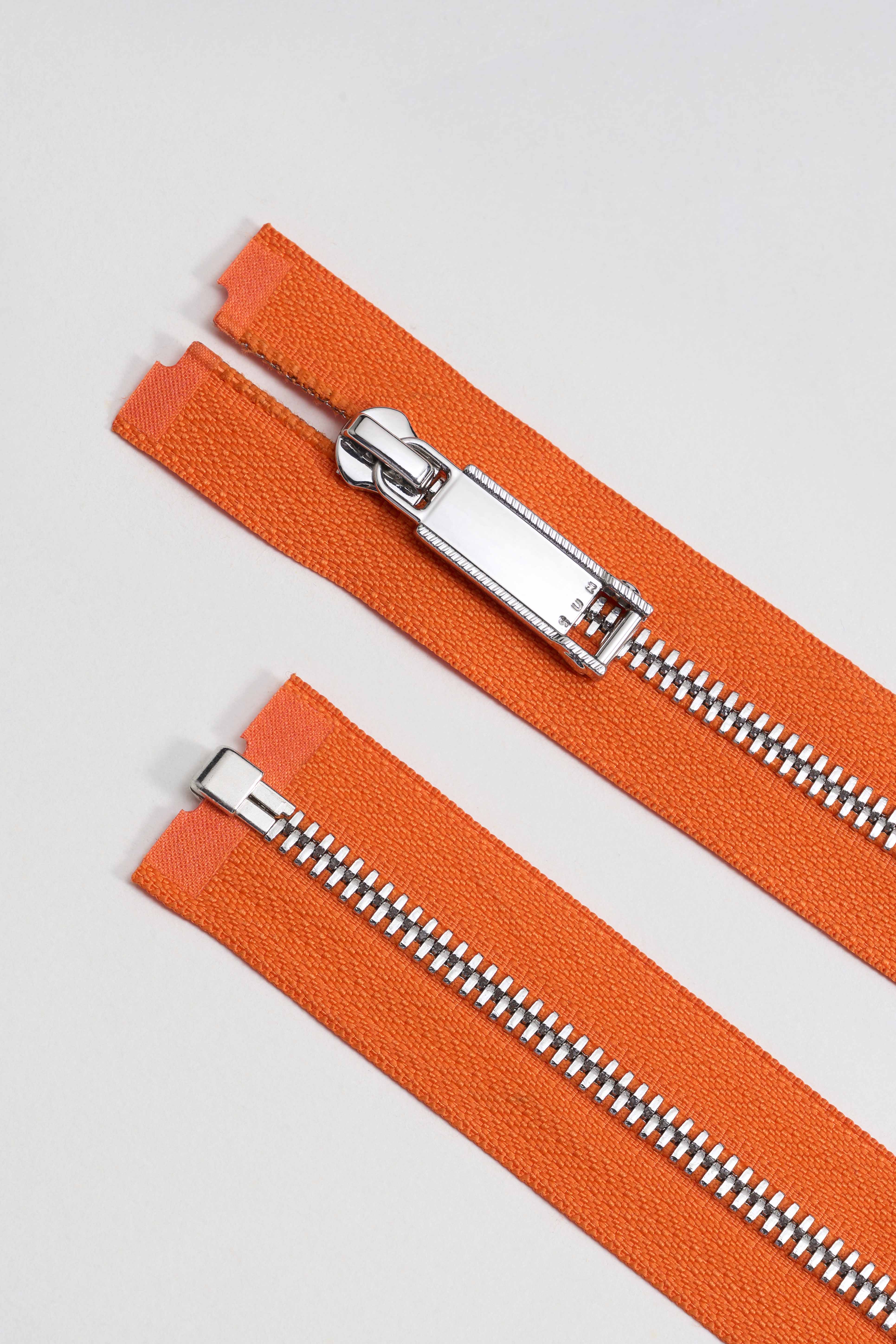
What Makes This a Comparison Decision
This article is designed for sourcing managers, brands, and manufacturers that have already identified metal zippers as a possible material solution and now need to compare brass zippers and aluminum zippers. Both materials are classified as metal zippers, but the performance and cost differences are significant enough to change the product outcome.
Zipper sizing follows a universal numbering system in which the number denotes the width of the closed teeth in millimeters. A #5 zipper has teeth about 5 mm wide when closed. This means that a material comparison should be made only within the correct size and application context.
Why Custom Zipper Buyers Compare Brass and Aluminum
Brass and aluminum have different physical properties, price points, and finishing possibilities. Buyers in apparel, luggage, footwear, and accessory categories typically face the same question: which material satisfies the required load, environment, and brand image at the right total cost?
Brass is denser and stronger in compression and friction. Aluminum is lighter and lower in cost but has different mechanical limits. The choice is not about which is universally better; it is about matching the application with the material's performance envelope.
Market Context for Metal Zippers
The global zipper market context helps explain why this comparison matters. Market research reports estimate the global zipper market at USD 17.39 billion in 2024, with projections reaching USD 36.73 billion by 2034. According to industry data, nylon zippers accounted for 46% of global consumption in 2025, while metal zippers held 31%. Inside the metal zipper segment, brass and aluminum represented 67% of production.
China is a major supplier in this category. Global trade in zippers classified under HS 9607 reached USD 3.15 billion in 2024, with China accounting for USD 1.52 billion in exports. A large share of the custom zipper supply chain draws on manufacturing clusters in Wenzhou, where companies such as Wenzhou Runhe Garment Accessories Co., Ltd. operate integrated production lines.
Brass Zippers vs. Aluminum Zippers: The Core Comparison
The comparison below is based on physical behavior, product reliability, application fit, and purchasing cost. It is intended to help a decision-maker structure a supplier discussion or internal product review.
Durability and Service Life
Brass teeth have higher hardness and deliver stronger resistance to extrusion and wear. Under equal opening and closing frequency, a brass zipper provides over 35% longer service life than an aluminum zipper. Brass also demonstrates a higher anti-deformation threshold, which buyers should interpret as more stable geometry when the zipper is opened and closed repeatedly.
Mechanical Strength
For crosswise tensile strength, an aluminum alloy zipper of the same size is roughly 100N lower than a brass equivalent. This does not mean aluminum is defective: it satisfies standard requirements for many ordinary garments. The gap only becomes decisive when a product is expected to handle heavy loads, frequent operation, or harsh environmental stress.
Weight
Brass zippers are 35% to 50% heavier than aluminum zippers. In lightweight garments, the difference can affect drape, comfort, and shipping weight. In denim, leather goods, and workwear, the extra weight usually reads as substance rather than a disadvantage.
Moisture and Oxidation
Brass has a lower probability of developing oxidation white spots under normal environments, with data indicating a 60% reduction compared with aluminum. Aluminum is more vulnerable to oxidation discoloration when exposed to sweat or seawater for long periods, and therefore needs an anti-oxidation anodizing finish in humid conditions.
Surface Treatment and Aesthetic Options
Brass zippers support a richer set of plating colors. Manufacturing facilities commonly produce antique silver, antique copper, brass, light gold, black teeth, white gold, bright silver, and bright black effects on aluminum Y-teeth, but the finish technology on brass still reaches a standard that positions it as a premium metal option for leather goods and high-end bags.
Cost Difference
The unit price of a brass zipper is typically 12% to 25% higher than an aluminum zipper. On a raw-material basis, aluminum alloy is far cheaper, and aluminum stamping creates less material loss, reducing labor and energy costs. The total purchasing cost for the same specification can be around 40% of a brass zipper when volume is arranged efficiently. Buyers should treat this as a range, not a fixed quotation, because final pricing depends on size, tape type, finish, quantity, and packaging.
After-Sales and Maintenance Behavior
In practice, brass zippers produce fewer after-sales failures and complaints because of stable sliding resistance and slower performance decay. Aluminum teeth can loosen after long-term friction and cause jamming, creating an obvious decline in operating experience. In humid environments, aluminum needs protective treatment, and customers may report abrasion or missing teeth if the application demands more than the material can handle.
Where Each Material Fits Best
Brass zippers are the stronger choice for leather goods, denim garments, workwear, high-end bags and cases, and products that require frequent long-term use, a premium texture, or durability under repeated handling.
Aluminum alloy zippers are more suitable for lightweight spring and autumn coats, kids' clothing, fast fashion casual garments, backpacks, cosmetic bags, home textiles, and other medium-light load scenarios. Aluminum is not the first choice for heavy workwear, long-term seaside high-salt environments, or heavy-duty high-load luggage.
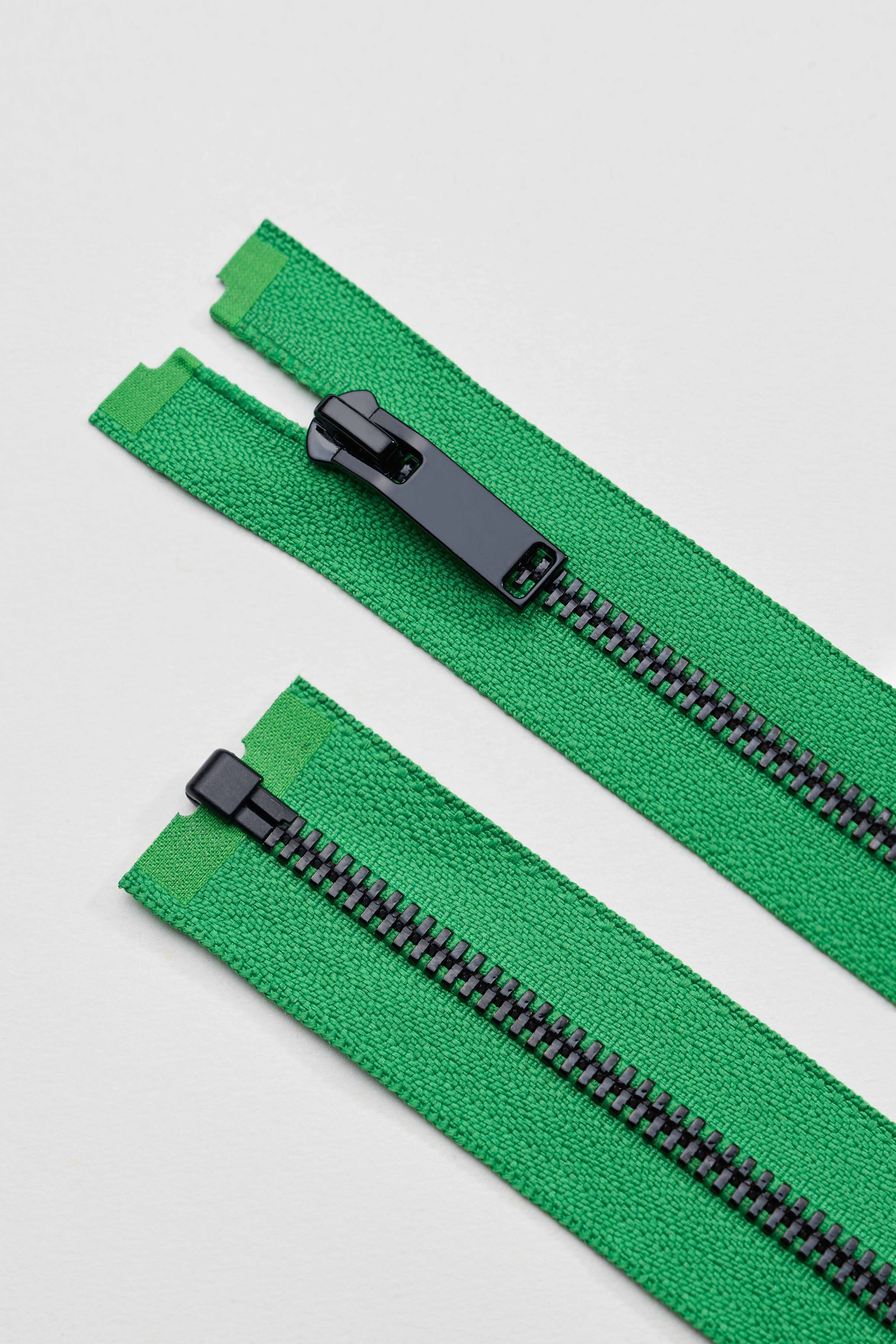
Comparison Table: Brass vs. Aluminum Zippers
| Criteria | Brass Zipper | Aluminum Zipper |
|---|---|---|
| Service life at same opening/closing frequency | Over 35% longer vs. aluminum | Baseline |
| Anti-deformation capacity | About 40% higher than aluminum | Baseline |
| Weight | 35%–50% heavier | Lighter |
| Crosswise tensile strength (same size) | Roughly 100N higher than aluminum | Baseline |
| Oxidation white spot probability in normal environment | About 60% lower than aluminum | Baseline |
| Relative unit purchasing price | 12%–25% higher than aluminum | Lower; total cost can be about 40% of brass for same spec |
| Best-fit applications | Leather goods, denim, workwear, premium bags and cases | Light coats, kids' wear, fast fashion, backpacks, home textiles |
| Recommended surface treatment | Plating options; stable under humidity | Anti-oxidation anodizing required in humid conditions |
How the Supplier Selection Affects the Comparison
A material comparison is not complete without evaluating the manufacturer's process controls. The same brass or aluminum raw material can produce different results depending on the production line quality, plating process, and inspection discipline.
Manufacturing Capability and Scale
Wenzhou Runhe Garment Accessories Co., Ltd., which operates under the YAB ZIPPER brand, is one example of a manufacturer with an integrated zipper operation. The company was founded in 1995 and is located in Wenzhou, Zhejiang. Its facility covers 10,000 m² and employs around 150 people, with an annual output of approximately 70 million pieces. About 30% of production is exported, with Southeast Asia listed as a primary market.
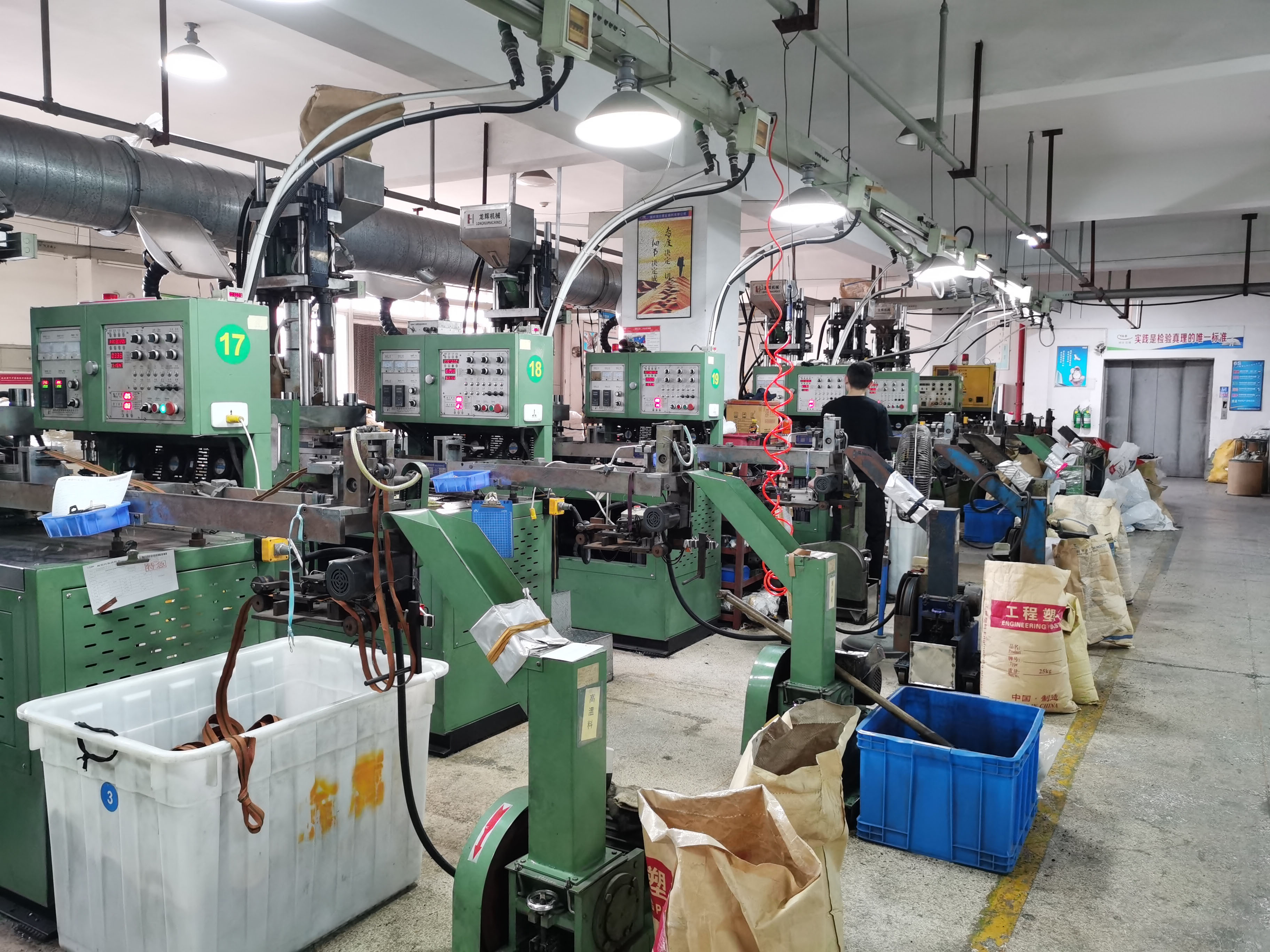
The company's production scope covers copper, aluminum, resin, and nylon zippers. It operates more than 500 zipper production machines and maintains teams that specialize in webbing, tooth attaching, dyeing, and finishing processes. For custom projects, the company has a research and development team of around 10 engineers.
Production Lines Relevant to Metal Zippers
For metal zippers specifically, the YAB facility has put into operation copper Y-teeth production lines that also process ordinary teeth, corn teeth, Swiss teeth, and particle teeth. In aluminum finishing, the company has developed surface treatments including antique silver, antique copper, brass, light gold, black teeth, white gold, bright silver, and bright black. It has also introduced an aluminum Y-teeth plated titanium alloy series with platinum, black gold, light gold, and rose gold categories, with surface treatment reaching the standard of the copper zipper series.
For resin products, the company uses more than ten tooth coating processes and has applied for three patent technologies related to resin-series tooth shapes. This range matters because brands that need a visual or functional family across metal and plastic zippers can consolidate orders at one factory.
Quality System and Compliance
Wenzhou Runhe is the sixth president unit of the Wenzhou Zipper Chamber of Commerce and has been elected president in 2018. It holds ISO9001 and OEKO-TEX Standard 100 certifications. These certifications matter to custom zipper buyers because they provide a baseline for process consistency and restricted-substance control.
Risk Control in Custom Zipper Production
When comparing brass vs. aluminum, the quality risk discussion must address raw material, process, compliance, durability, delivery, and after-sales conditions.
Raw Material and Process Risks
Potential risks include impure aluminum alloy teeth, color deviation of polyester tape, excessive heavy metals, misaligned teeth, sharp burrs, oxidation discoloration after anodizing, stuck sliders, and insufficient tensile strength. A supplier should prevent these through raw material testing instruments such as XRF metal composition detectors, color fastness testers, and tensile strength testers, plus process equipment such as automatic tooth forming machines, CNC anodizing lines, and automatic deburring equipment.
Compliance and Environmental Risks
Excessive heavy metals, azo dyes, or phthalates can cause failure in EU and US standard tests. Manufacturers that cannot trace these risks place the entire shipment at risk. Control measures include strict incoming material inspection, approved supplier lists, and regular third-party laboratory testing.
Durability and Testing
Because the brass vs. aluminum choice is often about durability, the factory testing process matters. Standard equipment should include reciprocating durability testers, salt spray test chambers, and washing and rubbing testing equipment. Batch sample retention should cover at least two years so that any field complaint can be investigated against the original material and production record.
Delivery and After-Sales
Delivery performance risks include delayed lead time, inconsistent batch quality, and wrong or missing goods. An effective response structure includes multiple independent production lines, standby equipment, double order verification before shipment, and a 48-hour response promise for customer complaints.
Step-by-Step Decision Framework for Custom Zipper Orders
Step 1: Define the Product's Use Conditions
List the actual conditions of use: opening frequency, load direction, weight tolerance, washing protocol, climate, and expected product lifetime. If the product must survive frequent use, heavy load, or humid logistics, brass is often the safer starting point.
Step 2: Establish a Cost Ceiling
Compare brass's 12%–25% price premium against the expected value of longer service life and lower after-sales complaints. If the product belongs to fast fashion or a disposable price band, aluminum may be sufficient.
Step 3: Set a Durability Floor
Ask the supplier how the zipper will perform under repeated pulls. Brass zippers last over 35% longer under equal opening and closing frequency, and their anti-deformation capacity is about 40% higher. If the brand promise includes durability, a brass line justified by these figures is more defensible than an aluminum line selected only on cost.
Step 4: Match Material to Application Categories
Use brass for leather goods, denim garments, workwear, high-end bags and cases. Use aluminum for lightweight spring and autumn coats, kids' clothing, fast fashion casual garments, backpacks, cosmetic bags, and home textiles.
Step 5: Review the Factory's Control Systems
A supplier's investment in inspection should be visible. Runhe applies a three-stage QC system covering incoming inspection, in-line patrol inspection, and finished-goods inspection, and follows an AQL 1.0 sampling standard for standard inspections. These details are more useful to a sourcing decision than any qualitative claim about quality.
Step 6: Verify Certifications and Traceability
Check current ISO9001 and OEKO-TEX Standard 100 documentation. Also ask how the supplier stores batch samples and test reports. Runhe keeps retained samples and test records for at least two years, which materially improves future claim handling.
Use Cases for Brass and Aluminum Zippers
Use Case: Denim and Workwear
In denim garments and workwear, the user expects repeated opening and closing, frequent washing, and daily mechanical stress. Brass zippers resist deformation and maintain a premium metallic look; these requirements explain why denim buyers often specify brass rather than aluminum.
Use Case: Fast Fashion Casual Wear
A fast fashion jacket or children's garment may be worn for a season and washed less aggressively. Aluminum zippers reduce unit cost and keep weight low, which helps a brand achieve a target price point without crossing the functional floor of ordinary coat use.
Use Case: Bags and Luggage
For high-end bags and cases, the closing action is frequent, and the customer sees the zipper as part of the product's perceived quality. Brass supports a richer plating palette and a more substantial tactile feel. For ultra-lightweight hard luggage, however, brass may conflict with weight limits, so a buyer should test the specific slider and taping combination before finalizing the spec.
Use Case: Shoe Uppers and Accessories
Footwear and accessory projects usually combine visual finish requirements with moderate mechanical load. Because brass offers a wide range of surface colors and stable performance, it is often a first option for visible decorative zippers; aluminum may be selected when quantity is high and the product design favors lightness.
Practical Comparison Criteria for a Custom Zipper Supplier
When evaluating any supplier for custom zippers, structure the conversation around the following criteria:
- Material traceability: Does the factory test incoming metal composition?
- Finish consistency: Is the plating color controlled by an in-house line?
- Testing capacity: Can the factory run reciprocating and salt spray tests?
- Production scale: Does capacity match your order size and peak schedule?
- Certification validity: Are ISO9001 and OEKO-TEX documents current?
- Response obligation: How quickly does the supplier handle field complaints?
FAQ
Which custom zipper is better for EU and US market compliance?
Compliance depends on the manufacturer's process, not only on the material. Buyers should request evidence that the production site holds ISO9001 and OEKO-TEX Standard 100 certification and that the factory applies restricted-substance controls through approved supplier lists and incoming inspection. In metal zipper production, excessive heavy metals, azo dyes, or phthalates can cause a shipment to fail EU and US standard tests. Wenzhou Runhe Garment Accessories Co., Ltd. holds ISO9001 and OEKO-TEX Standard 100 certification and operates a three-stage QC system covering incoming inspection, in-line patrol inspection, and finished-goods inspection.
How do brass and aluminum zippers differ in capabilities?
Brass zippers offer over 35% longer service life at the same opening and closing frequency as aluminum, along with about 40% higher anti-deformation capacity and approximately 60% lower probability of oxidation white spots in normal environments. Aluminum alloy zippers are lighter and cost less, but their crosswise tensile strength is roughly 100N lower than brass of the same size. Aluminum is appropriate for medium-light load products, while brass is better for leather goods, denim, workwear, and high-end bags.
How should the budget be divided between a brass and an aluminum custom zipper?
Brass typically costs 12%–25% more per unit than aluminum, and the total purchasing cost of an equivalent aluminum zipper can be around 40% of a brass zipper. The real budget decision should weigh this premium against a lower expected after-sales failure rate and longer mechanical life. In high-volume orders, the price gap can be reduced by arranging mass production with the supplier.
Can I see physical samples of brass and aluminum zippers before ordering?
Yes. Brass and aluminum zipper behavior is easiest to evaluate through physical handling, color confirmation, and pull-force tests on your actual fabric and slider design. A manufacturer such as Wenzhou Runhe can provide material comparisons, finish references, and product samples so your team can verify the metal look, weight, and mechanical feel. To start the discussion, you can review the company brochure or contact the sales team directly.
Conclusion
Brass and aluminum are not competing versions of a single product; they address different design and cost jobs. Brass zippers deliver longer service life, higher anti-deformation capacity, and more stable behavior in demanding environments, making them the preferred line for leather goods, denim, workwear, and premium bags. Aluminum zippers offer a lighter, more economical path for fast fashion, children's clothing, backpacks, cosmetic pouches, and home textiles.
An effective purchasing decision combines this material logic with a factory audit of process control, certifications, testing, and after-sales responsibility. That combination is what turns a simple zipper purchase into a reliable product decision.
For a more detailed look at production lines, capacities, and contact information, download the YAB ZIPPER company brochure.
Have Questions or Need More Details?
Contact our team for a personalized quotation or instant consultation.
Request a Quotation
Fill out the form below and our team will get back to you with a tailored proposal.
WhatsApp Direct Chat
Prefer to chat in real-time? Message us on WhatsApp for instant assistance & quick answers.
- Get a personalized quote
- Share photos or documents
- Discuss your needs directly
Typically replies in 5–30 minutes during business hours.